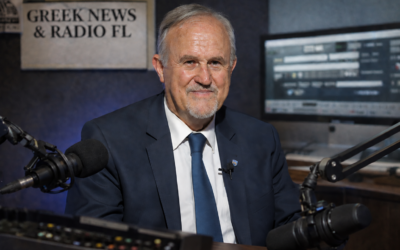
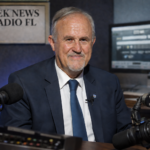
On September 2, the International Hellenic Association (IHA), the Hellenic American National Council, the Canadian Hellenic Congress, the Dimitriou and Maria Delivani Foundation, and Pan-Macedonian Germany hosted Dr. Gregor Gysi online (as part of the IHA Weekly Speeches). who is a German member of the Die Linke party and is chairman of the German-Greek Parliamentary Committee.
The title of his speech was "German responsibility to Greece - prospects for action for the next German Government". In his speech, Dr. Gysi emphasized the following points:
- Germany owes its responsibilities to Greece for the huge disaster and the thousands of victims caused as a result of the brutal policy of the DG Reich during the Occupation. This was acknowledged by President Steinmeier when he visited
Greece in 2018, but in practice his commitment was not followed up.
He described the issue of German debts to Greece as an "open wound that must be closed". He also said that the Moscow 2 + 4 Treaty of 1990 was not named the Peace Treaty precisely to prevent Germany from raising the issue of reparations, as required by the 1953 London Treaty.
- Germany has earned billions from loans to rescue private banks served by Greece while at the same time reducing pensions, dramatically reducing social benefits and raising taxes.
- Supports the payment of the forced loan that Nazi Germany imposed on Greece during the Occupation and mentions the need for some compromise on the interest rates due. He is also in favor of the return of the German reparations and the return to Greece of the stolen and looted archaeological treasures.
- He concludes by saying that Germany must assume its historical responsibility in a concrete way and that it is up to Germany to heal these wounds now.
In the context of the questions and answers, an interesting discussion took place, in a friendly atmosphere, during which important arguments were exchanged here and there.
From the Greek side, it was stressed that Germany owes to Greece the war reparations imposed by the Paris Conference (Nazi Germany carried out 130 holocausts while 1.770 villages were burned), the compensation to the victims of war crimes (Greece lost 13% of its population ), the repayment of the occupation loan and the return of the archaeological treasures that were stolen or looted.
Dr. Gysi stressed that Greece could stop further payment of its debt to Germany, amounting to 68 billion euros, until Germany begins to pay its own debt to Greece. In this case, the Greek government should be determined to get things done, given that Germany may use various pressure levers in retaliation. We note that the Greek people and parties are required to identify this option.
The German MP noted that Greece could accept a compromise on the interest of the occupation loan, but reminded the unfairness of the case since the 1958 loan granted by West Germany to Greece amounting to 200 million German marks had its onerous interest rate. 6% and paid in full. As for this loan, he stressed in particular that it has been recognized by Germany since Hitler's Germany had already made the payment of the first three installments.
He strongly stressed the need to inform the German public about Germany's debt to Greece as the German governments and the German media conceal the truth and present to German citizens Greece as a beggar and the weight of the European Union. We point out that the Greek government must be mobilized on this point as well.
Dr. Gysi stated that the remarks of the Greek side about the suspension of payments of the Greek debt to Germany are reasonable in order to exert general pressure and create noise, but added that some consultation with the European Union should precede. He insisted that the issue of German debts has not been closed, despite what the German government has stated in recent years.
He concluded by saying that if he is included in the government that will be formed after the elections of September 26, he will ask for the immediate start of negotiations with Greece for the settlement of these pending issues. In particular, he stressed that from the Greek side there is a need to put pressure on the Greek government to return more strongly to Berlin.
With this initiative, the IHA and its collaborators launch a campaign of pressure in Germany and Greece to start, within the framework of law and ethics, negotiations on war reparations, reparations and the payment of the occupation loan. .