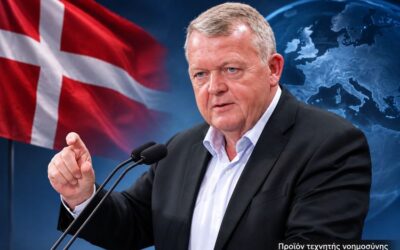

Ukraine is emerging as the main topic of the week, with developments in the region influencing global diplomacy. The US President announced that the US is in talks with the Russian President about organizing a meeting on the future of Ukraine. According to the latest information, the negotiating teams are preparing for this meeting, which is expected to take place in Saudi Arabia by mid-March.
From the first statements of the US President, as well as the US Secretary of Defense and the Secretary of State, it seems that Ukraine will not participate in the negotiations, while the European Union and its member states will also remain outside. The prevailing scenario is that the US will not insist on Ukraine's territorial integrity or its membership in NATO, but will turn to exploiting a large part of the country's geological wealth.
European Union Reaction: Return to the US “National Purpose”The US stance has shocked and disappointed the EU. European leaders see the US returning to a balance of power approach, with a strong promotion of the “national interest”, disregarding common transatlantic principles, international law and the so-called “Liberal Rules-Based World Order”. The European Union is trying to respond to this reversal through summits or high-level meetings, but no substantive decisions are expected. A common reaction for now is that the EU will respond to unilateral US measures (such as tariffs on coal and steel) in response to the inability to make decisions and a common strategy.
This tension is reflected in the disappointing statement of the outgoing president of the Munich Security Conference, German Ambassador Mr. Heusgen, who noted that “common values are no longer so common” between Europeans and Americans.
Strategic Dependence on the US: Europe at the Crossroads
The conclusion from the current situation is clear: Europe is not moving towards strategic autonomy or geopolitical independence. On the contrary, Europe remains tied to the US, increasing its military spending and intensifying its geopolitical anxieties. The future of the European Union on the international stage seems to depend on cooperation with the US, with its own strategies constrained by the continued influence of the American superpower.
Ukraine remains at the center of the international scene, with significant developments shaping the country's future and its relations with major powers.