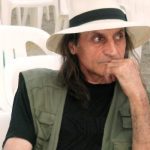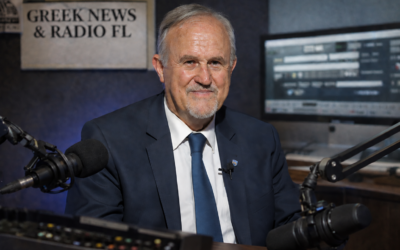
With honesty, sensitivity and a rock soul, Nektarios Theodorou, songwriter, lyricist and creator of the band Only Nude, talks with George Bilikas about music as a need for expression, about the power of speech and about art that remains true, far from fashions and superficial impressions.
Nektarios Theodorou is one of those artists who doesn't need spotlights to stand out. A creator with deep thinking and a substantial presence, he is the soul of the band. Only Nude, who has been leaving his mark on the Greek-speaking rock scene for years. Through songs that touch society and the soul, Nektarios insists on reminding us that music can be an act of humanity.
His albums, such as "We are not numbers, we are people" and its "Snow White and the 9 Dwarfs", carry the stigma of an inner truth, a voice that seeks light in the darkness. At the same time, with the innovative idea of Photo clip, Nektarios combines sound, image, theatricality and poetry, creating a new way of storytelling that marries the arts. On the occasion of his musical career and his next projects, we talked about what moves him, inspires him and keeps him creative — even when everything around him seems to be silent.
George Bilikas: Nektarios, how did your musical journey begin and how was “Mono Gymno” born?
Nektarios Theodorou: Music was and is for me a continuous spiritual journey. An escape. And I like traveling. From the age of about 10, rock music began to draw me closer to it and since then I said to myself that I too would like to get on stage at some point. To play and sing. To speak to the world. Mono Gymno started as an idea, which is why I always spoke of it not as a musical group, but as an ideograph. An ideograph! A piece of expression in the whole of the arts. Nothing else. Mono Gymno is an idea, it is a way of saying things to the world through lyrics and music.
G.M.: What led you to express yourself through Greek-language rock and not another genre?
N.T.: I love rock music and it is the only genre that I have loved so much since I was a child, regardless of whether I listened to and still listen to other genres. Rock gives you the opportunity to talk to your listener, to the person you are facing, to listen to them, to chat with them, to express opinions, attitudes and lifestyle. What is more important than that? Now why Greek and not English or some other language? Because this is simply my language and I support it. It is a heritage, and its greatness is priceless. It offers me everything. The metaphor, the allegory, the word formation, the interpretation, the spiritual direction, because nothing expresses me as well as this.
G.M.: If you had to describe your musical style in two words, which ones would you choose?
N.T.: In two words, sociopolitical based on the verse and experimental rock when it comes to music. Experimental because I've always tried to marry classical and traditional instruments in my compositions.
G.M.: Has the sound of "Only Naked" changed over the years?
N.T.: I think not. It has definitely evolved. We had different machines 25 years ago than now. Different capabilities then than now.
G.M.: What was the most defining moment in your career as a musician to date?
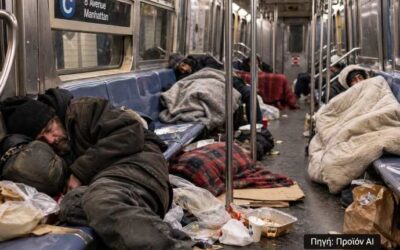
N.T.: When, since 2010, I saw the whole society kneeling. When I started seeing people walking on the street, with empty eyes. With empty stares. That's when I really got scared. Undead. When I saw family heads searching through the garbage to find something to eat. And during that period until 2015, not a leaf was moving in the music scene. Nothing. Do you remember that? A dead era. Then I called Dino (drummer of Mono Gymno) and told him, "Dude, we're going into the studio. We're not going to let this go by like this. Nothing will bring us to our knees. We're going to give away, through the internet, free songs to the world." And in 2011 we released a full album (the second in our collection) “My love, my fire and mine” and a CD single that we dedicated to the Amymonis Foundation, “Blind girl”, in 2012 again a full album “Open the doors”, in 2014 again a full album “We are not numbers, we are people” and we closed that period with another full album in 2015, “A paid response”. There I felt very strongly that I had a duty to speak through my songs and not to close my eyes and ears to what was happening around me. Others followed after 2013 and I am very happy about that. There was continuity and intense sensitivity from other artists and that is what made me even more attached to this scene. After that we had a calmer course.
G.M.: Your lyrics have a strong social and existential character. Where do you draw your inspiration from?
N.T.: I don't live anywhere else. I live here. How is it possible that what is happening leaves me unaffected? You have to be absolutely cynical, ridiculous and servile to say that everything is fine. Nothing is fine. Things are not good at all. On the other hand, because the terminology socio-political is often translated incorrectly, just two words. Society evolves according to the policy practiced in each space, country, place, call it whatever you want. When there is no social justice in the state, how do you demand that there be a balanced society? What kind of justice are we talking about when everything revolves around politicians and their cronies? The licking and saliva. How do you want an honest citizen when the citizen doesn't have milk and bread to buy for his children? When he can't cope with his daily obligations, when you've crushed him with bills and rent, when you've turned him from a householder into a beggar, when you've brought him to his knees and he sees the other person enter politics with a simple income and within 3-5 years have a bunch of houses and a few thousand to millions of euros in his possession? How can you not talk about this? It's the duty of any artist to talk about everything wrong he sees happening and not only that. To talk about beautiful things too. He must! There are those too, even in small moments. And when he sees that there are gaps, even in the emotional world of people, he must try to fill them. To create new and continuous images and emotions. To not let them disappear because some people want to level everything. To make us just lifeless meat. Controlled humanoids.
G.M.: How experiential are your lyrics? Do you talk about yourself or the world around you?
N.T.: Almost all of them are experiential, but there are also lyrics that were written for some other reason. Like, for example, being a simple observer in a situation that created some intense interest in me, a strong emotion, positive or negative, or I saw something important that I believed needed to be said and I wanted to pass it on to other people either as an example to avoid or as something good and beautiful.
G.M.: What role does poetry play in your writing?
N.T.: The most important. Poetry for me is the body. And then I dress the body with music. Sometimes with heavy clothes and sometimes with lighter ones.
G.M.: Is there a song that you consider your personal "confession"?
N.T.: Almost everything! (laughs)
G.M.: When you write, do you start from the lyrics or the music?
N.T.: Sometimes one, sometimes the other and sometimes both together. Although many times I am guided by the lyrics, because our language is naturally musical. If you listen to the words, the music comes out effortlessly, as long as you become one with them. I have been saying this for years. Words have enormous power. How you write them and how they are said matters. Who says them, and to whom they are addressed. Words carry values, history and scents with them. Learn to smell them and the result you will see later in everything you create will surprise you.
G.M.: You were one of the first to introduce the idea of the Photoclip — a musical story told through photographs. How did this idea come about?
N.T.: There is another aspect here. Theatrical improvisation. That is, it is a musical work, preferably a musical story as you very correctly said, in which there is an initial direction and it is interpreted with theatrical improvisation. We do not film it to use simple frames, but we photograph it and then the entire work and especially the verse must be rendered through authentic photographs without the slightest repetition. The song "The Gang of Jokes", because that is what I am referring to, is the entire socio-political life of the last 50 years in Greece and is not given to anyone, neither to politicians nor to party dogs. I wanted to make it a film but who would finance it? Nobody. So I came up with the idea of Photoclip but with the aforementioned data. And still not many people have understood it and you are giving me the opportunity to explain this. The 4 people who appear as a jury in the play play the 4 biggest parties in our country. There could have been more but we didn't have space (laughs). The clown, who begs, cries and then turns into a joker and turns everything upside down, is the people. The guy who keeps them chained is the media, and all those viewers who watch them wearing masks are all those, you know, the online judges, reviewers, trolls, couch potatoes with opinions and all that evil that exists behind the screens. 2700 clicks in 2 hours and a quarter, so you understand how much work went into getting this result.
G.M.: Do you think Photoclip is a form of "resistance" to the overproduction of video?
N.T.: Yes, I believe that. It's something else, different. It's a collaboration between artists from different fields, working on something, I would say, very special. Especially for the Greek-speaking rock scene. A work made with simple things, everyday but so essential.
G.M.: How important is the visual dimension of music to you?
N.T.: In our time, yes, it is important, not only in terms of marketing and advertising, but it also gives you the opportunity for collaborations. The development of an individual idea into a collective is one of the most beautiful things. It gives you the most beautiful feelings and a better result.
G.M.: You combine photography, directing, and writing. Do you consider all of these art forms to be communicating vessels?
N.T.: Absolutely!
G.M.: If you weren't a musician, what other art form would you like to pursue exclusively?
N.T.: There is no exclusivity for me. Creation has no exclusivities. Creation is the beginning and the end. And I explain: Creating a song or a film is just as beautiful as taking a burnt log and turning it into a jewel that adorns my space. I can't see any difference in that. That's why I insist on the word Creation and not art. So I end up doing what pleases me and makes me feel good at that moment. Something that beautifies my soul.
G.M.: In the album "We're Not Numbers, We're People" you send a clear social message. How do you see the relationship between music and social consciousness today?
N.T.: This happens on all albums. On the one you mentioned, it's just a little more intense. Now... music and social consciousness, I believe, are completely connected.
G.M.: Do you believe that the artist has a responsibility to position himself politically or socially through his work?
N.T.: Of course we should. We're talking about the obvious. But there is controlled silencing and we all know this very well on social media.
G.M.: How do you experience contemporary Greek reality as a creator?
N.T.: It can't get any worse. But I hope for the best. Not because of the politics that are being practiced, we forget that, but because we have gone from teaching to teaching for years and I count too much on the new generation. As for politics, have you heard anyone there, in their own tent, to borrow a phrase from a politician, talking and submitting a plan for culture? For music and cinema? At least I haven't heard of it, unless they have it and are hiding it from us as a surprise. All they say is, "Ah! We support artists". How? Fine, then we'll send you the bills for water, electricity, rent and a list of food, let's see if you support us or not. Come on... such vagrancy insults the word vagrant. At least the vagrant has a heart. But this is too big a conversation for here.
G.M.: Is there room for the independent music scene in Greece in 2020+?
N.T.: There is always room for this scene, because it makes the space itself. It expects nothing from anyone. The mountains have learned from the snow. It exists and will not cease to exist as long as it sees one injustice welcoming another.
G.M.: How do you approach the music industry when everything seems to revolve around views and streams?
N.T.: I don't care. I never did. I was never in controlled circles and closed groups. Neither did I nor my collaborators. We never sipped as a band and we never calculated something so superficial. The music industry is indifferent and it's the fault of those who left us indifferent and I make that clear. But, you reap what you sow.
G.M.: What are you preparing during this period?
N.T.: A feature film. A special film, a black comedy in which 8 out of 10 actors are musicians.
G.M.: If you could collaborate with any artist, Greek or foreign, who would you choose and why?
N.T.: We're talking about music, I suppose. A very difficult choice. There are so many of them and some have already passed away. What can I say about foreigners? I'd start with Tom Waits and end up somewhere else. The same goes for Greeks. We have excellent composers and musicians, and the same goes for actors in the film industry.
G.M.: What song of yours would you like someone who doesn't know you at all to hear?
N.T.: I would say that the discography after 2014 is more specific. More direct. I believe that “The Gang of Jokes” that I mentioned earlier is a more concentrated work that someone should listen to and see at the same time. Although very beautiful songs have been written before 2014.
G.M.: If you had to give a title to the chapter of your life today, what would it be?
N.T.: Creator and worker of art.
G.M.: What is your biggest dream as a creator — and as a person?
N.T.: As a creator, to have health and strength to put my ideas into practice and things that please me. That my works can be the motivation for other people to start creating. Nothing more. I don't care about glories and honors. As a human being, that this injustice does not exist in our society. That everyone can live comfortably and above all with dignity and make their dreams come true. Then you will see that everything will change as if by magic. And the issue of dignity is something very important and is not hidden under ties, suits, expensive dresses and perfumes. It is hidden in the souls of ordinary people.
A conversation with Nektarios is like his songs: simple on the surface, but full of depth and substance. He speaks without pomp, with a clear gaze and a disarming calm that only people of art possess when they know who they are and why they create. In the world of “Only Naked” there are no filters, but only words, notes and emotions. And perhaps this is ultimately the most beautiful message he leaves behind: that truth, sensitivity and authenticity still have a place — not only in music, but also in life.
Curriculum vitae
Nektarios Theodorou was born in 1972 in Volos and comes from the Oreoi of Northern Evia. He is a musician, composer, lyricist and founder of the Greek-language rock band Mono Gymno. He has released several albums with social and existential content. In addition to music, he is involved in photography, directing and writing, while he is the creator of the original idea of Photoclip, where music is united with the image, theatrical improvisation and storytelling. With a steady presence on the independent scene, he continues to create works that speak about man, life and the need for honesty in art.
Discography:
2006: "Don't listen to the old man's words, but don't forget them" (CD)
2011: "Blind Girl" (CD, single)
2011: "My love, my fire" (CD)
2012: "Open the Doors" (CD)
2014: "We are not numbers, we are people" (CD)
2015: "A Paid Answer" (CD)
2017: "Love is a Song" (CD)
2018: "Snow White and the Nine Dwarfs" (CD)
2020: "The Runaway" – (CD, Instrumental)
2020: "Silence is a strange song" (CD)
2023: "A Paper Ball" (CD, single)
Ergography:
(2007) Collection of poems entitled: "Come and treat yourself".
(Self-published).
(2017) Theatrical play entitled: "A Walk in the Mirror". (24 letters).
(2017) "The old woman's nail". Subtitle: "When hugs grow old". (Collection of short stories, 24 letters).
(2018) "Contemporary anthology of modern Greek poetry" (Collective, New Dimension).
(2018) Ea controversial fairy tale entitled "The Harbor of Lost Poets" (24 letters).
(2018) "Late Souls" (Short Stories, Collection, 24 Letters Publications).
(2020) "Winged Words: Poetic Connections 4," (Collective, Printed)
(2020) "Paths of Scripture: Poetic Connections 5" (Collective, Printed)
(2022) "Fernando's Stories" (New Dimension)
(2024) "The Suitcase Man" (Poems, New Dimension)
Filmography:
(2019) "The Road" (Short).
(2020) "You Remembered" (Short).
(2022) "The Mirror" (Short).
(2023) "Here I am, sleep" (Short).
(2024) "Your hope is promoted" (Short).
(2025) "The Biggest Applause" (Short film, currently competing in international festivals in 2025 around the world).
(2025) “The Song.” – (Short film, currently competing in international festivals in 2025 around the world)
(2026) “Greek rock – the other side” (Full-length, expected).
photo Greek Radio FL