
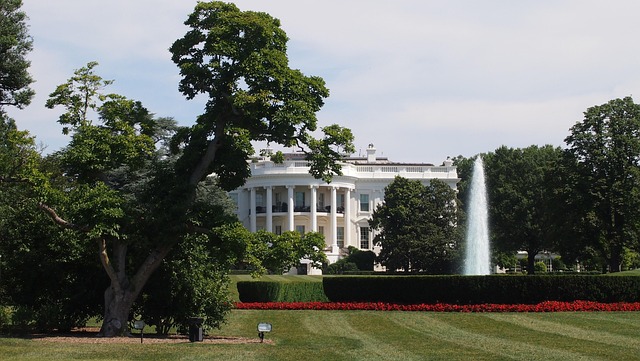
White House – October 2, 2025
Democrats’ reckless insistence on holding the government hostage over “free healthcare for illegal immigrants” caused a devastating shutdown — leaving essential workers and military personnel unpaid, driving vital programs like WIC (assistance to women and children) to the brink of collapse, and depriving critical services of funding.
Across the country, this political ploy of the Radical Left is causing pain:
Arizona
- The Department of Veterans Affairs (VA) is halting transition programs, career counseling, closing GI Bill and national cemetery hotlines, and suspending regional benefits offices.
- Visitor services are being reduced, while roads and trails in national parks remain open without maintenance.
- Saguaro Park East was closed to cars, while Montezuma Castle Monument turned away tourists.
Georgia
- Thousands of federal employees and airport workers are going without pay. TSA agents and air traffic controllers are working without pay.
- The Aviation Museum in Warner Robins is closing. So is the Ocmulgee Mounds in Macon.
- More than 111.000 workers in Georgia are affected, including military personnel, correctional officers, personnel from the EPA, HHS, IRS and other agencies.
- The historic Martin Luther King Jr. Memorial in Atlanta is closing to visitors.
Michigan
- Visitor centers are closing at national parks like Sleeping Bear Dunes.
- Head Start grants are being stopped and SBA loans are being delayed.
- More than 42.000 USDA employees are being placed on mandatory leave, disrupting agricultural support services.
Minnesota
- 20.000 federal employees (35.000 including military and postal workers) are affected.
- The National Park Service turned off the lights at the Mississippi River Visitor Center.
- The Minnesota National Guard begins an "organized shutdown": essential personnel remain, but most workers go without pay.
Nevada
- 22.000 federal employees are affected.
- The SBA stops lending to about 320 small businesses, depriving them of $170 million in funding.
- Tourists and residents in Las Vegas are expressing outrage over closed parks and airport delays.
New Hampshire
- About 5.200 federal employees are on suspension.
- The Portsmouth Naval Shipyard is at a standstill: soldiers and workers continue without pay.
Nationwide
- From Arkansas to Hawaii, tourists are left disappointed as national parks, historic sites and museums close.
- Lines at airports are growing, while TSA agents and screeners are working without pay.
- The funding cut threatens millions of families with the loss of food benefits (SNAP, WIC).
- Economists warn of a loss of $15 billion in GDP every week.
- Veterans, seniors, and military families are being hit by uncertainty.
This shutdown highlights the political deadlock and deep polarization in Washington, with hundreds of thousands of workers and citizens paying the price.
See the presentation here:
Economic-Consequences-of-a-Government-Shutdown-4
Economic Consequences of a Government Shutdown
Council of Economic Advisers – October 2025
Background
A government shutdown occurs when Congress fails to pass funding bills or temporary extensions (Continuing Resolutions – CRs) to keep the federal government running. CEA analysis shows that a shutdown can have broad economic consequences: lower growth, higher unemployment, but also disruptions to Social Security, air travel and food programs for women with young children. The longer it lasts, the more severe the effects become.
Legislative History
- CRs are usually a bilateral process for continued funding.
- During Biden's presidency, Republicans and Democrats passed 13 CRs, with the support of almost all Democrats in the House and Senate.
- History shows that CRs are a necessary function to avoid the macroeconomic shocks brought by a shutdown.
Macroeconomic Impact
- Goldman Sachs estimates a reduction in quarterly GDP of 0,2 percentage points for each week of shutdown.
- This is equivalent to approximately $15 billion loss per week.
- A one-month shutdown can lead to 43.000 additional unemployed.
- In Washington, consumption fell by 5% during the 2013 shutdown.
- Economic data collection is freezing, which increases uncertainty for the Fed and businesses.
Delays in Social Programs
- The program WIC (for almost 7 million mothers and children) runs out of resources in October.
- The SNAP food benefits they continue for a month, then they are interrupted (40+ million beneficiaries, of which 16 million are children).
- The allowances Social Security they continue, but with longer waiting times.
- The services Medicare are limited due to forced leave to 50% of the staff.
- Services for veterans (career counseling, GI Bill, burial requests) are affected.
- programs Head Start for low-income families they are left without funding.
Federal Workforce Outage
1,9 million civil servants they are either on mandatory leave or working unpaid.- TSA agents and air traffic controllers are working without pay → absenteeism and flight delays are increasing.
- Border Patrol agents, CBP, FBI, DEA, Coast Guard, federal firefighters continue unpaid.
Federal contractors they do not even receive back pay, resulting in permanent wage losses.- A one-month shutdown reduces consumption by 30 billion dollars.
Impact on Private Businesses
Loans to small businesses are frozen (in 2019, $2 billion in loans were delayed).- The exports are decreasing: licenses and certifications are not issued, with losses of billions of dollars.
Mortgage loan applications are decreasing (7% drop in 2013).- They are lost. $15 billion per week in federal contracts, of which 3 billion to small businesses.
Continuing Resolutions signed by President Biden
Democratic votes in the House | Democratic votes in the Senate
- HR 5305 – Government Funding Extension and Emergency Relief Act
220 (100%) | 50 (100%) - HR 6119 – Government Funding Extension Act
220 (100%) | 50 (100%) - HR 6617 – Additional Further Extension of Government Funding Act
221 (99%) | 46 (100%) - HJRes. 75 – Resolution to Extend the Continuing Funding Act, 2022
Voice Voting (100%) | Voice Voting (100%) - HR 6833 – Continuing Funding and Supplemental Appropriations for Ukraine Act, 2023
220 (100%) | 50 (100%) - HR 1437 – Further Continuing Funding and Extensions Act, 2023
215 (100%) | 49 (100%) - HR 4373 – Additional Further Continuing Funding and Extensions Act, 2023
217 (99%) | Voice Vote (100%) - HR 5860 – Continuing Funding Act, 2024 and Other Extensions
209 (99%) | 49 (100%) - HR 6363 – Further Continuing Funding and Other Extensions Act, 2024
209 (99%) | 50 (98%) - HR 2872 – An Act to Provide Further Continuing Appropriations for the Fiscal Year Ending September 30, 2024, and for Other Purposes
207 (99%) | 51 (100%) - HR 7463 – Continuing Funding Extension and Other Matters Act, 2024
207 (99%) | 50 (100%)
HR 9747 – Continuing Funding and Extensions Act, 2025
209 (100%) | 50 (100%)- HR 10545 – American Relief Act, 2025
196 (99%) | 48 (98%)
- HR 5305 – Government Funding Extension and Emergency Relief Act
- This also includes independent senators who work with the Democratic Party.
Social Benefits and Services
-
- The allowances Social Security will continue, but beneficiaries may experience longer wait times at customer service due to the disruption caused by a funding gap. Only activities not directly related to the payment of benefits and those not essential to timely and accurate payment, such as entitlement verifications and issuing replacement Medicare cards, will be suspended.
- Η εξυπηρέτηση πελατών στο Medicare There will also be delays, as nearly half of CMS employees will be furloughed. That means those who need help from a Medicare representative will have to wait longer.
- The services for veterans (career counseling, GI Bill hotline, regional benefit offices, public relations, headstone placement, advance need burial requests, memorial certificates) will be affected.
- The programms Head Start that are in their annual review and need new funding will not receive federal funds, putting the care of children from low-income families at risk.
Federal Workforce Outage
- More than 1,9 million federal civil servants are at risk of either being furloughed or working without immediate pay during a shutdown. 80% of them work outside of Washington.
- Its employees TSA (airport control) and air traffic controllers are forced to work without pay. In previous shutdowns, this has tripled employee absenteeism (from 3% to 10%), resulting in delays that often affected multiple airports in a cascade.
- Her agents Border Guard (19.000+) and its officials Customs and Border Protection (CBP) (25.000+) continue to work without pay, while TSA employees continue to screen 2–2,5 million passengers daily without guaranteed compensation.
- 49.000 Coast Guard members They went unpaid in a previous shutdown, when funding for the Department of Homeland Security ended. Federal law enforcement agencies, such as the FBI and DEA, are also continuing without immediate payment.
- The feds firefighters they work unpaid even during periods of intense fire, while winter training programs for new hires are canceled.
- Unlike employees, federal contractors are not entitled to retroactive payment after the end of a shutdown. This leads to permanent wage losses for millions of workers.
- Calculations show that a one-month shutdown would reduce consumer spending by 30 billion dollars, half of which come from the employees/contractors themselves and the rest from secondary impacts on other sectors.
- Impact on Private Businesses
- The small businesses They will likely face delays in receiving federal loans. The Consumer Financial Protection Bureau estimated that $2 billion in loans were delayed in a previous shutdown.
- The exports will be reduced, as federal agencies cannot issue licenses and certifications. In the 2013 shutdown, more than 2 million liters of American alcohol for export could not be certified, while $3 billion in loan, guarantee and insurance approvals from the Export-Import Bank remained unexecuted.
- The mortgage loan applications likely to decline as federal processing systems cease to function. In 2013, applications fell by 7%.
- About $15 billion per week in federal contracts are awarded to businesses in the US, including more than $3 billion to small businesses. These companies will lose funding, will not be compensated for completed projects and will have to lay off workers.
LIVE: House Of Representatives Passes Continuing Resolution To Fund The Government, Heads To Senate
WATCH LIVE: Thune & Johnson Hold Press Briefing On Third Day Of Government Shutdown
go video
Forbes Breaking News
photo by ahundt, https://pixabay.com