His poetry was not simply an artistic expression, but a functional tool for political action and moral teaching. He wrote mainly elegiac couplets (elegies) and iambic meters. Elegy was the appropriate medium for exhortation, political reflection, and the delivery of moral advice. Diogenes Laërtius is the ancient writer who gives us the clearest and most concise picture of the total scope of Solon's poetic output. His testimony of 5.000 verses is the basis on which modern understanding of the magnitude of this lost poetic production was built. Today, 285 verses have survived. The main authors who preserved verses by Solon were Aristotle, Plutarch, and Diogenes Laërtius.
In this text I will talk to you about Solon's poem "Eunomia"
Solon's poem "Eunomia"
The excerpt from "Eunomyia" (Excerpt 4 West), which is Solon's most emblematic political text. In it, the poet warns the Athenians that the destruction of the city will not come from the gods, but from the greed of the citizens and "Hybrid".
Eunomy
SOLON: ap. 4 West (The Martin Litchfield West (1937–2015) was one of the leading British classical philologists of the 20th and 21st centuries, with enormous contributions to the study of ancient Greek literature, poetry and music.
But our city, according to Zeus, is never mentioned.
They also heard the blessed gods' immortal frenzy;
For that great-hearted bishop is the father of the gods.
Pallas Athene has hands above;
5But they destroyed a great city, Aphrodite.
These people want money, being persuaded,
The city will be ruled by an unjust mind, which we are preparing.
I suffer much from great pain;
For they do not appear to possess either abundance or present.
10Gladly adorn yourself with food in peace.
…………………………………………………….
They are rich, being persuaded by unjust labor.
………………………………………………………………………..
neither sacred nor public
They are thrifty, stealing to snatch from somewhere else,
Nor are the modest principles of the Trial kept,
15which silently comprehended the happenings before the beings,
But at that time, however, she came, determined,
This is already a plague that is spreading throughout the city,
But he quickly freed evil from slavery,
The civil war that will be fought will be seen to be raging,
20Who has caused many evils to befall him in his old age;
For from adverse things quickly comes a long-suffering city
He runs away in company with unjust friends.
This is bad for the people in the city; but for the poor
Many people are moving from one land to another.
25those who have bound the eternal bond,
..................................................................
Thus, public evil comes to every household,
The Aulians, who have been there for four years, will not open doors,
He went high above the oath, but he found it anyway,
Even if she fled in the depths of a chamber.
30Anger compels me to teach these things to the Athenians,
As many evils as cities provide, Dysnomia;
Eunomia, the world's most favorable and perfect judge,
And I will give the unjust a double brake;
It smoothes the rough, it ceases to be boring, it makes the dark dark,
35He breathes forth the flowers that bloom,
He directs his works with a fair criticism, proudly
It calms; it ceases the works of division,
The lazy quarrel ceases altogether, it is under her control.
always according to people, perfect and perfect.
Solon – Poem Eunomia Translated by I.N. Kazazis
Our city will never be lost, as long as it depends on the decisions of Zeus and the dispositions of the blessed gods.
Why does such a protector-guardian, Pallas Athena, the magnanimous daughter of an almighty father, hold her hands above her?
It is, on the contrary, the will of the bourgeois themselves that destroys a great city, their lack of prudence and their enslavement to money;
The leaders of the city are equally devoid of principles, and from their great arrogance they are bound to suffer much:
because they are unable to restrain excess and enjoy a festive banquet with proper order and spiritual peace.
…………………………………………………….
They accumulate wealth by indulging in injustice
…………………………………………………….
and, not sparing any property, neither sacred nor public,
They steal provocatively from everywhere, and even the venerable foundations of Justice do not pay due respect,
of Justice that keeps its mouth shut, but is fully aware of what is happening and what has happened, and at some point in time arrives to impose punishments.
This situation becomes an inevitable plague for the entire city, which is quickly driven into the worst slavery;
This awakens the attitude and civil strife from its slumber, the one responsible for the loss of so many souls in the prime of their lives.
Soon the beloved city is destroyed by the hands of enemies and drowns in the conspiracies that delight the unjust.
These calamities that befall the people force many poor people to emigrate,
and others, dishonorably bound in irons, to be sold as slaves.
………………………………………………………………………..
Thus public calamity reaches every citizen's door; the gates and the fences no longer want to keep it out;
Then she, jumping the high fence, pursues the culprit and catches up with him, even though he quickly hides in the secret corners of his chamber.
This is the lesson I wish to teach the Athenians: that the evils that Dysnomia engenders are infinite,
while Eunomia restores general order and harmony, and finally passes the chains to the unjust;
It smoothes what is rough, stops excesses, weakens arrogance, and withers the flowers of sin in their prime;
It corrects distorted judgments; it calms pride; it dissolves every form of division;
It puts an end to the chaos of irritable strife; thanks to it, human affairs acquire their own measure and rediscover their wisdom.
Eunomia yesterday and today: Solon warns – and we are running towards the cliff
In 594 BC, Athens was a seething city. The poor were being sold into slavery for debts. The rich were seizing land, sanctuaries, and public money. Civil war was on the horizon. Then Solon – not an armchair philosopher, but a poet and legislator – wrote a little bell-shaped poem: the “Eunomia.” It was read at the time. It accurately describes a society marching toward destruction, his own and ours.
What exactly is Solon saying?
The city will not be lost to an external enemy – Athena protects it.
- It will be destroyed by the citizens themselves: by greed, lack of prudence and enslavement to money.
- The leaders are incapable of setting limits. They steal from everywhere – sanctuaries, public funds, land.
- Justice keeps its mouth shut – but sometimes it comes and hands out punishments.
- Then the city is driven into slavery, civil war, exile, and the sale of people as slaves.
- Misfortune doesn't stay outside: it jumps the fence, knocks on the door, enters the bedroom.
- Eunomia (proper legislation) is the only medicine: it establishes moderation, stops arrogance, and dissolves division.
Today's Society: A Mirror of Dysnomia
Let's put Solon's description side by side with what we are experiencing in 2026.
- "Slavery to money" – without prudence
Then: Athenians borrowed against their bodies. If they didn't pay, they became slaves.
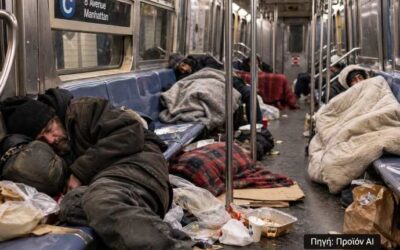
Today: Households are drowning in loans, credit cards, installments. Big banks speculate in a way that led to crises (2008, 2020, 2023). The word “overindebtedness” is not a technicality – it is the experience of millions. Consumerism has become a religion. Moderation is considered a misfortune.
Leaders unable to contain excess
Then: The leaders of the municipality were arrogant, they stole, they couldn't say "no" to wealth.
Today: We see politicians who promise “free electricity, free food, free housing” without explaining how. When the time comes to make decisions, they themselves protect the wealthy few. Corruption, scandals, off shore, lobbying – leaders do not hold back the excess, they fuel it.
"They steal provocatively from everywhere – neither sacred nor public"
Then: Plunder of sacred treasures, appropriation of public land.
Today: Privatizations of suspicious transparency, state contracts that serve friends and relatives, “black funds” of parties, incredible projects with over-cost estimates (bridges, highways, digital systems). When Greece had the memoranda, a list of names surfaced. Public funds are not “anyone’s” – they are loot.
"Justice keeps its mouth shut" – but sometimes it comes
Then: The tyrants believed they would get away with it. Solon says no.
Today: Major scandals are time-barred. Judicial investigations take years. The poor are thrown in jail in 24 hours. The rich with brilliant lawyers get postponements upon postponements. Society has ceased to believe in effective justice. This is exactly what Solon describes: "a tight mouth."
"An inevitable blow to the whole city" – the climate crisis (created by the system) and wars
Then: Injustice gave birth to plague, famine, civil war.
Today: It is not divine punishment, but a sequence. The greed of the few (fossil fuels, deforestation, overconsumption) has led to heat waves of 50°C, fires that wipe out entire villages, floods that drown cities. The refugees of the climate crisis are already in the millions. Solon had predicted it: the plague is not external, it is the result of our own Dysnomia.
"Foreigners and Slavery"
Then: Poor Athenians were sold abroad.
Today: Millions of young people are leaving the Mediterranean, the Balkans, Latin America, Asia – not for tourism, but for survival. At the same time, modern slavery (debt, trafficking, work without rights) is everywhere: greenhouses, garment factories, crops, even in big cities. Solon spoke of “iron-bound people”. We call them “uninsured workers” or “victims of trafficking”.
"Disaster jumps the high fence – knocks on every citizen's door"
Then: The rich man thought his class protected him. Solon says: no walls.
Today: The rich have gated communities, private security, shelters. But the climate crisis does not respect fences. The crime that poverty breeds does not stay outside. Pandemics (Covid, new threats) hit the rich and the poor equally. An economic collapse spares no one. When society breaks down, disaster enters in every house – exactly as Solon writes.
Where are we going?
Solon was not a pessimist. He believed that Eunomia – that is, correct, fair, measured legislation – could reverse the course. But three things are needed that are conspicuous by their absence today:
What does Solon want? What do we have today?
Prudence instead of greed Worship of GDP, consumption, uncontrolled growth
Leaders with limits Populist demagogues, corruption, inability to follow rules
Justice that is not silent Slow, selective, overfunded justice – when it works
Without these, the path is predetermined:
Civil strife. We are already experiencing it: social division, hatred on social media, "us versus them" polarization, occasional violence.
Exile Brain drain is not a statistic, it is a tragedy.
Slavery New forms of slavery (debt, trafficking, labor exploitation).
And in the end, “disaster jumps the high fence.” No wall protects when evil is internal.
The message we refuse to hear
Solon does not leave us in despair. He leaves us with a responsibility:
Eunomy is not automatic. It is the work of people who decide to establish moderation, justice, and order. before to be too late.
Today's society is heading towards destruction not because the gods want it – not Athena, not Zeus, not any power outside of us. It is heading towards destruction because the citizens themselves, and primarily their leaders, refuse to put a stop to hubris.
The question is not "if" disaster will come.
The question is: how much longer will Justice keep its mouth shut?
Epilogue (for the reader of 2026)
You don't have to be an archaeologist or a philologist. Read the poem again. It's not about ancient Athens. It's about your yard, about the bill you can't pay, about the politician who promises and doesn't deliver, about justice that sleeps, about the fence you thought would protect you.
Solon warned you 2.600 years ago. The question is whether you will listen to him. before Disaster knocks on your door.
Sources:
1.Anthology of Archaic Lyric Poetry
Edited by Sotiris Tselikas.Catalog of texts: SOLON
2. Greek Language Dictionary (TLG)
3.Solon Nomographus, Poeta, Fragmenta (0263: 001)
"Iambi et elegi Graeci, vol. 2", Ed. West, ML
Oxford: Clarendon Press, 1972.
Fragment 4, line 1
But our city, according to Zeus, is never destroyed.
They said, "Blessed are the minds of immortals."
For that great-hearted bishop is the father of the gods.
Pallas Athene has hands above;
But they destroyed a great city, Aphrodite.
These people want money, being persuaded,
The city will have rulers with unjust laws, which we are preparing.
I suffer much from great pain;
For they do not appear to possess either abundance or present.
Adorned with joy, he dines in peace.
4. Analysis by Dimitris Symeonidis Eunomia yesterday and today: Solon warns – and we are running towards the cliff
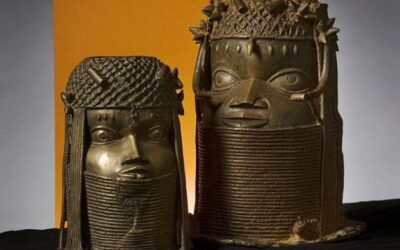
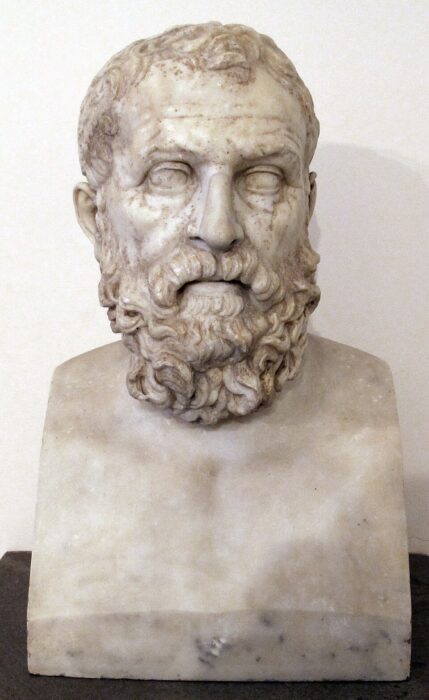
Photo By Sailko – Own work, CC BY-SA 3.0, https://commons.wikimedia.org/w/index.php?curid=30945032, https://el.wikipedia.org/wiki/