We have the internal factor and the external one.
The main factors and people involved were:
Paul von Hindenburg: The then President of Germany, who, despite his initial hesitation, appointed Hitler Chancellor on 30 January 1933.
Conservative Politicians (e.g. Franz von Papen): They believed they could "tame" and use Hitler to serve their own interests by pushing for his appointment.
Industrialists and Economic Elite: Many powerful German businessmen financed the Nazi Party, as they feared the rise of communism and sought stability for their investments.
The Great Depression (1929): The global economic crisis caused mass unemployment and hunger in Germany, driving impoverished citizens to political extremes.
The Treaty of Versailles: The feeling of humiliation from the harsh terms of the treaty after World War I gave Hitler the impetus to use nationalist rhetoric.
Propaganda and Violence: The action of SA (Storm Battalions) that terrorized political opponents, combined with his strategic propaganda Joseph Goebbels, reinforced the image of Hitler as the only "savior"
Foreign factors that supported Hitler
The strengthening of Hitler and the Nazi Party was supported by various foreign actors, either through direct financial support, or through ideological influence and business cooperation.
The main foreigners who contributed to its rise were:
Henry Ford: The founder of the eponymous automobile company was known for his anti-Semitic views. His book, The International Jew, exerted a great influence on Hitler, who mentioned him by name in Mein Kampf as a source of inspiration. Ford was decorated by the Nazi regime in 1938 with the Grand Cross of the German Eagle.
Prescott Bush: The grandfather of the future US President George W. Bush, through Union Banking Corporation, maintained close business ties with the German industrialist Fritz Thyssen), who was one of Hitler's main financiers in his early days.
Benito Mussolini: The Italian dictator provided financial and political support to the Nazi movement in its early stages, as he saw Hitler as an ideological ally against communism.
American and British Companies:
IBM: Its German subsidiary provided the punch card technology used for statistical recording and organizing the persecutions.
Standard Oil (Rockefeller): It maintained partnerships with the German IG Farben (the company that produced Zyklon B), securing know-how and fuel.
Banks: The Bank for International Settlements (BIS) and Bank of England they were accused of facilitating the transfer of German funds and gold, even after the war began.
(Purely Jewish Banks)
Prince Edward VIII (Duke of Windsor): The former king of Great Britain had publicly expressed his admiration for the Nazi regime and his stance was seen as encouraging the policy of "appeasement" towards Hitler.
Investors from Austria and Czechoslovakia: According to historical studies, Hitler received significant sums of money from wealthy supporters in neighboring countries, as well as from Finland, Sweden, and Hungary.
Many of these factors saw Hitler as a "bulwark" against communism, preferring the Nazi regime to a potential Soviet influence in Europe.
Πηγές:
Ian Kershaw: “Hitler” (two volumes, Hubris and Nemesis): Metaichmio Publications.
Richard J. Evans: The Coming of the Third Reich”: Alexandria Publications.
William L. Shirer: The Rise and Fall of the Third Reich”: Arsenidis Publications
David A. Andelman: The Treaty of Versailles
James Pool: Hitler and His Secret Partners
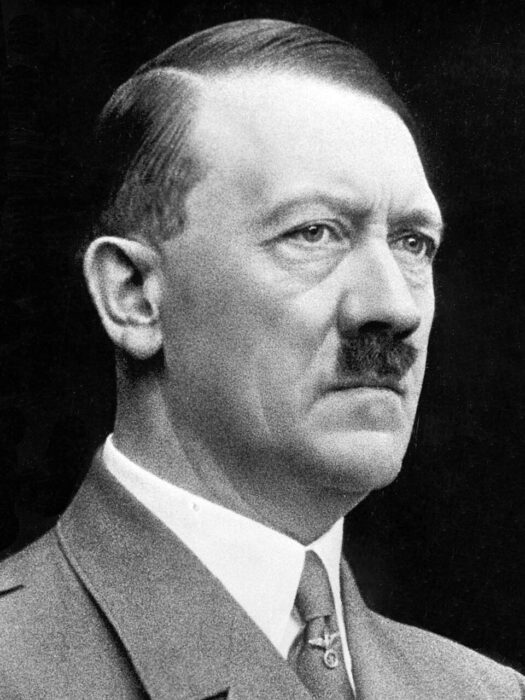
Photo By Bundesarchiv, Bild 183-S33882 / CC BY-SA 3.0 DE, CC BY-SA 3.0 de, https://commons.wikimedia.org/w/index.php?curid=153481913, https://el.wikipedia.org/wiki/