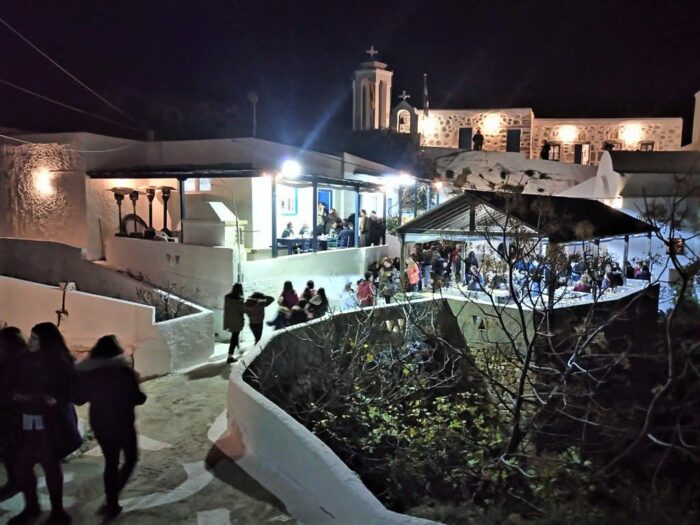
On February 1st, the eve of Ypapanti, the great religious festival of Panagia Flevariotissa takes place in Astypalaia, a milestone in the annual cycle of the religious life of the devout Astypalians and a winter rendezvous on the island for hundreds of expatriates!
Arriving at Monastiri and seeing an "army" of people busy not only with cooking but also with the thousand other things required for the successful organization of a festival in which several hundred people participate, you feel that the people of Astypalion have not been alienated from the modern way of life and the problems of everyday life that lock each of us in our shell! They manage to put the big "we" above the small "me", achieving things that seem impossible both in terms of financial figures and in terms of the extent of the effort required!
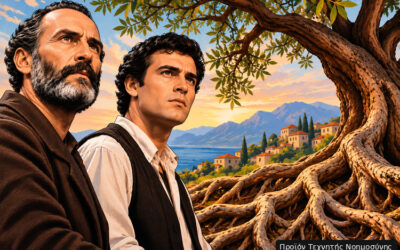
Floating between the Cyclades and the Dodecanese, with the natural and built environment pushing it towards the Cyclades but the distances ultimately classifying it as part of the Dodecanese, Astypalaia is a place that you fall in love with at first sight! Aristotle wrote about it that "the land of the Astypalians is hostile to snakes" due to their absence, the Romans, who valued each place primarily for its delicacies, named it "Ichthyoessa" for the abundance and quality of its fish, while the ancient Greeks, fascinated by its fragrant flowers and delicious fruits, called it the "Table of the Gods"! The dazzling beauty of this island with its amazing butterfly shape can literally satisfy even the most demanding visitor!
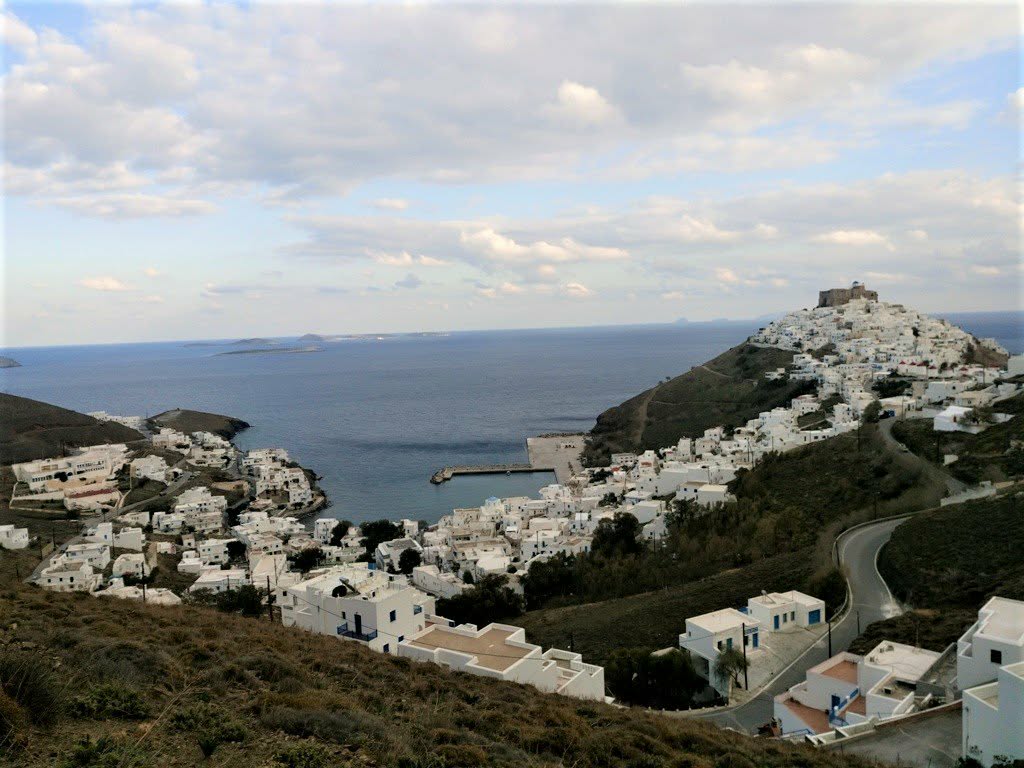
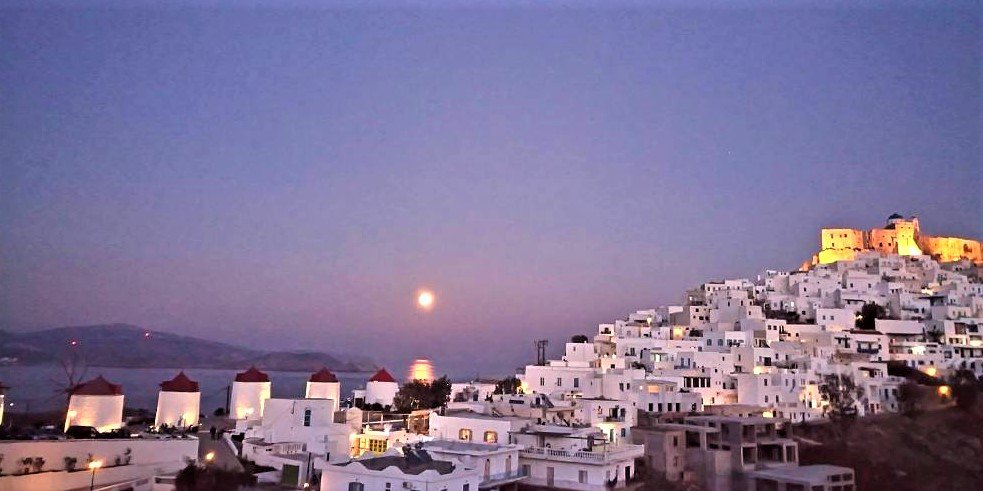
The island may not be particularly large and therefore its settlements are relatively few, but its capital, Chora, is so beautiful and charming that you really get "stuck" to it! With the Venetian Castle of the Querini, a family that owned the island for almost 300 years, dominating over the picturesque settlement, with the well-preserved windmills and their impressive red roofs creating a real necklace between the two hills where the whitewashed houses spread out, and with the churches of Panagia Portaitissa and Megali Panagia as landmarks, Chora is the undisputed protagonist of Astypalaia, which however feels very close to it the "hot breath" of the title contenders! Maltezana, Livadi, Pera Gialos at the foot of Chora, Vathi, Schinoudas, the island's beautiful beaches, its archaeological monuments and its numerous churches complete the map of the beauty of a place that nature and history have generously endowed with their ornaments!
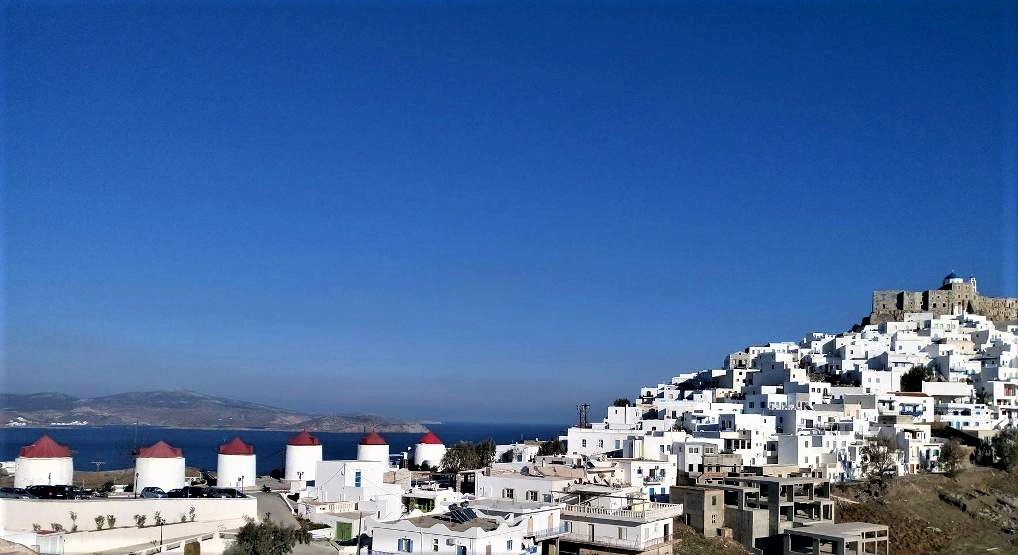
The traditional houses of Astypalaia are small, square and all-white, stuck together in the narrow cobbled streets, bearing Venetian architectural influences, while their impressive wooden balconies, the so-called "baklavadota", are reminiscent of Cycladic. Throughout the island, the Cycladic color seems to prevail over the Dodecanese. Very close to the famous windmills is the Town Hall Square, from where the two main roads that lead uphill to the Castle and the famous churches of Panagia Portaitissa on the one hand and of Megali Panagia towards the side of Pera Gialos on the other start.
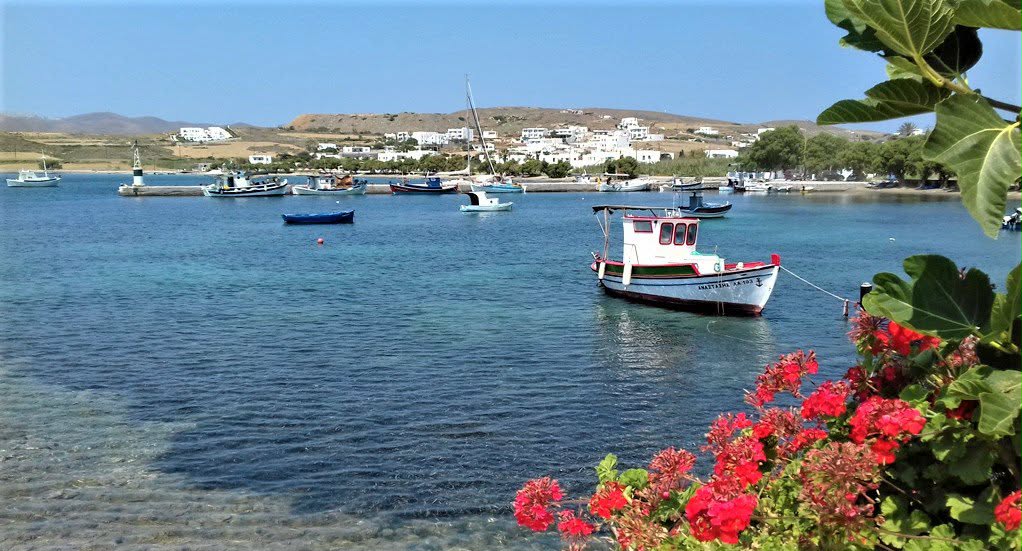
In the center of the island, the land narrows so much that a strip of only 100 meters connects its two parts. The “Stenos”, as the locals call it, divides Astypalaia into the eastern Mesa Nisi and the western Exo Nisi. Chora is located on Exo Nisi and the road connecting it to the eastern part passes by the beaches of Marmari, Steno, Plakes and Ble Limanaki, to end after 9 kilometers in Analipsi, the well-known Maltezana, the second largest settlement on the island, which probably took its name from the Maltese pirates who anchored there. Today, only fishing and tourist boats moor at the small pier, as Maltezana is mainly a holiday settlement in an area full of orchards and vineyards.
After Maltezana, the paved road leads to the quiet area of Schinoundas and from there it climbs the steep mountains of this side of the island, offering panoramic views of the Gulf of Vai, before ending at the enclosed bay of Vathy. The Vathy area is an attraction in itself, as it is a very enclosed bay with an opening of only 50 meters that resembles a lagoon.
Returning to Mesa Nisi we follow a completely different route that starts from Chora and crosses the mountains of the western side of the island, initially offering panoramic views of Chora and Livadi and then images of Exo Nisi and the quiet mountains with the scattered white churches. The end of this route, approximately 8 kilometers, is marked by the Monastery of Panagia Flevariotissa which celebrates on February 2. To the west of the island is the beautiful beach of Agios Ioannis with the homonymous picturesque white chapel between two steep slopes in an area full of orchards.
Very close to Chora is Livadi, the blooming garden of the island, which together with Maltezana and Pera Gialos constitute the largest settlements of Astypalaia. The orchards with tangerine, orange and grape trees, as well as the houses drowned in flowers, spread out across the entire length and width of the Livadi valley which ends at a beautiful beach.
Finally, Pera Gialos is today the traditional fishing port of Astypalaia, while until a few years ago it was the only gateway to the island before the new modern port of Agios Andreas was created. Nevertheless, ships of the Intradodecanese line still dock here, while the small marina that was created in recent years is particularly busy, especially in the summer.