– Tell me why you are standing, Thanasis, upright,
mute as a relic, in front of your eyes?
Why, Thanasis, are you going out at night?
Is there no sleep for you in Hades?
Now a lot of time has passed...
They threw you deep into the earth...
I'm gone, have mercy on me. I'm going to sleep.
Leave me alone to rest.
The crime you committed has taken me away.
Do you see how I became? Thanasis, sir.
Everyone is leaving me, no one is giving,
To your poor widow, alms.
Stand further away... Why are you shadowing me?
Thanasis, what have I done that you are scaring me?
How green are you? You smell like soil...
Tell me... haven't you broken up yet, Thanasis?
Tighten your shroud a little...
Worms are grazing on your face.
Damn it, look... they're flying!
and they come at me to eat me.
Tell me, where are you coming from with such a fuss?
Listen, what's going on? It's longing.
Why should you come out of your grave?
Tell me where you are coming from? What did you come to see?
E´
– Inside my grave the darkness
I was locked up on nights like this,
and there where I stood shrouded
Deep in my memory, huddled together,
Suddenly an owl landed on me.
I hear him shouting; Thanasis Vagia,
A thousand dead people were wounded.
and they will take you there.
I heard the words and my name.
My bones crack and rub.
I hide, I hide as much as I can.
Deep in my pit, I don't see them.
– Come out and show off, Thanasis Vagia,
Come on, let's run to the side.
Come out, don't be shy, they're not wolves.
Show us the way to Gardiki.
Here, shouting like madmen
The dead are falling on me.
Both with their claws and with their mouths
They fly, they dig the black soil.
And it was as if everyone found me at once
outside my grave the wilderness,
Laughing, whispering, they drag me wildly
and there, as they told me, they took me with them.
We fly, we run; it is natural,
Our passing spoils the world.
The black cloud, whatever it passes by,
The rocks tremble, the earth trembles.
The wind is blowing our shrouds
as if we were sailing with our sails.
They fall in our path and come unstuck.
The hollow bones are scattered on the ground.
The owl was crawling in front of us.
always shouting; Thanasis Vagia.
Thus we arrived at those places,
that I have slaughtered so many with this hand.
Oh, what torture! Oh! what terrors!
How many harsh curses they threw at me!
They gave me some boiled blood and I drank it.
Look, I have painted my mouth.
And in which they drag me and trample me
someone shouted... They stand and listen.
– We are glad to have found you, Vizier Ali.
Here they enter the courtyard.
The dead fall on him.
They fired me. No one stays.
I secretly left them and am running here.
With you, my wife, I will sleep.
In
– Thanasis, I heard you, pull over now.
In your memory, there is always time.
– Inside my grave for company,
I want three kisses from your mouth.
– When they threw oil and dirt at you
I came, I secretly kissed you on the mouth.
– Now a lot of time has passed…
Hell took that kiss from me.
– I ran away and shaded your wild eyes.
Your rotten flesh is falling apart.
Pull back, hide them, those hands.
From their sharpness, you might say they are knives.
– Come on, my wife, it's not me.
The one you loved once?
Don't hate me, I'm Thanasis.
– Get out of my sight, you'll bring me to hell.
He throws himself at her and grabs her,
She puts her lips into her mouth.
On her bare breasts the clothes begin,
that cover it, to tear them apart.
She undressed... her hand stretched out...
She thrusts it wildly into her bosom...
It remains as marble. Cold as a snake.
He trembles with fear, in the end.
He howls like a wolf, he trembles like a leaf...
He held the Holy Wood in his fingers.
The black one was saved, her amulet,
smoke, extinguished from her side.
Then the owl was heard too
outside, who was shouting: – Thanasis Vagia!
An attempt to analyze and connect with the current situation of Greeks by Dimitris Symeonidis JP
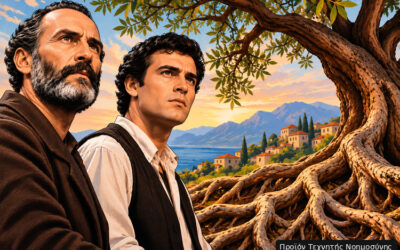
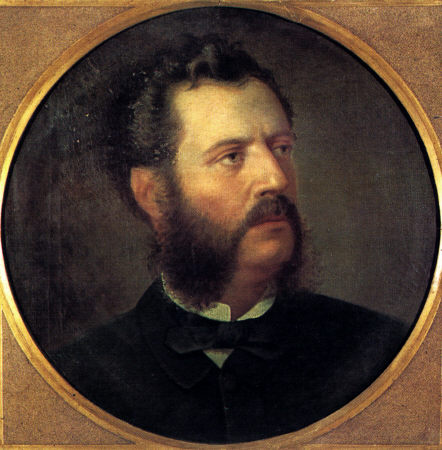
The poem "The Vampire" by Aristotle Valaoritis (1824–1879) is a dramatic and folk-style narrative in homorhyming fifteen-syllable couplets. It depicts the dead Thanasis Vagia emerging from the grave as a vampire and asking his widow for companionship, kisses and contact – an act that is ultimately thwarted when she uses the cross. (Holy Wood).
Relationship with present-day Greece
Popular tradition and superstition – The image of the vampire, revived by Valaoritis, remains alive in modern Greek folklore and popular culture (films, songs, testimonies from the countryside). Today, although not as a belief, it functions as a cultural archetype.
The relationship between life and death
The poem deals with the unfulfilled, the desire that does not fade even with death, as well as the inability to return to the past. This refers to the contemporary experience of loss, mourning and memory. – especially at a time when Greece is experiencing ongoing crises (economic, migration, health), where the dead and the living symbolically coexist.
How are burial customs and protective measures reflected in the poem:
- Mouth: The most vulnerable spot
In the poem, Thanasis Vagias describes his curse: ""They gave me some boiled blood and I drank it. Look, my mouth is painted." This image is not accidental. In popular perception, the mouth was considered the main entrance for the evil spirit or the point from which the vampire would feed.
To prevent this, the living practiced rituals to "seal" the mouth of the deceased:
Placing a candle or object: A very widespread practice, especially in Mytilene (where Valaoritis came from), was to place a piece of clay or wax, often engraved with the pentagram symbol or the inscription, in the mouth of the deceased. "Jesus Christ conquers."
Thanasis Vagias doesn't have anything like that. The fact that his mouth is "painted" with blood and asking for kisses makes him the embodiment of the uncontrollable vampire. The widow, upon seeing him, immediately realizes the threat.
- The Cross: The ultimate "antidote"
The climax of the poem comes when the widow, in order to save herself, grabs her amulet: "She held the Holy Wood in her fingers. She saved the black one, her amulet." This act is the ultimate expulsion of the vampire.
Tradition confirms that the only thing that could stop a vampire was the power of the Church. The protective measures they took were as follows:
Burial with a church ceremony
The Orthodox Church established that only proper burial could prevent a deceased person from becoming a vampire.
Excommunication
On the contrary, anyone who died excommunicated, cursed, or a violent death was almost certain to become a vampire.
Amulets and symbols:
On the grave they placed wax crosses, icons and the aforementioned symbols. The widow's "Holy Wood" (cross) is the ultimate weapon.
- The Nail: The Last Solution
This is the most violent meter and does not appear directly in the poem. Thanasis Vagias manages to get up and leave the grave on his own, without the living having to dig him up. However, popular tradition also foresaw this case.
When a vampire was suspected, villagers would exhume the corpse. If they found it "alive" (i.e. swollen, with blood in the mouth and claws that had grown), then they would proceed with the so-called "crucifixion":
Impalement (nailing): The most well-known method was to drive a stake or large nail (often iron) through the heart of the corpse, nailing it to the floor of the coffin so that it could not rise.
Beheading and burning: Other solutions were to cut off the head and bury it away from the body, or to completely burn the corpse to make it disappear permanently.
Conclusion
The poem "The Vampire" is a poetic depiction of popular superstition. It does not describe the impalement itself, but it shows us why this horrific practice was necessary:
The vampire is supernaturally powerful.: Appears spontaneously, frightens, has superhuman strength (dragging the poet through the air).
His sexual drive: His desire for his wife is his main purpose, a classic vampire trait.
The only defense is faith: All three practices (sealing the mouth, crucifixion with a stake, use of a cross) constitute a continuous escalation of violence, the pinnacle of which is not steel, but the cross.
Valaoritis, writing in the mid-19th century, is not simply describing a fictional story. He records a belief deeply rooted in the Greek countryside of his time, a belief that explained the terror in the face of death and dictated extreme behaviors, like the nailing of the dead.
The lives of today's economically suffering Greeks
The romantic poem of the 19th century with the contemporary experiential reality of the economic crisis. This connection is not arbitrary; the poem "The Vampire" can be read as a powerful allegory for the relationship of today's Greek with the past that haunts him, the unpaid debts (financial and existential) and the sense of entrapment.
- The vampire as the past that never goes away
Thanasis Vagias returns from the grave after "many years." He cannot rest, he cannot leave his wife alone. This is a strong reminder of how the economic problems in Greece during the crisis (2009-present) keep returning:
Memoranda and lenders: Like a vampire, the lenders (IMF, EU, ECB) "come out at night" and "stand silent" demanding new measures.
Taxes and contributions: The tax office, the fees, the VAT, the overdue debts — all of these act like a vampire: "The dead are falling on me" and "with their claws they dig the black soil" (the already empty bank account).
- The widow as the average Greek today
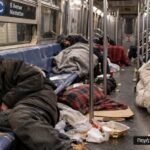
The widow is alone, poor, exhausted, and does not receive alms: “Everyone flees from me, no one gives alms to your poor widow.” This image is completely identical to:
The young unemployed: Bachelor's degree, master's degree, but no job. "Stay away... Why me?" "Are you shadowing?" employers say in front of the resume.
Retirees: With reduced pensions, without healthcare, they see their years disappear like Thanasis: "Now many years have passed... Hell took that kiss from me" — the kiss of a secure life.
- The Rotting Body: The Wear and Tear of Everyday Life
The vampire is described in gruesome detail: "green", "you smell like dirt", "worms graze on your face", "your rotten flesh falls apart". This image alludes to the mental and physical wear and tear of economic hardship:
Depression and anxiety: “Do you see how I became?” says the widow. Thousands of Greeks identify: they lost weight, suffered from insomnia, became sick from stress.
Degradation of life: The house that is not maintained, the car that is not serviced, the clothes they bought 10 years ago"Locked up in my grave" is the poor man who lives in an underground studio apartment, without heating.
- The request for "three kisses": The desperate need for human contact
Thanasis asks for companionship and kisses. He doesn't want money — he wants to feel alive through contact. Today's economically weaker Greeks experience incredible loneliness:
The family that is falling apart: Parents who cannot help their children, children who have gone abroad (the new brain drain). Contact is limited to a phone call.
The loss of dignity: When you can't pay, you avoid friends, relatives, meetings. "Don't hate me, I'm Thanasis," says the vampire. "Don't hate me, I'm your old neighbor," says the current over-indebted man.
- The "Holy Wood": The last hope
In the poem, the widow is saved only when she grasps the cross. In modern Greece of crisis, this “amulet” takes various forms:
Family help: The grandparents who share the pension, the grandmother who cooks food for everyone.
Solidarity: Social grocery stores, farmers' markets without intermediaries, mutual aid neighborhood networks.
Survival through faith or creativity:
Many turned to the church, others to music, poetry, theater — like an "Holy Wood" that keeps them standing.
- The End: Tobacco — Extinction
In the poem, the vampire is not defeated, but “smoked out.” There is no redemption, just temporary disappearance.This fits perfectly with the anguish of today's Greek:
No one knows when the next crisis will occur. No one knows if the debts will ever be written off.
Life is a never-ending battle with the specter of poverty that "smells like dirt" and "trembles like a leaf."
Conclusion
Valaoritis' poem is not just a folk horror story. It is a mirror reflecting the experience of being trapped by a force you cannot control, that returns every night, that sucks every drop of life, and that constantly demands — kisses, companionship, body, soul. Today's economically suffering Greek lives exactly this story: his past (debts, promises, dreams) haunts him like a vampire, and his only hope is small, often symbolic, resistances — his own "Honest Woods."
Curriculum:
Aristotle Valaoritis was born in Lefkada in 1824, son of businessman and senator Ioannis Valaoritis and Anastasia née Typaldou Foresti. He learned his first letters at the Lyceum of Lefkada (1830-1837), then studied at the Ionian Academy in Corfu (1838-1841) and traveled to Italy and free Greece (1841-1842). This was followed by studies in Geneva (where he obtained a Bachelor of Arts degree from the college there), Paris (law) and finally Pisa, where he was declared a doctor of law at the university there. In 1846, he contracted typhoid fever and returned to his hometown. This was followed by trips to Italy and Austria, where, at the risk of his life, he took part in actions in favor of Greek liberation. At the same time, he studied German philosophy and in 1847 he had already published his first poetry collection entitled Poems in Corfu. This was followed by a period of wandering in Italy, mainly in Venice. There he took part in student protests and met Emilios Typaldos' daughter Eloisia, whom he married in 1852. From his marriage he had three daughters (Maria, who died in 1855 in infancy, a second, also Maria, who died in 1866, and Nathalie, who died in 1875 in Venice) and two sons, Nanos and Emilio. After his marriage, he traveled to Europe for a year and when he returned to Lefkada, he strengthened the revolutionary movement of Epirus with men and money, resulting in the displeasure of the then English commissioner and being forced to leave for Italy again. In 1856 his father and mother died. In 1857 he published his second poetry collection entitled Mnemosyna, which was honored by Otto with the Golden Cross of the Savior. In 1864, he visited Athens together with the president of the Ionian Parliament and other prominent politicians and drafted the draft for the Union resolution. His appearance at the National Assembly was a great success. He was elected twice as a member of parliament in the Koumoundouros government (1865 and 1868), but he refused to assume ministerial duties. After the 1868 elections, disillusioned with politics, he retired and isolated himself on Madouri, a small island near Lefkada. There he composed the poem Diakos and Astrapogiannos, works that he published together in 1867. Following an invitation from the rector of the University of Athens in 1871, he wrote and recited with great success a poem about the Patriarch at the unveiling of his statue. He died in 1879. Shortly before his death, he wrote the first three cantos of Fotinos, a work that remained unfinished due to his death. Fotinos was included in the second collected volume of his works published after his death, in 1891. He also wrote a few translations (The Lake of Lamartine, The Thirty-third Canto of Dante's Inferno, etc.) and published articles of political and historical reflection. In Valaoritis' work, the linguistic style of the Ionian School meets that of the Athenian. His poetic works are written in simple language while his prose is in the Katharevousa. The epic nature of his works, as well as his struggles for the Homeland, earned him the honorary title of national poet, while he was still alive. Criticism was divided in the case of Valaoritis and varied from complete acceptance (Palamas, Roides, Sikelianos) to complete denial (Polylas, Panas, Bernardakis).
Πηγές :
users.uoa.gr/~nektar/arts/poetry/aristotelhs_balawriths_poems.htm
users.sch.gr/ipap/Ellinikos_Politismos/logotexnia/Biografies/valaoritis.htm
BOARDMAN JOHN: : ; Burial Rituals in the Ancient Greek World
Attempted analysis and connection with the current situation of the Greeks by Dimitris Symeonidis JP
Photo By Spyridon Prosalentis – National Documentation Center, El. Karapanagiotis Collection, Public Domain, https://commons.wikimedia.org/w/index.php?curid=6400787, https://el.wikipedia.org/wiki/