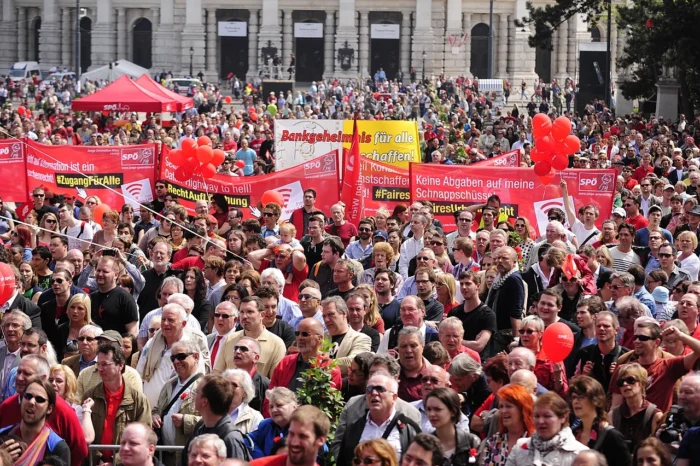
May Day is one of the most special days in the world. It is not just a holiday or a celebration of spring. It is also a symbol of life, struggle and social consciousness.
To understand why May Day is celebrated around the world, we need to look at its three main roots: nature, work, and politics.
The ancient roots: The celebration of spring
Long before it acquired a social character, May Day was a celebration dedicated to nature and rebirth.
In Europe, ancient peoples celebrated the changing of the seasons and the fertility of the land. A typical example is the Beltane festival, during which they lit fires and participated in ceremonies symbolizing the passage to new life.
The flowers, wreaths, and outdoor outings we see today are a direct continuation of these traditions.
The historical turning point: The labor movement
May Day acquired its current significance in the 19th century.
In 1886, in Chicago, thousands of workers rose up to demand the eight-hour day. Working conditions at the time were grueling, with shifts lasting up to 16 hours.
The protests culminated in Haymarket Square, where a bloody clash known as the Haymarket Affair took place.
This event shocked the world and became a symbol of the struggle for labor rights.
In 1889, the Second International established May 1 as a day of honor for workers.
The political dimension: A day with different faces
Over the years, May Day also acquired a strong political character.
In countries such as the former Soviet Union, the day was celebrated with large parades and state events.
In Europe, strikes and demonstrations dominate, aiming to demand better working conditions.
In other regions of the world, such as Latin America, the day has a strong political character and is accompanied by mass mobilizations.
Why is it not celebrated in the USA?
Although it all started in the United States, May Day is not recognized there as an official labor holiday.
Instead, the US celebrates Labor Day in September. This choice was made to avoid associating the day with the political tensions and labor movements of the time.
How is it celebrated around the world today?
Today, May Day is celebrated in different ways:
In Greece, it combines nature with struggle, with flowers and strikes.
In France, the “muguet” flower is offered as a symbol of luck.
In Germany, there are festivals as well as demonstrations.
In China, it is a public holiday and a vacation period.
In Latin America, mass labor mobilizations dominate.
Despite the differences, the day retains its symbolism everywhere.
Why is May Day celebrated?
May Day doesn't exist for just one reason.
Is:
the celebration of nature and life
the memory of workers' struggles
and a symbol of social protest
That is why it remains relevant to this day.
A symbol that never stops evolving
From the bonfires of Beltane to modern marches in the streets of Chicago and around the world, May Day continues to change form, without losing its essence.
It is a day that unites the past with the present and reminds us that progress is not a given, but the result of struggle and evolution.
From the Greek News FL journalistic team
Photo By SPÖ Presse und Kommunikation – 1.Mai 2013, CC BY-SA 2.0, https://commons.wikimedia.org/w/index.php?curid=27915433, https://el.wikipedia.org/wiki/