
Interview at Eleni Ghika
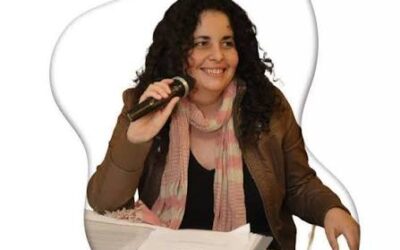
"I always wrote two or three lines in moments that were particularly difficult for me. But systematically and with some first poetic impulses, I began writing at the beginning of the Greek crisis, I continued throughout its duration and I persist." Recognizes the well-known journalist Ritsa Masoura, presenting her first poetry collection: "My poetry in a given period was the tool to scatter to the five winds the sobs and pain of many decades. This in itself shielded me. On the other hand, journalism continues to intrigue me. It has, after all, the privilege of evolution through new technologies. The mind is perhaps sharpened, although many argue the opposite," she will tell us, talking to us about poetry, journalism, and life. "Anchors are of no use" he will tell us in every way, moreover, he chooses this phrase as his title in this poetic cycle of life.
-Mrs. Masoura, does poetry come to us when journalism is no longer enough?
I don't think there is a "blood bond" between journalism and poetry, and if there is, I haven't discovered it. Journalism publicizes events, situations, penetrates the lives of others, but only for the sake of informing the public. On the contrary, poetry is a strictly internal affair that occasionally climbs to the surface, to the outside world, perhaps because it needs to be shared with others, perhaps because it is looking for a kind of acceptance. Personally, I enjoyed journalism in its very good times. Poetry - if we assume that what I write falls under the category of poetry - found me in really difficult moments, in great impasses and became a kind of refuge, a nest, where theoretically I could protect myself. There were moments when I felt the huge wing of an eagle covering me. I still struggle with those first feelings.
-Can you pinpoint exactly the moment when poetry won you over?
I don't know if it has won me over completely. It attracts me, though. I may be peeling beans and simultaneously composing verses in my head. Then I forget them, but I have retained some words and I build on them. This process began at a rapid pace along with the crisis. Almost planned. I'm telling the truth. Many times, as I think about it in retrospect, I think someone had planned the day and time when I would start writing systematically and throw my notes in the desk drawer, where I would forget them. From then on, various small life episodes intervened until I reached publication. And again by chance…I was published, when friends on Facebook, reading certain poetry series, wrote: “be published, be published” and when Syssi Kaplani of “Fildisi” publications accidentally read something of mine and convinced me that it was worth…being published. However, I must confess that publishing poems requires courage and audacity, when this country has experienced the power of its great poets. However, I often think that moving even at the base of a pyramid is not bad and, above all, you do not bother anyone, as you do not seek positions and titles.
-Why "Anchors are useless", Mrs. Masoura?
Look, the title of the poetry collection came from a poem titled “Compromise”, dedicated to my husband, whom I lost very young, at just 33 years old. And he “left” during a period of real calm for my family and for our relationship, so that same night of loss I thought that there was nothing I could do to keep him anyway. It was fateful that he would leave after a terrible car accident. Yes, there is something fatalistic about the title of the collection. In one of his letters to Wilhelm, Werther says: “what else is the destiny of man than to accept his fate, and to drink the cup to the end?” On the other hand, I believe that man should be free, to live according to his own principles and his own choices. It is unpleasant to keep him anchored in the harbors of life and the soul, of course.
-And, finally, what is the poetic cycle "Anchors are of no use"? Removal of certainties? Awareness, recognition, self-knowledge, acceptance?
You know, the loss of a loved one creates fait accompli and automatically creates a multitude of existential dilemmas. It dissects and recomposes the person's pain, puts them on a search channel for other ideals, demolishes or builds frameworks for them. ``So, this particular poetry collection is an experiential narrative that does not seek acceptance. I do not write to... please. I narrate what I have personally experienced or have recorded in the lives of others. They are letters that should have found recipients on earth, but also in the galaxies, years ago. That is why I consider it a happy coincidence that the book is adorned with paintings by our great artist Yannis Psychopaidis from the series "The letter that did not arrive". As for the self-knowledge that you ask me, I do not know if I will ever reach it. In my next collection, I have already prepared a verse about her, hoping to touch her, even if only superficially. This is a great talk, Mrs. Ghika!
-You have a huge journalistic career behind you, life. But also today, Globalview. Does a journalist ever stop being and feeling like a journalist? How many of the topics that are burning for you also cross over into your poetic journey?
A journalist can remain a journalist until the end. This does not prevent him from feeling a drop of a poet, even of the third category. And it is true that in the last decade, the two parallel roads have often met in a hasty and sometimes authoritarian way. In the sense that they claim their space over me.
As for www.Globalview.gr, it was my little son's idea and I embraced it with love because of both my son and my passion for journalism. In reality, www.Globalview.gr is a somewhat parochial news magazine. It is based on six or seven excellent friends, who write because they want to write. Each one has their own column – Efi Agrafiotis, Iris Kritikou, Angelos Petroulakis, Eleni Gournelou, Xeni Baloti, Lena Merika, Christina Filippa – and I have to say, apart from thanking them warmly, that their columns are generating crazy numbers. All the other topics fall into the category of "stealing" (I'm not proud of this part) and by numbers, um, below the minimum.
-Is Globalview your answer to today's journalism? The continuation of a life where you care about and are cut off by others and the commons?
I wouldn't dare say that it is a response to today's journalism. It is a titanic effort to remain an active member of the great journalistic family, it is a means of keeping in touch with developments, domestic and international, a trigger to search for news, to test my strength as a unit. I belong to the category of people who care about the common good. I think that through the establishment of globalview.gr and through my columnists, this special interest in humanity is highlighted, without, however, claiming laurels for the slightest thing.
-Do you feel that poetry or journalism makes you stronger?
My poetry at a given period was the tool to scatter to the five winds the sobs and pain of many decades. This in itself shielded me. On the other hand, journalism continues to intrigue me. It has, after all, the privilege of evolution through new technologies. The mind is possibly sharpened, although many argue the opposite. Personally, I believe that the mind is indeed sharpened, it is simply that man moves on many levels and this is not necessarily positive or does not have a positive effect on everyone. Therefore, when you are in such a powerful field of action, you also feel powerful. Poetry can become nostalgic, lost in memory. It will be difficult to project it into the future, because the poet cannot know in advance how his emotional world will be shaped. Unless he builds a world exclusively in his imagination. In conclusion, I would dare to claim that both – journalism, poetry – make me stronger towards myself.
-Are our most precious things preserved through poetry or journalism? Valuables?
The valuables that I believe we all have hidden somewhere are rescued through poetry. Journalism does not have such roles. A rescue can describe it, but that's it. On the contrary, poetry is a huge shooting range for souls that perceive their myriad shortcomings, the shortcomings of others and at the same time attempt to atone for themselves or at least believe that the feeling has found a way to be shared, to spread...
-When did you first write poetry, Mrs. Masoura? On what occasion?
I always wrote two or three lines in moments that were particularly difficult for me. But systematically and with some initial poetic impulses, I began writing at the beginning of the Greek crisis, I continued throughout its duration, and I persist.
-Which lyrics reached you, somehow... strangely?
Mainly lyrics by Dinos Christianopoulos, about whom I didn't know much and who generally weren't - at the time - of my own...school. I met him by chance in a well-known bookstore in Athens and while talking to him I felt the need to get into his own language. I'm still trying, although I think his lyrics suit me. For example: "Those who taught us weigh more heavily on us / but how much longer will your tenderness last? / What was sweet to us, time and communication washed away / those who smiled at us, sank into deep wells / and only those who hurt us remained / those who refused to submit to them / Those who taught us weigh more heavily..."
-Liters that have already accompanied you for a lifetime?
One of the lyrics that I loved because they always connected with the phases of my life is written by Manolis Anagnostakis: “We ate well, we drank well/ We brought our lives to this point well/ Small losses and small gains offsetting/ The question now is what do you say.” And this happened continuously until I found a new beginning to begin a new journey.
-Can you choose for us a poem that is completely you?
With assault flags
Often, those mornings
I was walking the streets.
with assault flags
I believed in the cosmogenic changes of the era
I was hiding within myself deceptive doses of radicalism
and I felt capable of tearing down fortresses
Unfreedom
Puritanism
Conservatism
Superstition
It was my way of facing the crisis.
I had forgotten that History has its own substratum
often inaccessible from my own immediacy
And so
I picked up the thread again from the beginning.
with half the assault flags now
-Mrs. Masoura, will you continue both poetically and journalistically?
I think it is within my intentions to continue with both, although I always keep in mind the well-known saying: “the present are the people, the future are the gods”. I would like to publish the Persons, my own Persons that I had for many years in Kathimerini. I am thinking about possibly presenting them in another version. I would also like to publish another poetry collection, although I will say again that I do not consider what I write to be poems, nor do I believe that I seek the magic of words to impress. I am simple, spontaneous and subjectively authentic when I write.
-Were you afraid of poetry at all? You know it's revealing, you're not hiding anything from us anymore.
Living for years in a peculiar regime of "exposure", through my newspaper writing, where the strictest judge must be yourself and then the reader, and then being excessively present on social networks, I did not feel afraid of my lyrics. I did not feel that they could threaten me, become a boomerang or anything else. I am not afraid of negative criticism either, although I surprised many of them and some may have said "but now she remembered it too?"
You know better than I do that it is not easy to make your thoughts public. But it is not scary either. Everything I wrote in this first collection was and remains a deposit of the soul. The reader can interpret them as he sees fit. I do not tell him how. In any case, in all these cases, in poetry, literature, painting, cinema, the subjective element that maintains its uniqueness deeply penetrates. If, of course, at some point many subjective elements coincide, that critical mass is created that automatically sets the scene – positive or negative. I do not know if this will happen in my case – I may not be read enough for any critical mass to exist – but I will repeat that my experiences and the way I expressed them on paper are very important to me myself. If they happen to like them, even better.
-Could I ask you for a brief account of the decade we left behind? And your poetry, by the way, is not egocentric.
I am terrified by the accounts. I cannot find words to describe what our country has experienced and is experiencing. Words are poor for such a description or for such an account. Shattered lives, fragile lives, bursts of endless pain, humiliation, dehumanization, political brutality from within and without. Rousseau believed that man is born good, but is then corrupted by culture and society. During the crisis, some theorists of goodness were certain that we would become better people. The exact opposite happened. In my collection there is a poem entitled "A Mistreated, Ultimately, Well-Being". (In the chapter: Cries of a Universal Crisis). In this poem I pile up everything that I believe happened. A land covered in ashes, a people awaiting redemption, but also an absence of answers for what crushed us.
The interview was published in Phileleftheros and on Fractalart.gr
Picture https://www.thepresident.gr/2019/12/29/oi-agkyres-den-ofeloyn-i-poiitiki-syllogi-tis-ritsas-masoyra/
The President