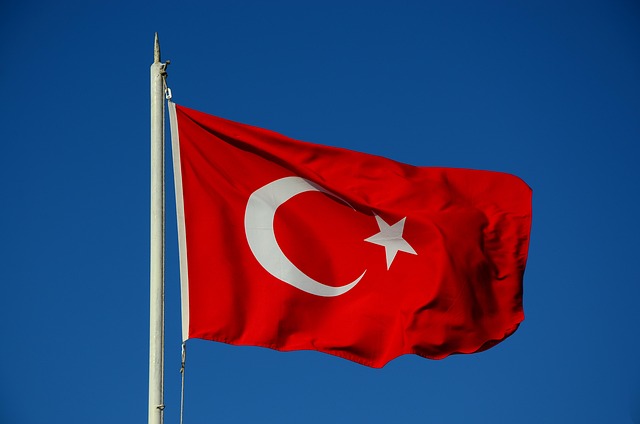
Lieutenant General (retd) Ioannis Baltzoi analyzes Turkey's latest moves on "Thessaly Television" and explains why he believes that no escalation scenario in the Aegean should be ruled out.
The risk of escalation in Greek-Turkish relations and even a serious heated episode was highlighted by Lieutenant General (retd) Ioannis Baltzoi, speaking on "Thessaly Television", in an extensive analysis of Turkish movements in the Aegean, Kastelorizo, Greek deterrent power and the strategic cooperation between Greece and Israel.
Mr. Baltzoi claimed that Ankara is following Athens' latest moves with particular concern, particularly highlighting the "Achilles Shield" program as well as the deepening of the strategic relationship with Israel.
"What burns them even more is this strategic alliance we have with Israel," he said, assessing that this is a development that seriously affects Turkish strategic calculations.
The "three wars doctrine"
Of particular interest was his reference to the so-called "three wars doctrine", which, as he said, Turkey applies towards Greece.
Ioannis Baltzoi described it as a model that includes three parallel levels of pressure:
the war of public opinion, with an attempt to shape the domestic and international audience; the psychological war, with threats and cultivating fear in the opponent; and the legal war, through the questioning of international legality and the different interpretation of treaties and the Law of the Sea.
As a typical example of psychological warfare, he recalled earlier Turkish threats of surprise action "one night", integrating Ankara's current rhetoric into a broader pressure strategy.
What did he say about Dodecanese and Kastelorizo?
Much of the discussion concerned Turkish objections to the demilitarization of Greek islands.
Mr. Baltzoi focused specifically on the Dodecanese Islands, emphasizing that Turkey is not a party to the Treaty of Paris, through which the islands were ceded by Italy to Greece.
In his position, Ankara is not entitled to raise claims based on this specific treaty.
He made particular reference to Kastelorizo and the strategic importance of the complex, noting that the region is at the core of the Greek-Turkish confrontation in the Eastern Mediterranean.
Asked if Kastelorizo could be the target of a Turkish operation, he replied:
"It could be a target. Of course, anything is possible."
"We may have exchanges of fire"
When asked whether the situation could lead to a heated incident, Ioannis Baltzoi appeared categorical in that no possibility should be considered impossible in advance.
"Of course it can happen," he said, adding that there could even be a "very big incident" with exchanges of fire.
He was quick, however, to clarify that he refers to probabilities that must be taken into account in strategic planning and not to certainty that a conflict is imminent.
He even emphasized the importance of preparing the islands of the Eastern Aegean, stating that there are operational plans and citing his personal military experience from Samos and other islands as an example.
The Imia and the accomplished
The discussion also reached the Imia crisis, with Mr. Baltzoi arguing that Greece could have adopted a different stance towards the presence of Turkish forces at the time.
The main lesson it highlighted is the risk of creating new faits accomplis through limited military action, without it necessarily evolving into a generalized war.
In the same context, he referred to Turkish positions which, according to his analysis, indicate increased preparation even for the possibility of a serious military crisis.
The Turkish "bell" for 2030
One of the most important points of the intervention was his reference to a study by a Turkish institute which, according to him, also informs the Turkish Ministry of Defense.
As he described, this specific analysis views the "Achilles Shield" as an extremely important development because it combines air defense, intelligence, early warning, network-centric operations, and a closer connection of Greece with Israeli military technology.
According to Mr. Baltzoi, the Turkish approach sees a new strategic architecture taking shape from the Aegean to Israel.
At the same time, he referred to the strengthening of the Greek Navy and the prospect of acquiring the F-35, arguing that there is concern in Turkey about how the balance will be shaped by the end of the decade.
According to what he conveyed from the Turkish study, the question posed on the other side is why should Turkey wait until 2030, when Greece will have significantly strengthened its military capabilities.
This is a point that he believes needs to be evaluated very carefully by Athens.
"Don't just count cannons and planes"
Ioannis Baltzoi rejected the mechanistic comparison of numbers between the two Armed Forces.
"They don't count cannons, airplanes, and so on," he said, citing the Thucydidesian notion that the determining factor is not only the means, but the people who use them.
He argued that Greece has deterrence capabilities and that numerical superiority should not be treated as the sole indicator of the outcome of a potential conflict.
The issue of Turkish drones
He appeared particularly sharp about Turkish drone flights.
In his view, Greece should first clearly warn that no unauthorized flights over Greek territory will be tolerated and then implement in practice the rules it has set.
He even cited as an example the shooting down of a Russian aircraft by Turkey in 2015, arguing that the protection of national airspace is part of the rights of a state.
This position constitutes his personal assessment and proposal for how such violations should be dealt with.
What does he expect from France and Israel?
The retired lieutenant general clarified that in the event of a Greek-Turkish crisis, direct military involvement of allies in favor of Greece should not be taken for granted.
On the contrary, he emphasized that in modern warfare, logistical support, information and diplomatic support play a crucial role.
According to his assessment, at these levels, Greece could count particularly on France and Israel.
For the United States, he appeared more cautious about exactly how they would react to a Greek-Turkish crisis, although he assessed that Washington would have no interest in a serious conflict between two NATO member states.
"The Shield of Achilles takes about three years"
At the end of his intervention, Ioannis Baltzoi explained that the "Achilles Shield" is not a system that can be activated in its entirety from one day to the next.
He estimated that its full development will require approximately three years, as it is a multi-layered system in which existing radars, anti-aircraft weapons, sensors, warships and aircraft will need to be integrated into a common platform.
He gave particular importance to the role of Artificial Intelligence, which will collect and process a large volume of data, evaluate threats and prioritize them for the people who will be responsible for the final decision.
As an example, he cited the use of similar technologies by Israel in its operations against Iran, arguing that Artificial Intelligence can drastically reduce the time required to process huge amounts of operational information.
The video follows:
https://www.youtube.com/watch?v=iO8Jx3YyPQk&t=1s
photo sevgixnumx, https://pixabay.com