Information attributed to government sources speaks of pressures due to its stance towards Turkish interests. The Vertical Energy Corridor, the billions in natural gas, the powerful lobbies of Washington and the battle for control of the Eastern Mediterranean.
Geopolitical research and analysis | Greek News & Radio FL
October 16 2026
In international politics, nothing can be considered detached from the interests that shape the decisions of the great powers.
Behind the diplomatic twists and turns lie economic pursuits, energy deals, political connections, and rivalries that are rarely revealed in their full extent.
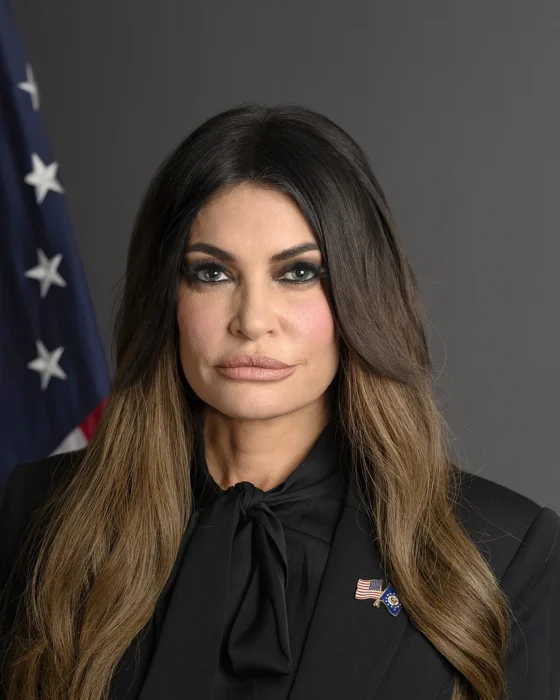
The removal of the American ambassador to Greece, Kimberly Guilfoyle, on October 13, 2026, comes at a particularly critical period for Greek-American relations.
A period in which Greece claims a leading role in the new energy map of Europe and Turkey attempts to maintain its geostrategic influence.
The White House's official decision followed a series of publications with allegations about the ambassador's behavior and her relationships with business figures. She categorically rejects the accusations.
However, the case becomes even more interesting when examined in the light of energy interests and intense behind-the-scenes competition in Washington.
Why was an ambassador who had taken an active role in promoting American energy interests in Greece removed? Who is affected by her departure and who may benefit from the change in balance?
These questions take on particular importance following information attributed to government circles regarding pressures for her removal.
GOVERNMENT SOURCES AND BEHIND-THE-SCENE PRESSURES: WHAT DISTURBED GUILFOYLE'S ATTITUDE?
In the diplomatic background, a particularly serious allegation is being made, which is attributed to sources from government circles.
According to this information, pressure was allegedly exerted to remove Kimberly Guilfoyle because her stance on important energy and geopolitical issues did not serve Turkey's interests.
This information has not yet been independently confirmed by published documents or named government testimonies. However, its content raises questions that deserve serious journalistic investigation.
Guilfoyle had advocated for energy cooperation between Greece and the United States and promoted the transport of American liquefied natural gas to the European market.
This policy strengthened Greece as an alternative energy gateway to Southeastern Europe.
At the same time, it created a new competitive factor for Turkey, which has been seeking for years to emerge as a key energy transit hub.
The question that arises is essential:
If pressure was indeed exerted against the American ambassador, who exerted it, through what channels, and with what ultimate goal?
Was it about political interventions?
For pressures from business interests influenced by energy agreements?
For activities of organized lobbies with access to American centers of power?
Or about an internal American affair, which third parties could exploit to their advantage?
The answer requires specific evidence.
What is already known is that Turkey has an organized interest representation presence in Washington and seeks to influence decisions regarding US-Turkish relations.
Therefore, the investigation of the case cannot ignore the power competition between Athens and Ankara.
When billion-dollar contracts and control of critical energy routes are at stake, the fate of a diplomat takes on a significance far greater than his personal political career.
THE VERTICAL ENERGY CORRIDOR: THE GREAT GEOPOLITICAL STAKE
The Vertical Energy Corridor is not just a technical natural gas transportation project.
It is a strategic initiative that can change the balance in Europe's energy supply.
Through Greek energy infrastructure, natural gas, including American LNG, can be transported to Bulgaria, Romania, Moldova and Ukraine.
This particular route takes on particular importance at a time when the European Union is seeking to reduce its dependence on Russian natural gas.
For Greece, the project means increasing its geostrategic value, strengthening energy infrastructure and new investment opportunities.
For the United States, it means expanding the European market for American LNG exports.
For Eastern European countries, it means more possibilities for diversifying supply sources.
On February 25, 2026, the US Department of Energy brought together representatives from Greece, Bulgaria, Romania, Moldova, Ukraine and the European Commission in Washington, with the aim of promoting the project.
The US government has, therefore, confirmed with official actions the importance of the project.
Whoever controls the energy routes gains economic power and diplomatic advantages.
This is one of the main reasons why competition in the Eastern Mediterranean is becoming increasingly intense.
TURKEY AND THE BATTLE FOR ENERGY DOMINANCE
Turkey has invested significant political capital in its effort to transform itself into an energy hub connecting Asia, Russia, the Middle East and Europe.
The pipelines that pass through its territory offer Ankara significant negotiating power.
At the same time, the Turkish government is using its geographical position to strengthen its regional role.
The emergence of Greece as an alternative energy hub creates different balances.
It does not mean that the two countries are necessarily in conflict on every energy issue.
But it does mean that they compete for investment, infrastructure, international collaborations, and political influence.
Turkey does not wish to be sidelined from the most important energy developments in the region.
Greece, respectively, seeks to utilize its geographical position without depending on Ankara's choices.
In this environment, Guilfoyle's active support for Greek-American energy partnerships took on particular importance.
If the information about pressures associated with her refusal to serve Turkish aspirations is confirmed, then the case will take on much broader geopolitical dimensions.
For now, this possibility remains under investigation.
TURKISH LOBBY IN WASHINGTON AND THE MONEY OF POLITICAL INFLUENCE
Exercising political influence through lobbying is a recognized activity in the United States.
There is, in fact, a specific legal framework that requires the declaration of activities representing foreign interests.
Turkey has a significant presence in this system.
According to a report by Turkish Minute on August 14, 2026, the ruling Turkish AKP party had transferred approximately $6,2 million to its Washington delegation since 2024.
The amount included expenses for the purchase and operation of facilities, as well as for the party's organized presence in the United States.
The event reflects Ankara's economic and political investment in the American capital.
It is not in itself an indication of illegal activity.
It reveals, however, that the Turkish side views the representation of its interests as a permanent strategic priority.
And here another crucial issue arises.
How effective is the Greek presence in Washington's decision-making centers, when it is opposed by organized and financially powerful mechanisms for representing interests?
The Greek diaspora is an important factor of influence.
Relations with Congress, Greek-American organizations and personal contacts with political figures have played an important role over time.
However, modern diplomacy requires a constant strategic presence, institutional organization and professional handling of international competition.
BUSINESS INTERESTS AND COMPLAINTS ABOUT GUILFOYLE
The removal of Kimberly Guilfoyle cannot be examined without reference to the previous reports.
On September 25, 2026, the Wall Street Journal presented an investigation into the American ambassador's relations with Christos Marafatsos, a registered lobbyist for the Greek company AKTOR.
According to the investigation, the specific business representative had participated in a series of diplomatic contacts.
The issue caused reactions in the United States.
On October 1, Democratic Representative Gregory Meeks formally requested an explanation from the State Department.
On October 6, Senator Jeanne Shaheen also called for an investigation into the allegations.
The reactions mainly concerned the extent to which a public official can promote private commercial interests through his diplomatic capacity.
Additional complaints followed, including allegations of financial demands against individuals and providing access to political figures.
Guilfoyle denied the allegations.
On October 13, the White House announced that she had been asked to resign.
This is the confirmed sequence of events.
Whether there were other behind-the-scenes pressures is a separate issue that needs documentation.
The existence of real complaints does not preclude their political exploitation. However, political exploitation does not prove that the complaints were fabricated.
THE RUBIO VISIT: WHY TIMELINESS RAISES QUESTIONS
On October 7, 2026, US Secretary of State Marco Rubio paid an official visit to Athens.
His speech at the Pnyx, with the Acropolis in the background, had special historical and political symbolism.
During the visit, the importance of the strategic cooperation between Greece and the United States was confirmed.
The talks included energy, defense and diplomatic issues.
Greek Foreign Minister George Gerapetritis referred in particular to the Vertical Energy Corridor and Greece's role in transporting American LNG to Central and Eastern Europe.
Six days later, Guilfoyle was removed from her position.
The time sequence created intense political interest.
The revelations had begun before Rubio's visit, a fact that must be taken into account.
However, it remains a subject of political analysis whether the development affected the dynamics of Greek-American relations.
Guilfoyle's departure deprived the US embassy in Athens of a person with personal connections to Donald Trump's circle.
And this is particularly important in a political period where personal relationships often influence access to the highest centers of power.
ROBERT MENENDEZ AND THE LOSS OF A STRONG SUPPORTER OF GREEK POSITIONS
The Guilfoyle case brings Robert Menendez's political career back into the discussion.
The former US senator has been a long-time supporter of Greek and Cypriot positions in US foreign policy.
He had strongly criticized Turkey on a number of issues, while supporting initiatives to strengthen cooperation between the United States, Greece and Cyprus.
His conviction and departure from the American political scene marked the loss of an important supporter of Greek positions in Congress.
Menendez was convicted of corruption offenses and on January 29, 2025, he was sentenced to eleven years in prison.
His court case involved, among other things, bribery and actions in favor of foreign interests, particularly Egypt.
The loss of his political influence changed the balance on issues that concerned Greece and Turkey.
It is, therefore, not unreasonable to examine who benefited politically from his departure.
What is required, however, is to separate judicially proven acts from assessments of their geopolitical consequences.
TOM BARACK AND THE ANCHOR INFLUENCE
Another person who is gaining particular importance in the geopolitical environment is the American ambassador to Turkey, Tom Barrack.
Barack maintains close relations with Donald Trump and has undertaken important diplomatic missions in the wider region.
On September 23, 2026, he publicly emphasized the importance of US-Turkish defense cooperation and described the relations between the two governments in positive terms.
Ankara therefore has an American ambassador who actively promotes cooperation between the two countries.
Guilfoyle's departure creates a different diplomatic environment in Athens.
It does not mean that Barack exclusively determines American foreign policy in the region.
The comparison, however, highlights the importance of access to American decision-making centers.
Greece should not depend on the personal relationships of an ambassador for its strategic power. It needs a stable and organized institutional presence in Washington.
THE AEGEAN, THE EEZ AND THE NEXT GEOPOLITICAL RECONSTRUCTIONS
The Eastern Mediterranean is at the center of important international competitions.
The disagreements between Greece and Turkey over maritime zones, the continental shelf and the exclusive economic zone are linked to broader issues of security, energy and international law.
Greece is called upon to protect its sovereign rights, while at the same time seeking to strengthen its strategic partnerships.
Turkey, for its part, seeks to maintain a strong role in regional developments.
American foreign policy is one of the factors that influence these balances. Therefore, any change in the diplomatic representation of the United States in Greece acquires particular interest.
It should not, however, be considered a priori an indication of a specific plan for the Aegean.
The point is to monitor the actual decisions that will follow.
Which energy agreements will move forward?
How will US-Turkish relations evolve?
What stance will Washington take towards Greek positions?
And who will take on the task of representing the United States in Athens?
The answers will reveal more about the future direction of American politics than any speculation.
WHO BENEFITS FROM THE CHANGES IN BALANCE?
Guilfoyle's removal creates new realities, not because American policy depends solely on one person, but because diplomatic connections have practical value.
Significant American, European and regional economic interests are active in Southeastern Europe.
Large energy groups are vying for contracts.
States compete to attract investment.
Business networks seek access to government decisions.
Russia is interested in maintaining its influence in the European energy market.
Turkey seeks to strengthen its role as a transit hub.
The United States is promoting LNG exports and its energy presence in Europe.
Greece is at the epicenter of this rearrangement.
This means that its energy upgrade creates opportunities, but also competition.
Every new energy deal redistributes economic benefits and political influence.
And every such redistribution provokes reactions from those who feel they are losing part of their position.
The Guilfoyle case must also be examined within this broader context.
Not to assign responsibilities without evidence, but to investigate whether the decision had consequences that go beyond the specific diplomatic position.
GREECE SHOULD NOT BECOME THE FIELD OF CONFLICT OF FOREIGN INTERESTS
Greek foreign policy is facing significant challenges.
The country's energy upgrade represents a significant opportunity.
Cooperation with the United States can strengthen its economic and strategic position.
However, international relations cannot rely solely on the goodwill of individual politicians.
Greece needs continuity, institutional credibility and clear orientation.
It needs to know which agreements truly serve its national interests.
It needs to monitor the movements of competing states, but also to exploit the possibilities for cooperation where they exist.
Above all, it needs to have sufficient information about the decisions made in Washington that directly affect our region.
The removal of Kimberly Guilfoyle undoubtedly creates a new situation.
The information about pressure due to her stance towards Turkish interests is a serious allegation that needs further investigation.
The answer cannot be derived from the analysis of economic interests alone.
It is necessary to examine the actual diplomatic moves, public decisions, and any element that could shed light on the background.
EPILOGUE — THE REAL HIT BELOW THE BELT
In geopolitics, the most significant blows do not always come from open conflict.
They may arise from the gradual shift in international balances, from the loss of access to decision-making centers, or from the change in economic and energy alliances.
The Kimberly Guilfoyle case is not just about the resignation of an American ambassador.
It also concerns a period in which Greece is gaining greater geostrategic importance, while powerful state and business interests are claiming a share of new energy developments.
Information about pressures allegedly linked to Turkish interests adds a dimension that deserves careful and persistent investigation.
The goal is to reveal whether there were such interventions, who participated, and whether they actually influenced the White House's decision.
Even more important, however, is to examine what the new situation means for Greece.
Because behind diplomatic changes there are interests. And behind interests there are strategic choices that can influence the future of entire countries.
Greece must be at the table where decisions that concern it are made.
Not as a simple observer.
But as a country with its own interests, strong alliances and clear strategic priorities.
The big question, then, is not just who sought Guilfoyle's removal.
They are the ones who will shape the next day in relations between Greece, the United States and Turkey.
And most importantly: Will Greece determine its own geopolitical role or allow the interests of others to determine it?
sources
Reuters, October 13, 2026 — Removal of Kimberly Guilfoyle and White House statements.
Associated Press, October 14, 2026 — The impact of the ambassador's departure on Greek-American relations.
The Wall Street Journal, September 25, 2026 — Investigation into Guilfoyle's ties to energy business figures.
House Foreign Affairs Committee, October 1, 2026 — Official intervention by Gregory Meeks.
US Senate Foreign Relations Committee, October 6, 2026 — Intervention by Jeanne Shaheen on the allegations.
US Department of Energy, February 25, 2026 — Official announcement on the Vertical Energy Corridor.
Greek Ministry of Foreign Affairs, October 7, 2026 — Statements by Giorgos Gerapetritis after the meeting with Marcos Rubio.
US Department of Justice — Robert Menendez sentencing details.
Turkish Minute, August 14, 2026 — Data on the financing of the AKP delegation in Washington.
Press note: The reference to pressure linked to Turkish interests is attributed to information from government sources and has not yet been independently verified. Its publication as an allegation does not constitute confirmation of its validity.
Photo By US Embassy & Consulate in Greece – https://gr.usembassy.gov/wp-content/uploads/sites/188/2025/10/Kimberly-Guilfoyle-Official-Portrait.jpg, Public Domain, https://commons.wikimedia.org/w/index.php?curid=177916933, https://en.wikipedia.org/wiki/