In the Netherlands, people with severe dementia live in a safe neighborhood with houses, streets, squares, cafes and shops — a model that forces us to wonder how truly European Greece is.
There are societies that measure their progress by skyscrapers, highways, and economic indicators. But there are also societies that measure their civilization by the way they care for their most vulnerable people.
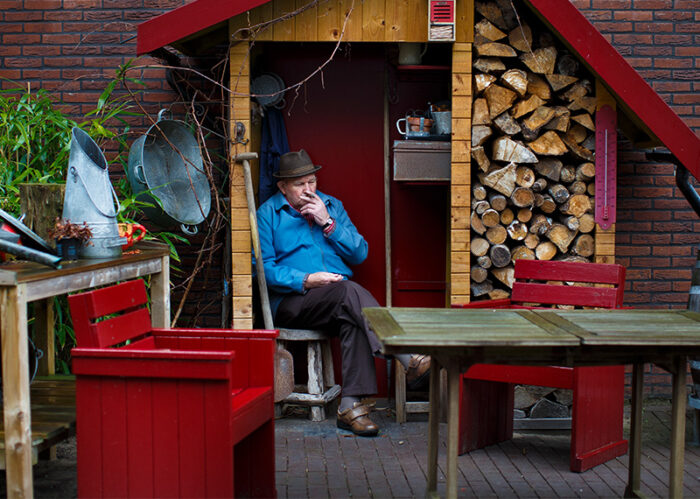
In the Dutch town of Veesp, near Amsterdam, is De Hogeweyk. At first glance, it looks like an ordinary, nicely organized neighborhood. It has houses, streets, courtyards, squares, a restaurant, a café, a supermarket, a theater, a hair salon, and social activity spaces.
In reality, however, it is a specialized residential and care community for people with severe dementia.
De Hogeweyk was completed in 2009, following an effort to change the traditional care model that had begun as early as 1993. It currently has 27 houses, housing a total of around 188 people. Each house is home to six or seven residents, with shared habits and a similar lifestyle.
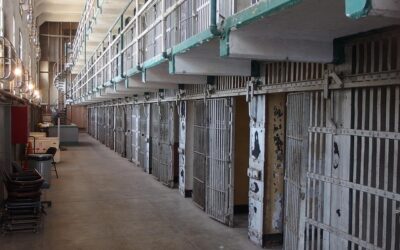
There are no cold hospital corridors, faceless wards and a daily life built exclusively around the disease. Residents can walk, visit the supermarket, have a coffee, participate in activities or sit in a square. They move freely within a carefully designed and protected space.
Security exists, but it is not imposed in a way that resembles confinement.
The unit operates with approximately 200 full-time employees and has nurses, doctors, psychologists, physiotherapists, social workers and other professionals. Specialized care is provided around the clock, but is organized as discreetly as possible, so as not to interrupt the normal daily life of the residents.
Here, a common myth needs to be corrected. The workers are not actors pretending to be vendors or neighbors. De Hogeweyk is not a fake village and people with dementia are not participating in some staged reality. The restaurant, supermarket, theater and other services are real. The people who work there are practicing their profession normally, while also having the training to support the residents when needed.
This is the essence of the Dutch model: dementia does not abolish human status. A person does not become a room number, a medical file, or a body that simply needs to be fed and taken its medication.
He still needs choices, movement, social contact, intimacy and dignity.
De Hogeweyk is not a paradise without problems. The creation and operation of such a community requires money, specialized staff, constant supervision and an entire philosophy of social care. Scientific research on the so-called “dementia villages” continues, and experts point out that more comparative studies are needed to accurately evaluate all their effects.
The most important thing, however, is already before our eyes: a society has dared to ask itself not only how to keep people with dementia safe, but also how to allow them to continue living.
And here begins the difficult comparison with Greece.
Our country will celebrate forty-five years of membership in the European family in 2026. Nevertheless, instead of comparing our social structures, hospitals, education and care for the elderly with the best European standards, we often choose the convenient comparison with countries that we consider to be behind us.
We constantly hear that “we are better than Turkey” or that “we are not like Bulgaria.” Even if we accept these comparisons, what exactly do they prove? That we should be happy because we are not in last place?
Greece should not look to lower benchmarks to feel successful. It has been a member state of the European Union since 1981. Its role models should be countries that build better hospitals, stronger social services, and more humane care structures.
According to the World Health Organization’s report on long-term care in Greece, approximately 214.000 people in the country are estimated to be living with dementia. At the same time, access to public long-term care services remains limited and much of the burden continues to fall on families.
Behind every person with dementia, there is usually a family that is anxious, exhausted, stays up all night and tries to fill gaps on its own that an organized state should cover.
De Hogeweyk doesn't just show us how a different care unit can be built. It shows us how a society understands the value of a person when they can no longer defend their rights on their own.
Real development is not demonstrated in words, nor in national comparisons that flatter our egos. It is demonstrated in social structures, in the daily lives of the elderly, in family support, and in the way people are treated when they fall ill and become vulnerable.
How many centuries can a society go? As many as it takes to understand that a dementia patient doesn't just need supervision. They need life, freedom, safety, and dignity.
Because in the end, something very simple is true:
Show me your standards, I'll tell you how far you can go.
Πηγές
video source
The “dementia village” that's redefining elder care – TED
photo https://hogeweyk.dementiavillage.com/