There are moments in History when reality surpasses even the boldest scenario.
If someone had said a few years ago that a television personality, an actor, comedian, performer and producer, who had even played the president of Ukraine in a television series, would later become the country's real president and then one of the most central figures in a war in which hundreds of billions of dollars and euros have been mobilized, we might have accused him of being overly imaginative.
And yet, this is the reality.
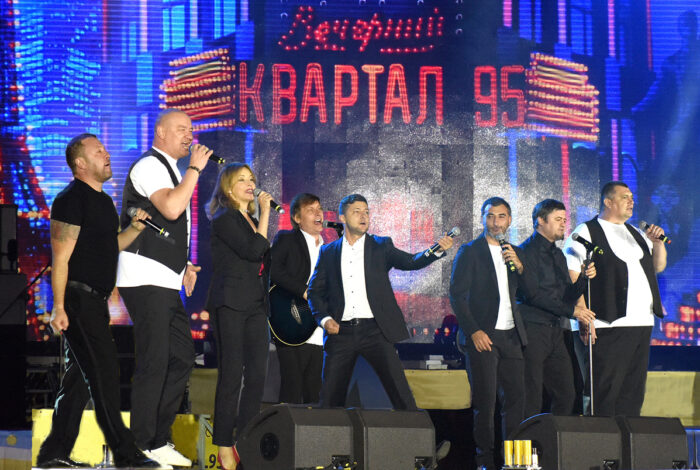
Before becoming president, Volodymyr Zelensky did not have a classic political career. The official website of the Ukrainian presidency itself presents him, from 1997 to 2003, as actor, performer, screenwriter and producer of Kvartal 95He later became an executive producer and even a television station manager.
It's not reprehensible that an actor decides to get involved in politics.
The question is different and much more serious:
How does television recognition turn into political power?
Zelensky had already played the president in the series "Servant of the People"The fiction presented a simple man who suddenly finds himself at the pinnacle of power.
A little later, the television story crossed over into real life.
In 2019, Zelensky was elected president of Ukraine. And here we need to be absolutely precise: he was not “appointed.” He was elected by an overwhelming majority. The Central Election Commission of Ukraine records 73,22% and 13.541.528 votes in the second round against 24,45% of Petro Poroshenko.
But that's exactly what makes the story even more interesting.
Because here we don't just have an artist who decided to become political.
We have one of the most impressive examples of the era where the spectacle meets power, where image precedes political experience and where a television star can, in no time, become a head of state.
The camera went off.
The stage lights went out.
And the lights of a real war were turned on.
In February 2022, Russia launched a full-scale invasion of Ukraine. Since then, Zelensky has been transformed internationally: from a former comedian and TV personality to a wartime president, an interlocutor of the world's major governments, and the central figure in an unprecedented mobilization of Western military and economic aid.
And then the entered the scene billions.
Not millions.
Billions.
According to the official US Ukraine Oversight mechanism, total US appropriations associated with Operation Atlantic Resolve and the response to the Ukraine war had reached, by March 31, 2026, approximately 195 billions of dollarsAt least $177,8 billion had already been committed and $116 billion had been disbursed. At the same time, the US had committed $67,8 billion in defense goods and services.
Let's make this clear, because myths are easily born here.
The 195 billion they don't mean someone handed Zelensky a check for $195 billion.
Part of the money goes to US military operations in Europe, stockpile replacement, equipment production, weapons and services.
But that doesn't make the economic question any less important.
It makes it bigger.
Because when weapons systems are shipped, stocks must be replaced.
When ammunition is consumed, new ones must be produced.
When missiles are delivered, someone has to take the order for the next ones.
So behind the war there are soldiers and dead.
But there are also factories.
Contracts.
Orders.
Budgets.
And huge financial flows.
We have no evidence that allows us to write that any government or defense company caused the war to make money.
That would be an assertion without proof.
But we have every right to ask:
When a war creates an economy worth hundreds of billions, who benefits financially from its continuation?
And suddenly, in September 2026, the president of the United States himself comes and publicly opens the account.
And then Trump said: I want the money back
On September 3, 2026, Donald Trump announced that the United States intends to ask European countries to compensation for previous US military aid and ammunition sent to Ukraine.
Trump attacked the previous Biden administration for, as he claimed, not demanding that Europe pay.
And he used a wording that is worth reading twice.
He wrote that "Hundreds of Billions of Dollars were given to Ukraine and NATO, free of charge" — that is, according to his own claim, hundreds of billions were given to Ukraine and NATO without charge. Reuters reports that Trump argued that the Europeans could have paid if they had been asked and that now his administration intends to seek repayment.
This statement does not come from a blogger.
It doesn't come from a conspiracy theorist.
It does not come from a Russian official.
It comes from the president of the United States.
And suddenly the word we've been hearing for years, "help", takes on another dimension:
account.
Because if today the American government says it will ask Europe for money back, then the citizen has the right to ask:
Who paid?
Who ordered?
Who received it?
Who made the weapons?
Who got the contracts?
And who will ultimately be asked to pay?
There is of course one essential detail: Trump's statement does not prove that money was given personally to European leaders and they handed it over to UkraineWe should not write this as a fact without evidence.
But what the American president actually said is already quite powerful.
Reuters also notes that the PURL mechanism, through which European countries finance the purchase of American weapons systems for Ukraine, is now operational. The official American account recorded until approximately March 2026. $4,2 billion in contributions from NATO member states through this mechanism.
And then the issue becomes much bigger than Zelensky himself.
Because the real issue is the war economy.
The US Government Accountability Office reports that the United States provided approximately $45 billion in immediate fiscal support to Ukraine through the World Bank, for expenses such as salaries of teachers, civil servants, health workers and social benefits.
And here is another issue that cannot be swept under the rug.
The American control mechanisms themselves have requested stronger supervision.
The GAO found that important spending data had not been adequately used in the audits and that there were unusual increases in some categories that needed further examination.
Even more characteristic is a report by the USAID Office of Inspector General dated March 3, 2026.
Its title is revealing: the oversight mechanisms provided "limited assurance" — limited assurance that the US contributions were used as intended. The report cites late or unsubmitted audit files and problems that limited the ability of US authorities to obtain timely assurance about the use of the money.
Let's not falsify this finding either.
It doesn't say that "Zelensky stole billions."
It doesn't say that all the funding disappeared.
But he says something that in a democracy should be self-evidently serious:
When you give billions of public money, the control must be proportional to the billions.
Asking for transparency does not mean that someone is with Russia.
Asking for an account does not mean that he is against Ukraine.
It means he remembers that money doesn't grow on trees.
The citizens pay for it.
The American taxpayer.
The European taxpayer.
Families who see their governments allocate tens of billions for a war that has already entered its fifth year of full-scale phase.
And today, even as new efforts at negotiation are underway, the basic positions of Moscow and Kiev remain far apart. Reuters reports that Russia continues to demand territorial concessions and the abandonment of Ukrainian NATO ambitions, demands that Kiev considers a tradition.
War has acquired its own economy.
An arms economy.
An ammunition economy.
A loan economy.
An economy of government contracts.
An economy of industrial investment.
A debt economy.
And at the center of this vast geopolitical and economic machine is a man who, a few years ago, stood on stages and television sets.
A man who played the president.
And then he became president.
It's not a crime.
It's not evidence of a conspiracy.
But it is one of the most symbolic political events of our time.
Because it forces us to wonder whether, in the age of television and social media, Do we elect political leaders or do we manufacture protagonists?
How much does popularity prepare a person for managing a state?
And when this state finds itself at the center of a war that moves hundreds of billions, who ultimately makes the big decisions?
The president?
The generals?
The allies?
The governments that finance it?
The defense industries?
Or all together in a system that, as the war continues, becomes larger and more expensive?
Trump is now holding Europe to account.
Europe continues to finance.
Ukraine continues to fight.
Russia continues its operations.
Industries continue to produce.
And people continue to die.
That's why the most important question is no longer whether Zelensky was once an actor or a comedian.
The real question is:
How much does a war without end cost?
Who really pays the bill?
Who wins when the bill grows?
And, mainly:
Who really has the power to say "this far"?
Because at some point billions cease to be numbers in a state budget.
They are becoming weapons.
They become debris.
They become debt.
And human lives become.
And when war becomes economical, the most difficult question is whether at some point peace will become the least profitable option.
Πηγές
- The White House/Reuters, September 3, 2026: Trump's statement on seeking compensation from European countries for previous US military aid to Ukraine and his reference to the PURL mechanism.
- Official Presidency of Ukraine: Biography Volodymyr Zelensky — actor, performer, screenwriter, producer and television executive before his political career.
- Central Election Commission of Ukraine: 2019 presidential election results — Zelensky 73,22%, 13.541.528 votes.
- Ukraine Oversight – US Government: Total appropriations approximately $195 billion, $177,8 billion committed, $116 billion disbursed through March 31, 2026, and data for defense assistance/PURL.
- US Government Accountability Office (GAO): $45 billion in direct fiscal support to Ukraine and findings on the need for enhanced oversight.
- USAID Office of Inspector General / Oversight.gov, March 3, 2026: Report on the oversight mechanisms of direct budgetary support and the "limited assurance" they provided.
- Reuters, September 4, 2026: Current American diplomatic efforts and the significant differences that still divide Russia and Ukraine on the terms of ending the war.
https://www.instagram.com/reels/DcteU4fiB8N/
photo By Vadim Chuprina – Own work, CC BY-SA 4.0, https://commons.wikimedia.org/w/index.php?curid=76170318, https://en.wikipedia.org/wiki/