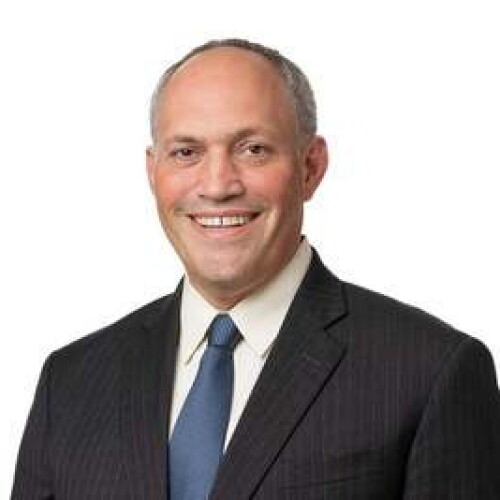
Michael Rubin, Middle East Forum
In a particularly sharp analysis, Michael Rubin of the Middle East Forum directly challenges Turkey's image as a major regional military power, arguing that behind Ankara's seemingly impressive military presence lie significant weaknesses.
Rubin examines Turkey's behavior on a number of regional fronts and argues that Ankara has often chosen limited-risk operations, avoiding truly difficult military tests that could reveal the true limits of its capabilities. According to his analysis, Turkey appears as a power with great military self-confidence and a strong presence in the region, but the question is whether this image corresponds to a real ability to conduct a large and demanding military operation.
Rubin uses the wider Red Sea and Bab el-Mandab Straits as a case in point. Despite the region’s strategic importance and the increasing Houthi activity, Turkey’s military presence has not translated into assuming a role comparable to that expected from a country that presents itself as a regional military superpower.
At the same time, Ankara has developed military bases and a presence in countries such as Somalia, attempting to expand its geopolitical footprint. For Rubin, however, creating bases and projecting power is one thing, and the ability to support a large-scale war far from Turkish territory is another. The same question arises in relation to Libya, Syria and other areas where Turkey has attempted to appear as a decisive military actor.
Rubin argues that Ankara has largely chosen operations where it can control the level of risk, utilizing drones, special forces, local allies and other force multipliers, without having to expose the full range of its conventional military capabilities. And herein lies the main problem.
Real military power is not measured solely by the number of soldiers, aircraft, tanks, or bases. It is measured when a country is forced to confront an adversary that can respond effectively, inflict serious casualties, and impose high costs.
Rubin thus brings up the issue of the state of the Turkish military after the mass purges that followed the failed coup of 2016. The removal of a significant number of experienced officers, according to his analysis, had serious repercussions on the institutional continuity and operational experience of the Turkish armed forces.
Particular mention is also made of the Turkish Air Force, as the availability of experienced pilots and the maintenance of operational proficiency are critical factors for any large-scale air operation.
Rubin connects these developments to a broader paradox: Turkey appears simultaneously as a country that wants to play the role of a great military power and as a power that, when the costs of an actual conflict rise, has every reason to be cautious.
With characteristic irony, he refers to the image of "Schrödinger's Turkey": a power that may theoretically be all-powerful, but its real state cannot be fully assessed without going through a serious military test. The question Rubin poses is therefore simple but particularly sharp: how great is Turkish military power really when the image, rhetoric and projection of power are removed?
For him, the answer lies in real operational capabilities and not in impressions.
Turkey may have significant armed forces, a defense industry, drones, an air force, naval capabilities, and military bases beyond its borders. However, Rubin argues that these alone are not enough to prove that the country can withstand a prolonged, high-intensity conflict against a powerful and well-organized adversary.
Thus, the phrase “empty shell” takes on special weight in his analysis: it does not mean that the Turkish military lacks military capabilities, but that, in Rubin’s assessment, the image presented to the outside world may be significantly greater than what has been demonstrated in practice. And as Ankara continues to expand its military presence from Syria and Libya to Somalia and the Eastern Mediterranean, the question remains:
Is this a real military superpower or a force that has not yet passed the real test?
This is precisely the question that Michael Rubin attempts to focus on.
photo MIDDLE EAST FORUM
https://www.meforum.org/michael-rubin
https://www.meforum.org/michael-rubin