Written by Anastasios Papandreou
The article is a reprint of two of our recent articles, entitled “Analysis: The Shield of Achilles (Part A)” and “Analysis: The Shield of Achilles (Part B)”, which we published on December 14 and 20, 2025 respectively. We are republishing them together on the occasion of today’s news about the signing of the “Achilles Shield” contract in Israel. The article analyzes in detail the weapons systems that Greece will acquire. As stated by the Minister of Defense Nikos Dendias, the new defense arrangement that is expected to be in operation in the coming years is the “Achilles Shield” doctrine.
In essence, it is an updated defense function of the Armed Forces so that the country is able to defend against new types of threats that have become known but also to modernize existing structures and systems. For the "Achilles Shield", Mr. Dendias has emphasized that "it has many levels ... anti-aircraft, anti-missile, anti-drone, anti-ship and Anti-submarine, under the sea". Greece has always had one of the most comprehensive and multilayered air defenses at NATO level, covering the entire spectrum. From V-Shorads to medium-long range systems. Possessing dozens of launchers with anti-aircraft capability, mainly covering space or moving formations.
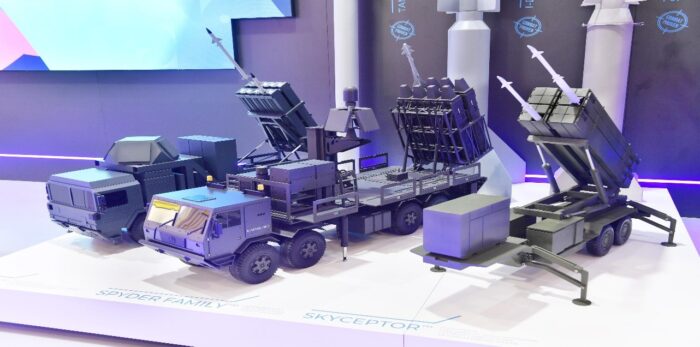
However, it is imperative to replace some of these systems in order to modernize the anti-aircraft network. Within the framework of the "Achilles Shield" program, the systems to be acquired are the BARAK MX, the SPYDER AiO and the David's Sling. The aim is to replace the I-Hawk PIII medium-range artillery batteries and the Osa AKM and Tor M1 self-propelled systems as well as the S-300. Both the I-Hawk PIII and the Osa AKM are old systems with high manning requirements, while for the TOR M1 and S-300 it is unknown how long they will be able to be supported by the Greek army due to the Russian-Ukrainian war.
Barak MX
Barak is a long-range surface-to-air missile (SAM), jointly developed by IAI and the Indian Defence Research and Development Organisation (DRDO). The missile is designed to destroy aerial threats, including aircraft, helicopters, anti-ship missiles and UAVs, as well as ballistic and cruise missiles. There are both sea-based and land-based variants of the system.
The Barak 8 missile is approximately 4,5 meters long, has a diameter of 0,225 meters at the missile body and 0,54 meters at the booster stage, a wingspan of 0,94 meters, and weighs 275 kilograms including a 60-kilogram warhead that detonates at close range. The missile has a maximum speed of Mach 3 with a maximum operational range of 70 km and can perform 50g maneuvers.
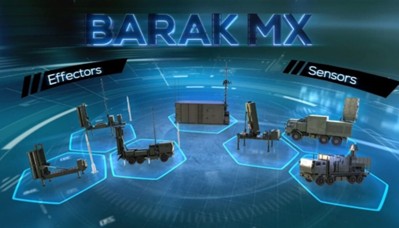
IAI has also developed new missiles in the Barak family, including the SRAD versions with a range of 15 km, the MRAD, with a single-pulse rocket motor for a range of 35 km, the LRAD with a dual-pulse rocket motor for a range of 70 km, the ER with a dual-pulse rocket motor and additional booster for a range of 150 km and improved TBM capabilities, and the Barak MX which expands the Barak into a multi-layered air defense system using integrated smart launchers carrying short-, medium- and extended-range interceptor missiles.
The launcher unit of the BARAK MX air defense missile system is mounted on a military truck chassis with increased agility. Barak missiles are launched vertically from the TEL (Transporter Erector Launcher) and provide 360-degree coverage. The launcher unit consists of eight missiles ready for firing. All eight missiles can be launched in less than 20 seconds. Also, each launcher has the ability to carry any combination of BARAK missiles, expanding the availability and plurality of solutions for the unit commander.
A Barak artillery battery consists of a command and control system, surveillance radar, missiles and mobile launchers. When combined with a modern air defense system and multi-function surveillance and guidance radar, the Barak MX allows for the ability to simultaneously engage multiple targets during saturation attacks.
SPYDER AiO
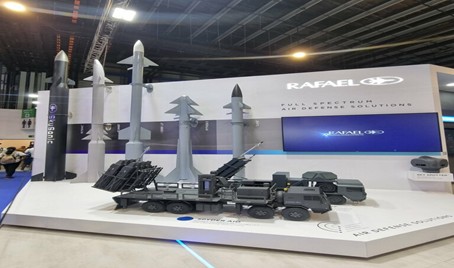
The SPYDER AiO (All in One) is a fully flexible and autonomous air defense system developed to meet the critical operational needs of the modern battlefield, capable of rapid deployment within minutes, in difficult terrain and with short response times. The AiO provides reliable air defense with a minimized logistical footprint. The main components of the system are:
1/ An 8×8 high-mobility wheeled truck vehicle that includes all systems.
2/ Command & Control System
3/ Two cabin workstations (CWS)
4/ Eight-stage launcher with I-Derby SR, I-Derby ER, & PYTHON-5 SR missiles
5/ Fire surveillance & control sensors on a mast extending in height
6/ 3D AESA fixed array radar
7/ TopLite electro-optical system
8/ Power supply system
The system’s capabilities include engaging air threats at ranges of 1-40km and altitudes of 20m – 12km. It can engage four targets simultaneously and takes three minutes to transition from movement mode to missile launch mode. Capable of operating autonomously or interconnected at a higher echelon (C2), the SPYDER AiO radars detect threats on the move and quickly transition to firing mode. When a threat is detected or a command is given, the vehicle stops, the stabilizer jacks extend, the radar extends to full height and the launcher reaches a near-vertical position, ready to fire, fire – all controlled from the cabin workstation without requiring the crew to leave the vehicle’s cabin. The weight of the carrier together with the system reaches 30 tons.
In addition, a number of new IAI/ELTA EL/M-2084 MMR multifunctional radars will be acquired. It is not yet known whether the number will only cover the acquired units or whether there is provision for additional radar systems to replace old-style 2D/3D radars that are still in use.
The EL/M-2084 belongs to a group of 4D AESA radars with multi-function Gallium Nitride transceivers in the S/C bands. The main missions of the radar are, Air Surveillance, Air Defense-Fire Control Radar, Early Warning and Anti-Artillery Radar and C-RAM. The MMR detects high and low flying targets, tracks, classifies and creates a real-time air situation picture of all airborne targets such as low-profile radar platforms, UAVs, tactical air weapons, homing munitions, tactical ballistic missiles, cruise missiles and curved trajectory artillery shells.
The radar is available in two configurations, rotating and static. The first has 360-degree coverage, a maximum range of 475 km and a height coverage of -7 to 70 degrees and a search at an altitude of 30 km. The second has coverage (+/-) 65 degrees in the horizontal and a height coverage of -7 to 90 degrees, a maximum range of 650 km and a height of 30 km. The anti-aircraft capability of this radar in these border areas will help in easily targeting the enemy's artillery units. Also very important is the ability to detect roving munitions, which will give the local air defense the opportunity to shoot them down before they hit their target, which may even be the radar itself.
Davis's Sling
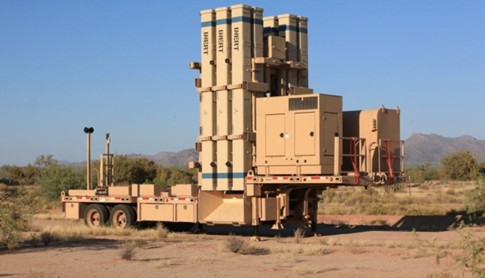
The launcher unit of the David's Sling air defense missile system consists of a Transporter Erector Launcher (TEL) mounted on a two-axle trailer. The TEL is equipped with multiple missile canisters and typically carries 6 to 12 Stunner interceptor missiles. Each missile is stored and launched vertically from its individual canister, reducing the preparation time required for launch and improving the response time of the system. Each battery can support a number of launchers. Certainly up to four which is also the Finnish system, so certainly up to 48 Stunner missiles ready for launch.
The launcher and the Stunner missile have been developed with the help of the American Raytheon. Which offers the missile under the name Sky Ceptor, as an alternative to PAC 3 batteries through the PAAC-4 (Patriot Advanced Affordable Capability-4) upgrade. The Stunner is a hit to kill technology missile. The interception range, although mentioned as 300 kilometers, probably refers to the range of ballistic missiles, so we will assume that the actual maximum range is secret. The special feature of the missile is the nose where the target acquisition sensors are housed and which does not have the usual conical design but is asymmetrical and resembles the spine of a marine mammal (dolphin-shaped nose).
The nose hosts the two sensors for terminal guidance, a combined electro-optical and infrared (EO/IR) sensor, as well as an AESA radar seeker for maximum all-weather performance. During the intermediate flight phase, the missile receives guidance updates from the system's ground-based radar via an integrated data link. The missile is 4,6 meters long, has a span of 1,1 meters and a diameter of 35 centimeters. It weighs 400 kilograms and achieves a maximum speed of 7,5 mach. It has a two-stage engine to accelerate the missile and maintain speed during the intermediate phase of flight towards the target, while the third stage is activated to increase the speed and kinetic energy of the missile during the final phase of interception.
The Golden Almond Battle Management Center serves as the command and control center for the David's Sling system and was developed by Elbit Systems. This mobile Command and Control Center processes sensor data, manages system operations, and coordinates with other air defense assets, such as the Iron Dome and Arrow systems. Finally, the David's Sling system relies on secure communication and data links to ensure seamless coordination between its components, including the radar system, interceptor missiles, and the command and control center. These data links allow the system to receive real-time updates and effectively respond to evolving threats.
Anti-Drone System
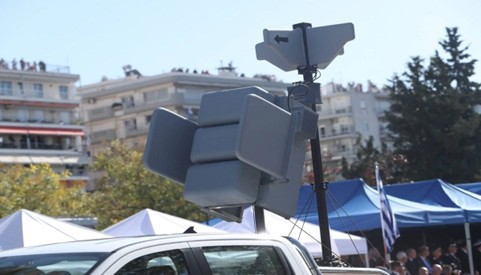
In the modern theater of operations, the lowest level of anti-aircraft coverage is anti-drone systems. Operations in Ukraine have primarily shown that a system costing a few thousand dollars can deliver major blows to systems and facilities costing many times that much. It is therefore imperative to have systems that can deal with threats such as small drones and loitering munitions that larger missile systems are either unable to do or too expensive to do. Such systems must exist to provide coverage both in the field and at key facilities such as military and civilian infrastructure of a strategic nature.
In this field, it seems that the Greek defense industry will play a leading role with the new anti-drone system Centaurus/Iperion of the Hellenic Defense Agency, which will be installed in main naval units (Centaurus) and as a land-based system (Iperion). This system has proven in the field that it can identify, target and shoot down such targets. Other solutions are the use of self-propelled anti-aircraft guns. The old German-made Gepards have had many successes in recent years on the battlefields. Today, Rheinmetall offers the newer but very expensive Skyranger. A low-cost option would be the development of the armored vehicle recently demonstrated in an exercise of the Hellenic Navy with an M61A1 Vulcan cannon from existing stocks and its interconnection with a targeting system for use as an anti-drone.
Anti-Ship Defense
For the successful attack and destruction of the enemy, detection, recognition and targeting are the cornerstones. Therefore, it is very important to have the appropriate sensors such as: Coastal surveillance radar, EO/IR systems and UAVs. The coverage of the Aegean Sea with surface surveillance radar is as important as the surveillance of the airspace by airborne radars, in terms of navigation safety and the control of illegal immigration as well as in terms of early warning and monitoring of the movements of the enemy surface fleet in time of war.
The reinforcement of existing systems with new generation advanced radars with greater range, discrimination and targeting data transmission, UAVs and observation systems is imperative. Unmanned aerial vehicles in particular have the ability to reveal targets hidden behind territorial prominences such as small islands and islets. Regarding weapon systems, some moves have already been made recently which will enhance the deterrent capability of the defense forces by complementing older systems such as the coastal EXOCET arrays and artillery forces.
The first system that has begun to enter the ranks of the land army is the modern SPIKE NLOS anti-tank systems purchased from the Israeli Rafael. These systems have the ability to deliver precision strikes at very long distances, which in the latest version of the missile reaches 50 kilometers according to the manufacturer. The missile is able to hit targets on land and sea and although it does not have the ability to sink a large naval unit. However, it can put it out of action by attacking the radar, the bridge or the operations center. The land army is going to receive 17 Spike NLOS systems, where each system consists of two fire units and an Orbiter reconnaissance / targeting aircraft. As has been announced, these systems will be distributed to LAT units in Evros and the islands of the eastern Aegean, enabling these units to strike beyond the horizon.
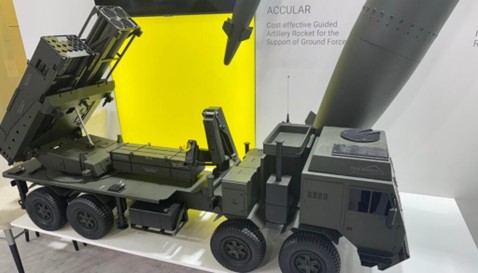
The second new system is the PULS multiple launchers. As the Minister of National Defense said, these systems are considered part of the shield due to the increased accuracy of the rockets they will carry. In general, however, the artillery with the already existing means has the ability to create area denial. With a barrage of fire from the A/C guns and the RM-70. However, the PULS will enable precision attacks with their ammunition, dramatically improving efficiency and reducing the emission of a large volume of fire. According to the 692 million euro program, which was recently approved by Parliament, 36 new multiple rocket launchers will be acquired with the ability to fire accurately from 35 to 300 kilometers.
PULS is designed to maximize response with optimal fire flexibility, without the need for special modifications to the system. A typical firing mission can be executed in less than a minute from start. The launcher has two rocket pods where different caliber rockets can be placed and is mounted on the back of a high-mobility truck. The rockets are palletized in special PODS (pods) and the launcher can carry up to two PODS:
2×18 122 mm Accular rockets with a range of 35 km, with a 20 kg warhead.
2×10 160 mm Accular rockets with a range of 40 km, with a 35 kg warhead.
2×4 EXTRA rockets of 306 mm with a range of 150 km, with a 120 kg warhead of either controlled fragmentation or penetration.
2×2 Predator Hawk rockets of 370 mm with a range of 300 km with a single warhead of 140 kg. Or a combination of the above
Thus, the PULS has the ability to engage sea targets at ranges of up to 40 kilometers with the Accular rockets. The 122 mm Accular carries a 20 kg warhead while the 160 mm one carries a 35 kg warhead. Guidance is done with GPS, achieving a circular error from the target of less than 10 meters. To have a yardstick for comparison, the upgraded rockets that the RM-70s are going to carry have a circular error of less than 1% at maximum range. That is, approximately 400 meters at 40 kilometers.
The most important system in the equation, however, are the coastal anti-ship missile arrays which have the ability to inflict a crushing blow on any enemy naval unit. The Hellenic Navy acquired in the mid-90s, two MM-40 Block 1 battery batteries of reduced composition from the French company Aerospatiale, then and now MBDA. The small number of launchers and the limited range of this particular version, imposed their placement at strategic points with a very specific mission and secondarily for the coverage of a wider maritime area.
To meet the requirement to cover wider maritime sectors of the Aegean, it would be logical to acquire additional Exocet MM-40 Block 3c batteries of full composition, latest generation, which will offer increased range and therefore meet the above coverage requirements. The existing batteries should also be upgraded to the latest version and the number of launchers should be supplemented. A MM-40 Block 3c battery consists of three firing units of four missiles, a vehicle carrying the battery sensors and a vehicle carrying the KDP. It has fully autonomous operational capability and can also be interconnected with the existing C3I network. The Exocet with a 200 km range and the ability to attack docked and land targets placed at strategic points can even be used for strategic surgical strikes.
A final option that exists is the deployment of manned sea systems for reconnaissance and/or attack with weapons or as kamikazes. Experience so far from the Black Sea has shown that such systems are capable of causing significant damage whether they are amphibious or main surface units. Especially with manned systems acting as swarms coming from different directions they have the potential to cause saturation. Let alone in an environment scattered with small islands or islets which will be used as natural cover.
With these systems and the ability to manage the field network-centrically, the above systems are able to create a maritime shield in and around the Greek islands. This ensures the islands' defense capability against maritime units by assisting the work of our surface units. Either by releasing units in non-critical areas or through cooperative action.
Underwater Shield
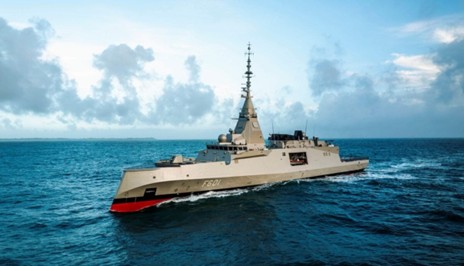
Regarding the underwater shield, the Ministry of National Defense is obviously referring to the navy's ability to deal with enemy submarines. The navy will in a few years have the most modern anti-submarine warfare technology that Western technology has to offer. We are referring to the Kingplin Mk2 and CAPTAS 4 combination that the Greek FDI frigates will carry and the corresponding UMS 4110 and CAPTAS 4 combination that the Italian Fremm helicopters will carry. Also, the completion of the delivery of the new state-of-the-art MH-60R anti-submarine helicopters that will be added to the existing 11 S-70B/B-6 will create a significant force capable of penetrating enemy submarine units.
At the same time, the mid-life upgrade program of the Greek T-214HN is slowly getting underway, which will provide additional capabilities to the Greek submarines to continue operating with claims in the next 15-20 years. Also, as it seems, 2026 will be the year of the beginning of the program to acquire new submarines (2+2) to replace the aging T-209/1100 and T-209/1200, which are in need of immediate replacement. Finally, it is not excluded that in the future we will see UUVs performing missions as units or in collaboration with other units of the navy, contributing to the defense/deterrence capability of the fifth level of the "Achilles Shield".
Source https://defencereview.gr/kentrika/aspida-toy-achillea-to-olokliromeno/