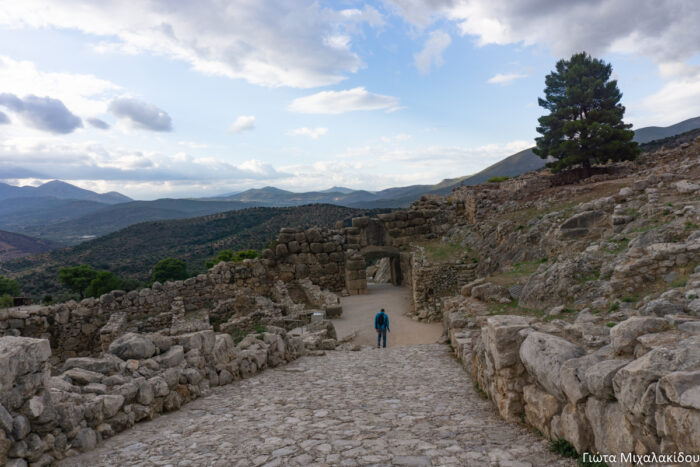
Mycenae has stood for thousands of years in a landscape that combines the hardness of rocks and gorges, with a view of the Argolic Gulf. It is the most brilliant creation of the Mycenaean world. Birthplace of gods, heroes, immortals and mortals, they captivate and inspire you thanks to their mythology, history and magnificent architecture. The powerful and rich palatial center of the Late Bronze Age in Greece flourished between 1.350 and 1.200 BC.
The citadel of Mycenae has been declared a UNESCO World Heritage Site since 1988. Mythology says that its founder was Perseus, son of Zeus and Danae, daughter of the king of Argos, Acrisius. Perseus' descendants reigned for three generations. When Eurystheus, who was the last, was killed without leaving descendants, the inhabitants chose Atreus, son of Pelops and father of Agamemnon and Menelaus, as king. Agamemnon led the Greek campaign against Troy.
After thousands of years, Homer's epics became the obsession and guide of Heinrich Schliemann, who began excavations proving the existence of the magnificent Mycenaean civilization.
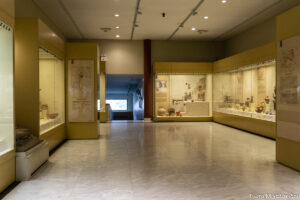
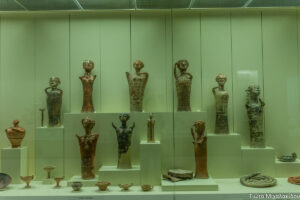
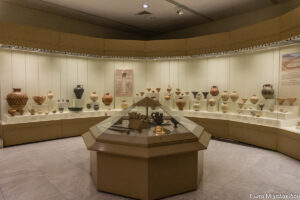
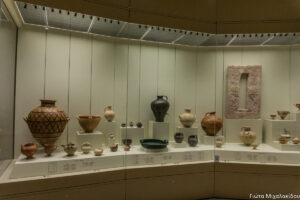
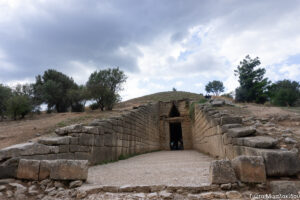
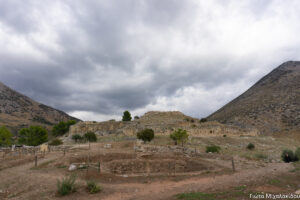
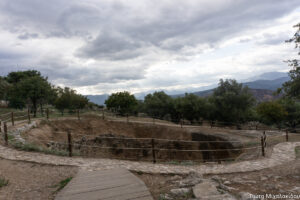
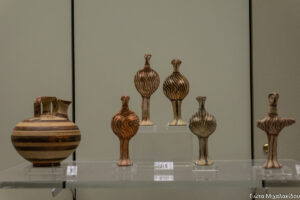
Archaeological Museum of Mycenae
A museum for the promotion of the great civilization of the Mycenaeans, who after the middle of the 2nd millennium BC dominated the Greek area, taking over from the Minoans, is the Archaeological Museum of Mycenae, built within the wider archaeological site, with the walled acropolis and the residential and funerary complexes around it. The modern building, integrated into the environment, began to be built in 1984 according to plans by the architect Georgios Mylonas and was completed in 1997, including about 2.500 exhibits through which the history and the top achievements of the Mycenaean civilization emerge, which had a decisive influence on the creation of the Greek civilization of historical times.