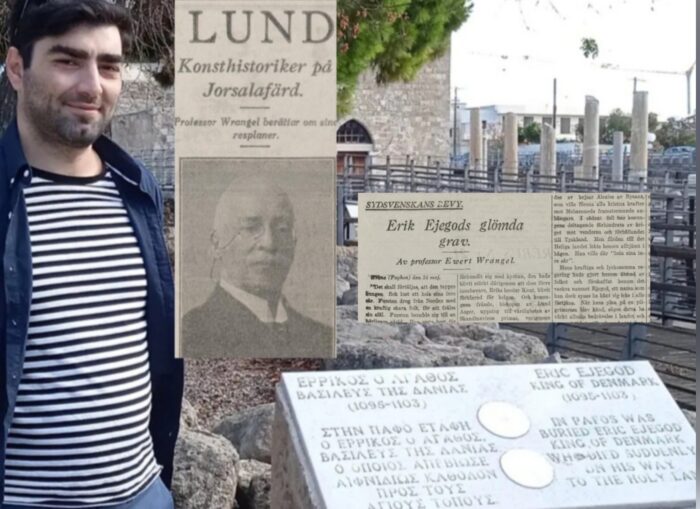
Paphos is usually associated with the goddess Aphrodite and the Apostle Paul. However, few know that the Danish king died there in 1103. Erik Ejegod, founder of the Archdiocese of Lund. In the early 20th century, the Swedish professor Ewert Wrangel followed his footsteps in Cyprus, connecting the history of Lund with the Greco-Roman and early Christian world of Paphos. In an article in South Swedish newspaper described the Danish monarch's last pilgrimage and his forgotten tomb in Cyprus.
“It must be said that the brave king desired to heal his inner wounds. The ruler departed from the North with a numerous retinue to save his soul. He was preparing for a more glorious world. He set out to get to know the land of Jerusalem, which was then flourishing peacefully. The king desired to acquire a heavenly life.”
Wrangel explains that Erik Ejegod was particularly beloved by his people. When his intention to leave Denmark for a pilgrimage to the Holy Land became known, the news caused great sadness:
"When his plan for pilgrimage became known, it is said that it caused great sorrow in the country and that his subjects even offered to be taxed with a third of their wealth if the king agreed to remain in his homeland."
Despite the appeals, the king began his journey in 1102. Traveling with him were relatives, nobles, and important figures from Denmark and possibly other Scandinavian kingdoms. Following the old Varangian route through Rus, he reached Constantinople, where Emperor Alexios I Komnenos welcomed him with great honors, offering him royal gifts, ships, and gold.
Wrangel writes:
"In Constantinople the emperor welcomed the northern king in the most honorable manner. He presented him with royal attire and fourteen ships."
In early 1103, Erik continued his journey. He probably visited Ephesus and other major Christian pilgrimage sites in Asia Minor, where he eventually reached Cyprus.
"King Eric, as the Knýtlinga Saga states, certainly reached Cyprus, the island of Barnabas, where Paul had also preached. But there he contracted an illness that became the cause of his death."
According to the article:
“This happened in the city that during the Middle Ages was called Bafa, that is, Nea Paphos, where the Romans had once erected a magnificent sanctuary dedicated to Aphrodite, but many of the ancient sanctuaries had already been destroyed.
And it concludes:
"The death of King Eric must have occurred on July 11, 1103. The lord of all claimed the soul of the brave ruler while he was far away in the world. The mighty king did not reach old age. The lament of the warriors was heard everywhere. Since then, brave men have mourned the death of the king throughout the world."
Wrangel also describes the landscape that the Scandinavian travelers saw:
“But they could not help but be charmed by the magnificent nature, which in spring and early summer was presented with the richest floral ornament. Higher mountains the Northerners had rarely seen. The pine forests of these peaks reminded them of the pine forests of their northern homelands. The plain below could have been Scania or Zealand; (Jylland) but the vineyards, orange trees and olive trees testified to different conditions of nature”
And it continues:
"The area rises with hills and mountain terraces towards a fertile plain and behind it stretches the large mountain range called Troodos and reaches a height of over 2.000 meters above sea level."
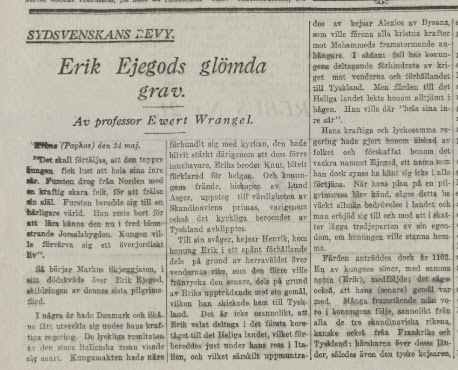
1925-06-21 Sydsvenska dagbladet
Furthermore, shortly before his trip to the East and Cyprus in 1924, Professor Ewert Wrangel of the University of Lund himself stated that his goal was to study early Christian art and follow in the footsteps of the Danish king Erik Ejegod, who died in Paphos in 1103. The Swedish historian particularly emphasized the connection of Lund Cathedral with the Greco-Roman and Christian tradition of the East, believing that the art and ecclesiastical heritage of Scandinavia had their roots in the Greek, Roman and early Christian worlds.
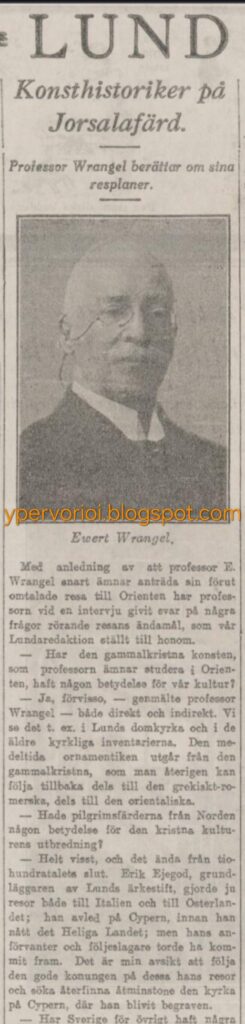
Sydsvenska dagbladet 1924-12-11
Finally, it is worth mentioning that Professor Ewert Wrangel's interest in Cyprus continued after his trip in 1925. In a public lecture in Malmö entitled Cyprus ("Cyprus, the island of the goddess of beauty"), presented his experiences and findings from the island, contributing to the Swedish public's acquaintance with the history and culture of Cyprus.
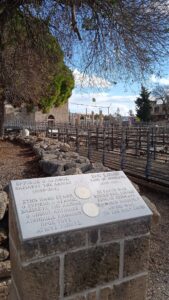
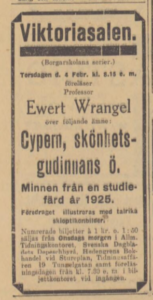
Today there is commemorative plaque/monument at the archaeological site of Chrysopolitissa, next to the Column of the Apostle Paul. This is where visitors looking for the tomb of the Danish king are usually led.
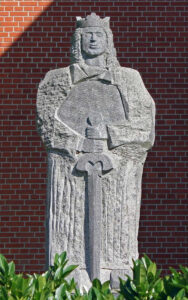
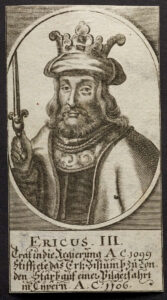
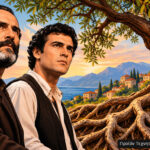
Statue of King Eric in Slangerup of Denmark – Danmarkshistoria
source / photos https://ypervorioi.blogspot.com/2026/06/blog-post_21.html