
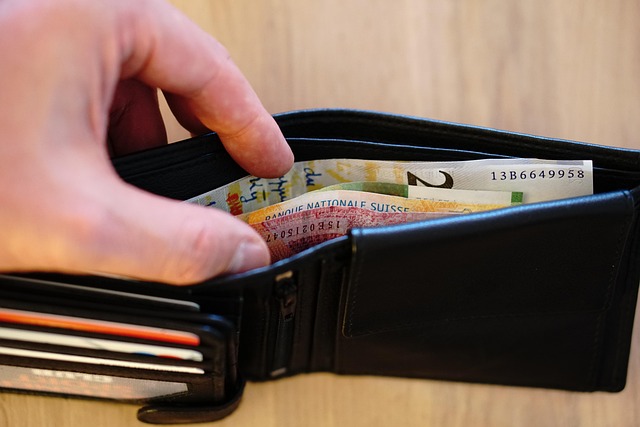
The risk of not being able to make payments is reduced with the new backup system.
Whenever payment problems arise, it becomes clear how central a role they play. Many countries, including Sweden, are now responding to this in order to reduce the risks.
Preparedness for war and other disruptions must be improved, they agree many politicians.
Sweden is now taking a clear step to strengthen the resilience of its payment system by introducing a new backup system for card payments.
The new system will be able to be used even in cases of long-term interruptions to the internet and other communication infrastructure and is planned to be operational by the summer of 2026 at the latest.
Deteriorating security environment
The background to the decision is the deteriorating security environment in Europe, where sabotage, cyberattacks and geopolitical instability have increased the vulnerability of digital systems.
Damage to undersea cables in the Baltic Sea has highlighted how dependent society's vital functions are on stable network connections.
In a country like Sweden, where cash use is very low and digital payments dominate, the risks are considered particularly acute.
It is being developed in cooperation with neighboring countries
The new card system is being developed in cooperation between Sweden, the other Nordic countries and Estonia.
“There is a war in Europe and in connection with this war there are all kinds of hybrid influences and harassment, which can mean that communications are disrupted or cut off,” says Tuomas Välimäki, a member of the board of the Central Bank of Finland, in newspaper Dagens Nyheter.
The goal is to create a common solution that will make it possible to make purchases with a card even when there is no connection.
The technology is based on the fact that payment terminals can encrypt and store transactions locally until the connection is restored, at which point payments are completed afterwards.
Operates for up to a week
Similar solutions are already being used in parts of Scandinavia.
The goal is for the backup system to be able to handle outages lasting up to a week.
It will act as a complement to both current card payments and cash, which are still considered important in times of crisis and disruption.
The project is part of a broader strategy to strengthen the resilience of the financial system.
A possible digital monetary solution
The initiative also highlights the issue of European dependence on US-based global card networks, as the Deutsche Welle.
By developing regional and state-supported payment solutions, the risk of external factors affecting access to key payment functions is reduced.
At the same time, research into new central bank digital money is underway, both in Sweden and in the eurozone.
An e-krona or digital euro could act as an additional alternative in a payments landscape that is increasingly adapting to withstand crises, disruptions and long-term disruptions.
photo RoyBuri, https://pixabay.com
source https://ypervorioi.blogspot.com/