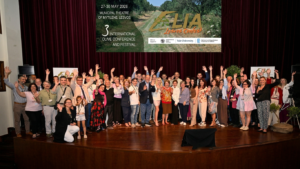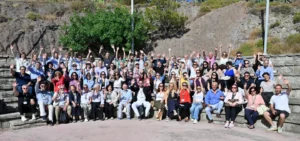
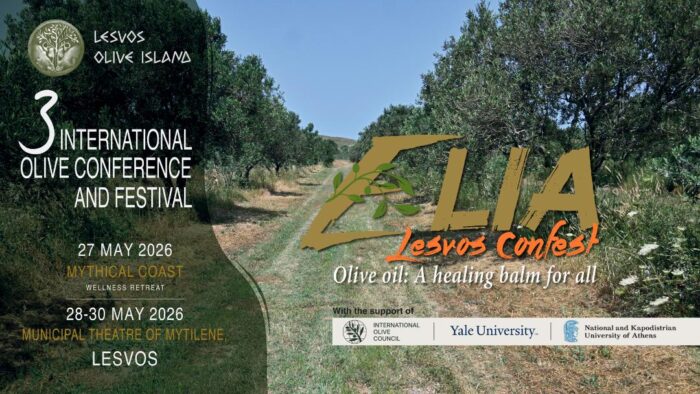
The "ELIA Lesvos Confest", far exceeding the limits of a simple Conference, returned to the Lesvos, even more dynamic and expanded, in its third edition, succeeding in functioning as an open platform for the exchange of knowledge and experiences between the public, producers, entrepreneurs and scientists and laying, through this multidimensional approach, the foundations of a substantial dialogue around sustainability, health, the Mediterranean Diet, olive tourism and the future of olive cultivation. From May 27 to 30, the Lesvos found itself once again at the center of international olive growing, with the 3 International Conference and Festival on the Olive Tree "He is the Balsam of All Oils" to gather under its umbrella more than 50 leading scientists, professionals and creators from all over the world, highlighting the island as a point of reference for the modern agri-food dialogue. In this place blessed with 11.500.000 olive trees, science met with production, gastronomy with culture and tradition with innovation, having as a common axis the olive.
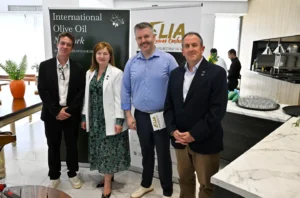
In an international and prestigious context, the multidisciplinary Conference bore the stamp of International Olive Council (IOC), confirming the value, quality and high level of the event, given that this is a recognition that the Organization grants with particularly strict criteria. At the same time, “Elia Lesvos Confest” was supported by Yale University and its National and Kapodistrian University of Athens (NKUA), strengthening its academic and scientific character. Highlights, Masterclasses, Workshops and experiential interactions took place throughout the "ELIA Lesvos Confest", giving special emphasis on the environment, regenerative agriculture, gastronomy and olive tourism. The 3rd «Elia Lesvos Confest» -the conclusions of which you will find in the context of its 4th day, when they were announced by Yale Professor Tasos Kyriakides- was based on a basic assumption: the olive and olive grove they are not simply a unit of agricultural production, but a living system where ecology, culture, economy and public health coexist and where the future will be determined by whether we manage to transform this complexity into resilient practices and reliable value.
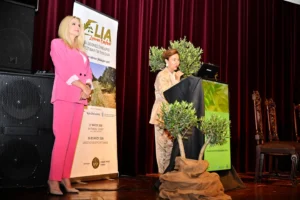
The organization of this emblematic Conference was once again carried out, with absolute and universally acknowledged success, by Cultural Association «Olive Island Lesvoss", which was formed with the vision of creating an international platform to promote the olive, as a vehicle for culture, sustainability and development. The President of the Association and soul of the Conference Fotini Tirpidiri, emphasizes: "This is an international event dedicated to olive and its olive oil, which highlights the island as a reference point for the dialogue around sustainability, modern nutrition, innovation and culture, with a diverse program of actions, speeches and experiences.
Throughout the "ELIA Lesvos Confest", simultaneous interpretation was available for the public, in Greek and English, by the company Podium. Admission for the public was free, while Certificates were given to those who attended in person. The program was successfully coordinated by the experienced Journalist & Presenter Magda Tsegou, while the photographic coverage of "Elia Lesvos Confest» the renowned photographer took over again Dimitris Talianis.
WEDNESDAY, MAY 27TH DAY 1 – START WITH A TARGETED ACTION TO PROMOTE THE ISLAND AS A DESTINATION OF OLIVE OIL EXCELLENCE AND A GASTRONOMIC GALA THAT WAS RECORDED IN GOLDEN LETTERS IN THE HISTORY OF THE CONFERENCE
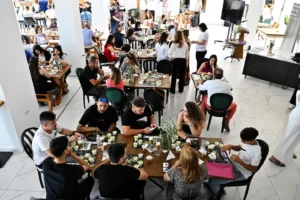
The beginning of the 3rd "ELIA Lesvos Confest", took place on Wednesday, May 27th and was hosted in the uniquely aesthetic spaces of the hotel "Mythical Coast Wellness Retreat», offering a multidimensional program to the participants. The first, therefore, of the actions of the Conference-Festival, with the theme «Lesvos in a Glass – A Sensory Tasting Journey with IOON», was a 4-hour tasting experience of selected olive oil local producers, structured around the varieties cultivated on the island (Kolovi, Adramytiani, Ladolia), in the context of which experienced tasters and experts from the IOON (International Olive Oil Network), introduced the participants to the basic elements of professional sensory evaluation, as well as to the way in which the excellent olive oils Lesbos upgrade the gastronomyThe organizer of the event, which was designed to highlight the island as a destination of excellence for olive oil, was the International Olive Oil Network (IOON), In cooperation with the Organoleptic Laboratory of Crete (OSC).
The International Olive Oil Network (IOON), is a Swiss-based initiative dedicated to promoting knowledge about olive oil, sensory science and its cultural value worldwide. IOON redefines education, science and culture around the Extra Virgin Olive Oil (EVOO), directly connecting research, producers and consumers. It is, we can say, an independent global platform, which brings together the best scientists, organoleptic analysts, producers and consumers, bridging the gap between academic research and everyday practice.
For its part, the Organoleptic Laboratory of Crete (OSC), based in Rethymno, Crete, is a leading certified pillar of quality assurance for the olive oil, offering reliable organoleptic evaluation, education and promotion services for haute gastronomy. Combining scientific documentation with a passion for olive oil, the A.S.R. operates as the ultimate judge and quality advisor for producers, olive oil makers and lovers of gastronomy, highlighting the superiority of the Greek language olive oil, envisioning its placement at the top of the global culinary scene.
The action was divided into two distinct parts, the first of which was entitled "His Language Olive oil: Understanding Quality, Organoleptic Characteristics & Sensory Principles». It was a targeted introduction to the quality of olive oil, classification and sensory principles, according to the current standards of the European Union (EU) market. This session provided explanations on how the organoleptic characteristics of olive oil (e.g. fruity, bitter, spicy, etc.) are associated with the perception of health benefits and gastronomic value.
The second part, "The Sensory Journey", was a curated, guided tasting journey into the varieties and terroir of Lesbos, taking into account comparative international standards and daring gastronomic combinations. Interactive element: “Words of Taste”, where participants, attributing a word or metaphor to each olive oil, collectively created a Poetic Wall of Lesvos.
The pairing olive oil – recipes were curated by the team of exceptional olive oil chefs, who also curated and signed all the Masterclasses and Workshops of the Conference – Festival and who are completely dedicated to olive oil and the local gastronomic heritage, and were:
Vassilis Leonidou / Executive Chef Olive oil – Restaurant “Avli” in Rethymno
Fanis Maikandis / Executive Chef
Yannis Tsivourakis / Head Chef – “Minoan Palace” in Platanias, Chania and
Marios Antoniou, Hotel Chef «Mythical Coast Wellness Retreat» in Lesvos.
Speakers & Curators of the Activities were the internationally renowned:
Spyros Tsevas / Founder of IOON & Member of the IOON Expert Council, whose speech focused on how the olive oil not only for the Lesvos of 11,5 million trees, but also for global olive cultivation.
Eleftheria Germanaki / Agriculturist, Head of the Organoleptic Laboratory of Crete & Head of the Tasters Group, Member of the IOON Expert Council. Eleftheria Germanaki highlighted the importance of organoleptic evaluation as a unique system worldwide, which determines the commercial category of a food, noting that the gastronomic identity of Lesvos speaks a universal language and the future of olive oil begins with knowledge and respect for the land.
Filippo Falugiani / Founder of AIRO – International Restaurant Association Olive oil, Restaurateur, professional taster olive oil and Wine Sommelier. Filippo Falugiani emphasized that: "Olive oil creates memories, emotions and identity."
Manolis Karpadakis / Expert in the value chain of olive oil, Special taster at the premises of MELISSA KIKIZAS S.A. – Terra Creta premises, Vice President of the Crete Exporters Association, Member of the IOON Expert Council. Manolis Karpadakis focused on the decisive role of knowledge and technology in shaping the quality and sensory profile of extra virgin olive oil, pointing out that quality is born in its fruit olive, is revealed in the olive mill and preserved at every stage of the production process.
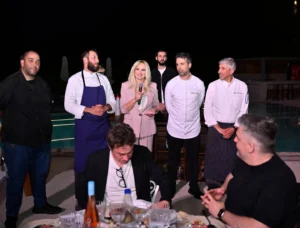
The first day of the Conference, full of colors of sea and sky, aromas of fine olive oil and unique harmoniously "olive-married" flavors, concluded in the most fitting way, with an excellent Gastronomic Gala, which was hosted in the "mythical" beauty of the "Mythical Coast Wellness Retreat" and was already recorded in golden letters in the history of the Polysynedrio.
THURSDAY, MAY 28 – THE 2ND DAY OF WORK PROVIDED ANSWERS TO CRITICAL ISSUES RELATING TO OLIVES AND OLIVE OIL FROM DISTINGUISHED GREEK AND FOREIGN EXPERTS
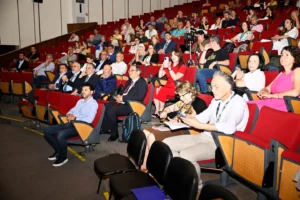
During the three days, from Thursday 28 to Saturday 30 May, the morning sessions of the Conference were hosted in the well-equipped Municipal Theatre Of Mytilene, with the program of the multi-thematic Conference - Festival focusing on critical issues of the time such as:
- Climate change and resilience of olive cultivation: Challenges, solutions and opportunities. The olive grove as a model of sustainable excellence.
- Innovation, technology and quality for more sustainable production olive oil.
- Gastronomy, hospitality and olive tourism
- Modern Greek-Mediterranean diet.
- Health, medical and therapeutic value
- Branding – from farm to market
- Her relationship olivewith culture, art and sustainable tourism: The role of cinema in promoting the culture of olive.
The proceedings of the first day of the Conference were honored with their presence and delivered a speech: the Member of Parliament Lesbos Charalambos Athanasiou, Dr. Kiki Zinoviadou – Professor at Perrotis College of the American Agricultural School, Erifili Chiotelli – Deputy Mayor for Culture and Social Welfare of the Municipality Of Mytilene and Nikolaos Giannakas – Deputy Mayor for Tourism and Entrepreneurship of the Municipality Of Mytilene.
The detailed program of the day follows:
Juan Antonio Polo Palomino (IOC) / Agricultural Engineer with specialization in Agro-Food Economics, Policy and Sociology from ETSIAM (Higher Technical School of Agricultural Engineering) at the University of Córdoba. Head of the Department Olive oil and Environment at the International Council Olive oil (IOC), on the theme: "The IOC Vision: A Sustainable Future for the Global Athletics Sector" Olive». Juan Antonio Polo Palomino underlined that sustainable production is no longer an option but a one-way street for the future of global olive farming. “There is no Plan B”, he emphasized, while pointing out that the resilience of olive farming systems is founded on healthy soil, good agricultural practices and adaptation to climate change, highlighting extra virgin olive oil as a product that connects human and planetary health.
Nikolaos Zouros / Professor, University of the Aegean, Director of the Petrified Forest Natural History Museum Lesbos, President of the UNESCO Global Geoparks Network, on the topic: "The olive at Lesvos". Nikolaos Zouros underlined: "The olive tree is a key element of the Lesvos landscape, creating impressive images, while at the same time, within the olive groves some of the most important geological landscapes of the island are highlighted, such as the protected area of Panagia Kryfti, in southern Lesvos. The aesthetic value of the Lesvos olive grove is undeniable, while also constituting an important ecological reserve."
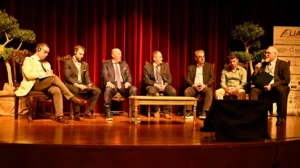
10.00 – 11.30 Open discussion on the topic "Olive oil 2026: Challenges Create Opportunities», coordinator Nikos Thomaidis / Associate Chairman of the Board of Directors & Professor of Analytical Chemistry at the National and Kapodistrian University of Athens (NKUA) and their participants:
Juan Antonio Polo Palomino (IOC) / Agricultural Engineer with specialization in Agro-Food Economics, Policy and Sociology from ETSIAM (Higher Technical School of Agricultural Engineering) at the University of Córdoba. Head of the Department Olive oil and Environment at the International Council Olive oil (IOC)
Juan Antonio Parilla Gonzales / Doctor of Social and Legal Sciences, Professor at the Department of Economics of the University of Jaen and Business Manager of Picualia Oleoturismo, Spain. Juan Antonio Parrilla González presented, in his three speeches, the challenges and opportunities of olive oil, the new narrative of the industry and the creation of culinary experiences, focusing on the transition of olive oil from a traditional agricultural product to a modern cultural and gastronomic good of high added value and highlighting the importance of the product's connection to the place, authenticity and consumer experience.
Pano Panago / Project Manager and Scientific Advisor – European Commission, Joint Research Centre (participated online)
Panagiotis Katsavellis / Agriculturist, President of the Executive Committee of the Aegean Regional Branch of GEOTEE.
Antonis Tirpintiris / Entrepreneur, Founder of Sigri Olive Mill and Falcon Group S.A., Greece, Mechanical and Electrical Engineer, NTUA
Manolis Karpadakis / Expert in the value chain of olive oil, Special Taster at the premises of MELISSA KIKIZAS S.A. – Terra Creta premises, Vice President of the Crete Exporters Association, Member of the IOON Council of Experts
Theodoros Angelidis / Agriculturist – Aristotle University of Thessaloniki (AUTH), Entrepreneur – Cinefytopolis, Olive Producer in Mytilene & Scientific Associate of the Institute of Soil Water Resources ELGO – DIMITRA
12.00 – 13.15 PANEL I: «Towards Resilient Olive Cultivation: Addressing Challenges and Creating Opportunities – Cultivation Practices and Solutions to Address Climate Change», coordinated by Dr. Vasilios Gkisakis and their participants:
Dr. Vasilis Vasiliou / PhD in Biochemical Pharmacology, Professor of Epidemiology at the “Susan Dwight Bliss” Chair and Chair of the Department of Health Sciences at Yale University, USA, on the topic: “Green Solutions for a Healthier Set of Environmental Exposures (chemical, physical, biological, social) that an individual receives throughout his life”. Vasilis Vasiliou highlighted the Lesvos as a "healthy exhibition model", connecting the environment, nutrition and health and presented data on the role of olive oil in cardiometabolic, neurological and immune health, emphasizing that the Mediterranean diet is a powerful tool for preventing chronic diseases and emphasizing that the Lesvos, can become an international model of sustainable nutrition and agroecology.
Dr. Vasilios Gkisakis / Principal Investigator, Institute Olive, Subtropical Crops and Viticulture (IELYA), Department of Olive Crops & Horticulture, ELGO – DIMITRA, Kalamata, Greece, on the topic: “Agroecological practices for resilience and increasing added value in olive cultivation”. Vasilios Gkisakis emphasized, among other things, that: “Agroecology, which is obviously a fusion of the words agriculture and ecology, includes the entire food system, from the soil to the organization of human societies. The ‘modernization’ of olive cultivation, which is based on intensive monoculture with high inputs (fertilizers, pesticides, irrigation) and which focuses exclusively on competitive productivity without seriously considering the sustainability of the production model, degrades its environmental value. "There is a need to redesign olive farming practices in a way that is both efficient and sustainable. Holistic agroecological approaches are needed that environmentally modernize the production method, 'regenerating' agricultural ecosystems and making them resilient to environmental pressures."
Dr. Nektarios N. Kourgialas / Principal Investigator, ELGO-DIMITRA – Institute of Olive, Subtropical Plants and Vine, Head of the Laboratory of Water Resources, Irrigation and Environmental Geoinformatics, Greece, on the topic: “New Challenges and Innovative Approaches for Optimal Irrigation of Olive in Greece"
Juan Manuel Martin-Garcia / Professor at the Department of Soil Science and Agricultural Chemistry, University of Granada, Spain, on the topic: “Hydroinfiltrator: Surface Water Harvesting and Irrigation Optimization to Increase Drought Resilience for Mediterranean Olive Groves”
Pano Panago / Project Manager and Scientific Advisor – European Commission (EU), Joint Research Centre, on the topic: “Integrated Soil Health Assessments in the EU for a Sustainable Future in Olive Growing Systems” (participated online)
13.15-14.00 PANEL II: «Identity Creation Along the Value Chain: From the Olive Grove to the World Map: The New Story of Olive oil», coordinated by Manolis Karpadakis and their participants:
Manolis Karpadakis / Expert in the value chain of olive oil, expert taster at the facilities of MELISSA KIKIZAS S.A. – Terra Creta facilities, Vice President of the Crete Exporters Association, Member of the IOON Council of Experts, on the topic: “Quality in Olive oil "It's not enough: Turning Core Values into Commercial Success"
Dr. Juan Antonio Parilla Gonzales / Doctor of Social and Legal Sciences, Professor at the Department of Economics of the University of Jaén and Business Manager of Picualia Oleoturismo, Spain, on the topic: «Olive oil: Added Value through Tourism and Gastronomy»
Roberta Garibaldi / Professor at the University of Bergamo (Department of Economics and Business Administration), President of the Italian Gastronomic Tourism Association, on the topic: «Olive oil and tourism: An analysis of international demand" (participated online)
14.30 – 15.30 PANEL III: «Olive Oil, Health, Medicine and Therapeutic Value», coordinated by Dr. Prokopi Magiatis and their participants:
Dr. Prokopi Magiatis / Associate Professor at the School of Pharmacy, National and Kapodistrian University of Athens, on the topic: "Clinical trials of pure polyphenols olive oil in capsule form". Prokopis Magiatis presented the latest clinical data on the polyphenols of olive oil, including studies on Alzheimer's, metabolic syndrome, osteoarthritis and cancer. Recent clinical trials show that the polyphenols high content have significant biological activity, confirming that the quality of the olive oil has an impact on health.
Dr. Pavlina Sverak / Doctor (MD), Researcher and Physician collaborating with the Department of Pediatric Hematology & Oncology, University of Minnesota, on the topic: "Extra virgin olive oil high phenolic content in combination with curcumin modifies the symptoms of Neurofibromatosis type 1"
Dr. Vangelis Dadiotis / Postdoctoral Researcher at Northeastern University, Boston, on the topic: "Oleocanthal and the Body's Stress Sensors: Implications for Inflammation and Disease"
Ramon Estruch Riba / MD, PhD, Department of Internal Medicine, Hospital Clinic, Barcelona, Spain, on the topic: «Extra Virgin Olive Oil and Heart Health: Data, Mechanisms and Dietary Recommendations from the PREDIMED Study»
15.30 – 16.30 PANEL IV: «Gastronomy: Creating Culinary Experiences with Olive Oil", coordinated by Dr. Juan Antonio Parilla Gonzales and their participants:
Dr. Juan Antonio Parilla Gonzales / Doctor of Social and Legal Sciences, Professor at the Department of Economics of the University of Jaén and Business Manager of Picualia Oleoturismo, Spain, on the topic: "The gastronomic value of the unique, 1 Michelin star awarded restaurant 'Aureum by Picualia' (Baeza, Spain), located in the heart of the Picualia cooperative olive mill"
Panagiotis Magganas / Dietitian – Nutritionist, Certified sommelier olive oil, Production specialist (master miller) and management (manager) olive oilFounder of the restaurant "Peskesi" and the Organic Farm "Peskesi", with the theme: "Utilization and Promotion of Olive oil through the Hospitality sector, Combining Gastronomy and Tourism"
Fillipo Falugiani / Founder of AIRO – International Olive Oil Restaurant Association, Restaurateur, professional taster olive oil and wine sommelier, on the topic: "Upgrading the Gastronomy to Olive oil». Fillipo Falugiani argued in his speech that upgrading gastronomy through olive oil requires treating it as a key culinary ingredient and not as a simple condiment. “Restaurants must educate the public and present the olive oil with the same respect and knowledge they show for wine," he emphasized.
Vasilis Leonidou / Head of Gastronomy, Executive Chef – Avli Restaurant, Rethymno, Awarded as Best Chef Olive oil by the International Guide “Flos Olei Guide”, on the topic: “The birth of the first Chef group Olive oil in Greece". This announcement of the establishment of the new initiative of "Olea Chefs”, where founding members are all the chefs who participated in the “Elia Lesvos Confest"(Vassilis Leonidou, Stratos Iosifellis, Fanis Maikandis and Yannis Tsivourakis), gave a new dimension to the event, highlighting the gastronomic power of olive oil through creative approaches that connect the product with history and place.
The gastronomic part of the second and third days of the Conference, both for the coffee break and for lunch, was sponsored by Mediterranean Gastronomy Academy (M.GA), whose ambitious project aims to highlight and record elements of its unique cultural heritage Lesbos, tracing them in the everyday life of the local resident and producer. With the accessibility and aesthetics of its space, the pure raw materials with a minimal carbon footprint, combined with the necessary technical equipment and specialized human resources, it aims to satisfy the specific requirements of the local and international audience and to comprehensively present the local cultural heritage of the island, through interactive participation, descriptive storytelling, the use of multimedia, as well as tasting.
After the completion of each day's work of the Conference, interesting educational excursions were organized for the participants - experiential experiences in places and businesses that develop the island's economy, through activities intertwined with the olive, as well as visits to Museums and other attractions, which highlight the history and cultural heritage of LesbosThe aim is to create cooperation networks while increasing its visibility and traffic. Lesbos.
FRIDAY, MAY 29 – THE 3RD DAY OF WORK WAS COMPLETED WITH STRONG MESSAGES OF SYNERGIES AND VALUABLE EXPERIENCES FROM THE DIVERSE IDENTITY OF WEST LESVOS
The detailed program of speeches for the third day of the Conference was as follows:
9.00 – 10.30 PANEL I: «Technological Developments in Olive oil: Improving quantity, purity, quality and disease monitoring», coordinated by Dr. Alessandro Leone and their participants:
Nikos Thomaidis / Deputy Chairman of the Board of Directors & Professor of Analytical Chemistry at the National University of Athens, on the topic: “Ensuring the Authenticity and Quality of Olive oil with New Generation Tests". Nikos Thomaidis highlighted the role of modern analytical technologies in detecting adulteration, verifying authenticity and highlighting the exceptional quality characteristics of olive oil, presenting a unique technology and methodology, with which in a minimum of time all the important substances that make up the olive oil important and irreplaceable for health.
Dr. Alessandro Leone / Professor of Agricultural Engineering and Food Machinery at the Department of Soil, Plant and Food Sciences (DiSSPA), University of Bari Aldo Moro, Italy, on the topic: "Process Control Strategies and Technologies for More Sustainable Production Olive oil". Alessandro Leone strongly supported the need to digitize and automate olive mills with the aim of reducing resource waste.
Diego Manuel Martinez Gila / Associate Professor of Systems Engineering and Automation at the University of Jaén (UJA), Spain, on the topic: "From Sensors to Quality: Non-Invasive Technologies in Modern Production Olive oil». Diego Martínez Gila, presented the most modern technologies that allow continuous monitoring of quality in real time, reducing losses and improving the efficiency of olive mills, noting that "quality is not accidental, it is the result of continuous control and knowledge of the process."
Manolis Karpadakis / Expert in the value chain of olive oil, expert taster at the premises of MELISSA KIKIZAS S.A. – Terra Creta premises, Vice President of the Crete Exporters Association, Member of the IOON Expert Council, on the topic: “Formation of the Composition and Organoleptic Characteristics of Olive oil through Knowledge and Technology"
Eleftheria Germanaki / Agronomist, Head of the Organoleptic Laboratory of Crete & Head of the Tasters' Group, Member of the IOON Expert Council, on the topic: "Quality and Organoleptic Characteristics of Olive oil»
11.15 – 12.45 PANEL II: «Eleonas as a model of sustainable excellence: Good practices for olive oil high grade», coordinated by Dr. Vasilis Vasiliou and their participants:
Professor Arnon Dag / Gilat Research Center, Agricultural Research Organization, Volcani Institute, on the topic: "Precision fertilization: A key element for the productivity of olive and the quality of olive oil»
Terry Nipp / Senior Researcher at the Texas A&M Blackland Center, Vice President for Research at AEGIS (Agricultural and Environmental Geographic Information Systems) and Director of Policy and Development of AgMIP, on the topic: "Addressing Droughts, Floods and Fires: Developing Integrated Water Management Strategies for Sustainable Production Olive in Greece"
Thanasis Kizo / PhD in Environmental Policy and Management, Professor at the Department of Geography of the University of the Aegean, Director of the Laboratory of Agricultural Geography and Precision Farming Systems PrecFarm, on the topic: "Beyond production olive oil": recording, protecting and highlighting biodiversity in extensive olive groves"
Vasilis Mouselimis / Agronomist, MSc-MBA, CEO of Falcon Agro Hellas, on the topic: "Reexamining the nutrition of olive": from nutrient intake to metabolic and physiological regulation"
Dr. Vasilios Takavakoglou / Agronomist, MSc. & PhD, Senior Researcher ELGO – DIMITRA – Institute of Soil and Water Resources, on the topic: “Promoting Soil Health and Sustainability in Lesvos: A 'Living Labs' approach from the 'European Soil Mission'
Antonio Tirpintiris / Entrepreneur, Founder of Sigri Olive Mill and Falcon Group S.A., Greece, Mechanical and Electrical Engineer of the National Technical University of Athens, on the topic: "Creating Sustainable Olive Groves: Reversing Desertification and Restoring Biodiversity to Degraded Lands"
As part of the educational excursions and experiential experiences, which were developed in the afternoon hours of the Conference days, Friday's program included a visit to the western part of the island and specifically to Sigri, with a guided tour primarily of its most emblematic landmark Western Lesvos, the Natural History Museum Fossilized Forest Lesbos, which was founded in 1994 with the aim of studying, researching, promoting, exhibiting, preserving and protecting the Petrified Forest of LesvosThe Museum's headquarters are located in the settlement Sigri, in the center of the protected area of Fossilized Forest, a preserved natural monument with worldwide recognition.
This was followed by a tour of the state-of-the-art ελαιοτριβείο Sigri Olive Mill, where technology and innovation are at the core of the company and its owners, the active family Tirpidiri, are constantly improving its operations, techniques and know-how, in order to serve its customers in the best possible way. O Antonis Tirpintiris emphasized to us, among other things, during the tour: "All our products are tested in accredited laboratories to ensure their quality and highlight all their special characteristics, while top quality is our priority. We ensure that what we give people is exactly what is written on the product label and is 100% beneficial for their health."
The impressive Olive Mill is a true jewel for the wider region of Western Lesvos, as it is surrounded by the olive groves of Tirpintiris Family, which also hosts many different native trees to which more varieties from around the world have also been added, while young olive saplings have been actively planted for the last 10 years or more. We must emphasize that the Estate, which the Synedros also toured, is a habitat for thousands of birds and animals and has increased the flora and fauna of the wider area of the village of Sigri with numerous plants. More and new birds and wild animals are coming to live in the area and this is proof that this specific investment has made a difference! Where there was once abandoned land, there is now an oasis of biodiversity.
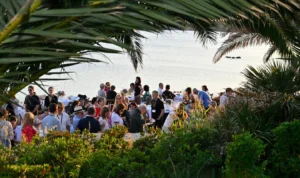
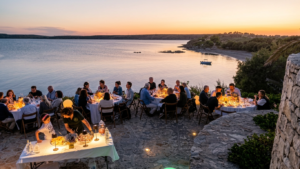
The evening, which concluded such a day rich in experiences, is certain to have been indelibly engraved in the book of memories of all those who were lucky enough to experience it, constituting perhaps the most important part, not only of this particular Festival, but also of any corresponding organization, as it included in its context all those hours during which, around a table, people who were strangers - for the most part - to each other until two days ago, acquire timeless bonds of friendship and cooperation, becoming a large company, an embrace that includes Greeks, but also Italians, Spaniards, Americans, Indians, Bulgarians, Georgians and any other nationalities that made up the puzzle of speakers and participants in the 3rd "Elia Lesvos Confest". Especially when this table is set in one of the most beautiful spots of the Lesbos, at its westernmost tip and in the "virgin" and impressively beautiful area of Sigri, in the midst of a magical landscape, which the colors of the stunning sunset transformed into a dreamlike setting. With hosts the Antonis and Fotini Tirpidiri, the people who opened their wonderful home, the impressive Villa Faros, and with it their hearts, in order to generously offer not only their impeccable hospitality, through this perfectly orchestrated evening, but a real life experience, as these small moments of joy and carefreeness are the ones we carry forever locked away in the vault of our hearts, in the form of precious memories! The Family Tirpidiri constitutes at the same time a timeless and unshakable pillar of the organization of "Elia Lesvos Confest».
SATURDAY, MAY 30 – THE 4TH DAY OF THE INTERNATIONAL PRESIDENTIAL CONFERENCE AND THE CONCLUSIONS DRAWN FROM ITS WORK SHOWED IT AS A BRIDGE CONNECTING PEOPLE, IDEAS AND PROSPECTS FOR THE FUTURE
The program of the last day of the Conference was as follows:
09.00 – 10.15 PANEL I: «The modern Greek - Mediterranean Diet connecting place, people and health», coordinated by Tasos Kyriakides and their participants:–Tasos Kyriakides / Assistant Professor at the Yale School of Public Health (YSPH), on the topic: "Research and the sustainable continuation of Mediterranean gastronomy: the olive oil as a vehicle"–Dr. Antonia Trihopoulou / Physician, Full Member of the Academy of Athens, Supervisor of the Center for Research and Education in Public Health of the Academy of Athens, Associate Professor at Yale University (USA) and Emeritus Professor at the Medical School of the National University of Athens, on the topic: "Wild Herbs and Aromatic Herbs: The Use of Olive oil»–Dr. Maria Tsimidou / Professor Emeritus of Food Chemistry – Laboratory of Food Chemistry and Technology, Department of Chemistry, School of Sciences, Aristotle University of Thessaloniki, Coordinator of METROFOOD-GR, on the topic: “Utilization of nutritional and health claims in the field of olive oil and the table olive»–Kiki Zinoviadou / Dean of Perrotis College, American Agricultural School and Head of the Graduate Program “Development of New Products and Businesses in the Food Industry”, on the topic: “Tabletop olive: an unknown treasure"–Dr Rosa M. Lamuela-Raventos / Professor of Nutrition and Aromatology, Researcher at the Institute of Nutrition and Food Safety, University of Barcelona, Director of the Research Group “Natural Antioxidants/Polyphenols”, CIBERON, Barcelona, Spain, Professor of Nutrition & Food Science, ICREA Academy Program, on the topic: “Why Extra Virgin Olive Oil "it is ideal for everyday cooking"
10:15 – 10:30 PANEL II: «Olive oil – A healing balm for everyone", with the Dimitris Maggioros / Neurosurgeon, Director of the Neurosurgery Clinic of General Hospital 251, Graduate of the University Hospital of Cologne, Trained in holistic therapies (acupuncture, nutrition, hypnosis, Shiatsu, chiropractic), Vice President of the World Academy of Chinese and Complementary Medicine, on the topic: “Olive Balsam Oil. Gift of Health”
11.00-12.00 PANEL III: «Creating a Regenerative Food Chain in the Hospitality Sector in Lesvos» coordinated by Sotiris D. Babagiouris / Co-Founder and CEO of Local Food Experts, Executive Director of Sustainable Food Destination and their participants:–Nikiforos Steiakakis / Chief Operating Officer at the Sustainable Food Destination Organization & Chief Strategy Officer at Local Food Experts, on the topic: “Creating a Regenerative Food Chain in the Hospitality Sector | Success Stories from Greece”–Dimitris Dimitriadis / President of the Institute of Organic Agriculture DIO & General Director of the Organization for the Control and Certification of Organic Products DIO, on the topic: “Sustainable Restaurant Certification Standard in Greece” –Dimitris Sotiropoulos / Quality Assurance Manager at the Organic Products Certification Organization DIO, on the topic: "Organic Regenerative Agriculture Standard in Greece | ORA Standard"
12.00 – 12.45 PANEL IV: «Olive tourism: Sustainability Lever for the sector olive» coordinated by Spyro Dafni and their participants:–Spyro Dafni / CEO & Co-Founder of Olive Fabrica (Corfu), Production Company of THE GOVERNOR – Premium Extra Virgin Olive Oil Olive oil, on the topic: "The Olive tourism as a tool for self-improvement of the sector". Spyros Dafnis underlined: "Many times we talk about olive tourism, but we have not understood that its basis is a real process. Our first outward-looking move was to open the olive mill, not to visitors, but to young children, because whatever we do is meaningless if there is no intergenerational renewal.” At the same time, Spyros Dafnis described how, together with his brother George - now the third generation of the Dafnis Family - they radically changed the production process and today they export the largest quantity of the award-winning olive oil which they produce in over 25 countries, while welcoming approximately 30.000 visitors annually to the olive mill premises, as well as to Olive House, the first olive oil bar, which they opened in Corfu and one of the first in Greece and the world.–Anna Petkova / Sommelier and trainer olive oil, Business and Marketing Consultant, Ambassador of Mediterranean and Conscious Eating, creator of My Pure Olive TM, on the topic: "Developing the culture of extra virgin olive oil" olive oil in Bulgaria"–Dimitra Mathiopoulou / Founder, The Olive Routes | MBA, Athens University of Economics, on the topic: “From Olive oil in her Experience Olive: Value Creation Case Study from Messinia"
13.15 – 14.45 PANEL V: «From Olive Grove to Screen: Digital Arts, Artificial Intelligence and Culture Olive» with participants:–Christina Mitropoulou / Screenwriter & Development Manager of Athens Film Office, on the topic: “The Power of Narrative: How Stories Shape Value, Identity and Demand”–Irina Khangoshvili / President of the “Art & Travel International Film Festival” in Georgia, director, producer, Secretary General of Cinetour, on the topic: “Cultivating Culture: The Strategic Role of Film Festivals in Promoting Olive tourism and Sustainability"
4.45 – 15.30 Completion of Conference Proceedings: Interviews and Knowledge Dissemination – Conclusions, moderated by Tasos Kyriakides,Assistant Professor at Yale School of Public Health (YSPH)
Professor Tasos Kyriakides emphasized, among other things, in the context of announcing the conclusions of the Conference:
"The return of young people to agriculture is an urgent need and there are possibilities for them to re-enter the workforce." Olive groves, given that the olive is an ecosystem essential to our future. Remember that there is no Plan B and resilience is not infinite, which is why it is necessary to invest in agriculture to ensure food security and health. The Extra Virgin Olive Oil is the story that the world is waiting to hear, as evidenced by the announcement of the creation of "Olea Chefs". The story of the product must connect with the consumer and harness the power of gastronomy and olive tourism, by means of the transformation of olive oil from a commodity to a value-added product. Core values can be transformed into commercial success. To achieve all this, children and young people must get to know the olive grove, be educated and introduced to the olive and olive oil and this can only be achieved by creating Schools Olives”.
"At the same time, cinema and the media, such as television, can dynamically promote its history and culture." olive to a wide audience, since people remember through stories and consumers buy identity, emotions and stories. It is precisely these stories - of the land and its people - that olive grove– and the passion for olive trees can be transformative and its value olive oil to increase through its connection to the narrative, as as a product it can express character and personality, while the olive trees they also cultivate culture! In addition to these, the Mediterranean diet is a small daily celebration, directly linked to both public health and cultural continuity, with the olive to be one of its main pillars. It is also important to communicate the fact that the Extra Virgin Olive Oil "It can be used both in raw foods and in the daily diet with cooked foods, given that the bioactive phenols are reduced by heat, but still exist."
"THE Olive tourism can act as a key lever for the emergence of olive oil, connecting the destination with sustainable, regenerative storytelling and creating content based on biodiversity, local tradition and culture. This is a multi-factorial design, which should focus on social impact, education and the excitement created by experiential experiences, through tasting different varieties and gastronomy in general. The Lesvos constitutes a healthy model of sustainable development, ideal for the development of a Place-based Strategy, with its vast Olive groves "to 'sign' the natural environment and become the cultural expression of the island, which is based on its tradition and natural wealth."
"The olive trees can also make a major contribution to tackling climate change and we can produce more sustainably if we choose to adapt, for example, the irrigation of olive groves to local conditions, using treated wastewater or other methods. Agriculture can help biodiversity and undisturbed substrate - which can implicitly be described as a living system - can be farmer-friendly. Soil protection, minimal disturbance, living roots, biodiversity conservation and animal integration are key requirements of regenerative agriculture, which must adapt to local traditions and local foods, while regenerative food events can reach new consumers, with Certified Sustainable Restaurants that will offer “green hospitality”, leveraging ESG criteria, for environmental sustainability, social responsibility and how these are linked to Governance. Agroecology is emerging as much more than an ethical stance, acting as a tool for resilience and, above all, as a path to added value. Technology and Artificial Intelligence can help make traditional cultivation more economical and stand up to comparison with super-intensive methods, however, quality is born with the fruit and the entire management of the product, from the olive grove to the bottle, must be based on specific data, centered on the knowledge, experience, care, passion and dedication of people who cultivate the land, seeking to give "identity" and added value to the culmination of their labor, the Extra Virgin Olive OilFinally, the producer himself must know his products and the messages to the consumer public must be clear, in order to dispel the myths about the olive oil"Consistency builds perceived value!"
The gastronomic part of the day was taken over by Vocational Schools Of Mytilene D.Y.P.A. (Public Employment Service), who offered the sumptuous lunch, while the company "Krinellia Organics» offered her exquisite drinks during the break.
This last day ended with a tour of the beautiful Molyvos and lunch at a restaurant in neighboring Petra.