Translated from English by Dimitris Symeonidis JP
Ferdinand Waldo Demara (1921–1982) was the "Great Flat-Faced Conman", an American who adopted many false identities, and became a famous conman, known for his hypocrisy as a Trappist monk, as a university dean, as a prison guard and, most famously, as a surgeon in the Royal Canadian Navy during the Korean War, where he performed major surgical operations, gaining fame and notoriety without formal qualifications thanks to his charisma, sharp mind and uncanny memory. His life is detailed in the book and film The Great Conman
Early life and motivations
Birth: Born in Lawrence, Massachusetts, to a wealthy family that later fell into poverty during the Great Depression. leaving school at 16.
Incentives
Demara's success stems from his photographic memory, charisma, and understanding of human nature, allowing him to quickly learn the necessary skills and capitalize on people's trust in his credentials.
His incredible life inspired Robert Crichton's book in 1960. Unlike many con artists, his primary motivation was not financial gain but "lawlessness" and a desire to become a hero, according to biographer Robert Crichton.
He was a daring and accomplished conman, and remains one of the most interesting figures in Canadian naval history. Not bad for a man who was neither a sailor nor a Canadian citizen.
Capabilities: He had an almost photographic memory and a high IQ, which allowed him to "speed read" textbooks and master the basics of complex fields in hours.
Notable Imitations
Solitary: He joined the Trappist monks as Brother John Payne.
Naval Surgeon (Korean War): His most famous feat was playing Dr. Joseph Cyr, a Royal Canadian Navy surgeon-lieutenant on the HMCS Cayuga. Despite his lack of medical training, he successfully performed 16 major surgeries, including removing a bullet near a soldier's lung, after studying a surgical manual the night before, saving many lives and earning widespread recognition.
Prison Director: He served as an assistant warden at a Texas prison under the name Ben W. Jones. He was well-respected for his work in the maximum security wing until an inmate recognized his face from a Life magazine article in 1952.
Academic and Clergy: He played the Dean of Philosophy at Gannon College, a doctorate in applied psychology, and several orders of monks (Trappists and Benedictines).
Founder of Walsh University: Using a false identity, he helped found LaMennais College in Maine in 1951, which later became Walsh University.
Revelation and Legacy
Discovery: His naval ruse was exposed when the mother of the real Dr. Cyr saw an article praising her "son" for his heroic surgeries. The Navy, wanting to avoid a scandal, quietly, although facing legal problems, often released him without serving time for the impersonations as his story attracted public interest.
Media and Cinema: His life inspired the 1959 biography "The Great Deceiver" by Robert Crichton and a 1961 film of the same name starring Tony Curtis.
Recent Years: In his later years, he became a licensed Baptist minister and hospital chaplain in California, serving until his death from heart failure and diabetes in 1982.
Details about his life
Ferdinand “Waldo” Demara, an American by birth, enlisted in the Royal Canadian Navy in March 1951. Using the name Joseph Cyr, he arrived at the recruiting office in Saint John, New Brunswick, and offered his professional services as a doctor. Canada was embroiled in the Korean War and doctors were in short supply. Little time was wasted in processing this valuable recruit. No one checked his background or credentials. An enlistment process that should have taken months was completed in a matter of days.
"Dr." Cyr was appointed Surgeon-Lieutenant and posted to the naval hospital in Halifax and then to HMCS CAYUGA. He joined the ship at Esquimalt for his second tour of duty in Korean waters.
If the authorities had taken the time to investigate a little, they might have uncovered the doctor's secret. He was not fit to care for the health of the sailors under his care. Demara had no formal training in any of the many careers he had adopted as a psychologist, university lecturer, Trappist monk, and prison guard, to name just a few.
What Demara possessed was a powerful mind, as well as an amazing memory. Presenting Cyr, he performed numerous minor surgeries, including dental work on the infected tooth of CAYUGA's commander, Captain James Plomer. Demara apparently studied the necessary techniques by reading textbooks and relying on the help of his assistant in the ambulance berth, as well as generous supplies of anesthetic and antibiotics.
After a commando-style raid off the west coast of Korea, three seriously wounded victims – all South Korean rebels – were brought to the CAYUGA. Cyr, also known as Demara, is said to have removed a bullet from a man’s chest and amputated a leg. Not only did his patients survive, but Cyr's colleagues were so impressed by his composure that they planned to submit his name for a medal. The talk of such an award, and the attention surrounding his Korean exploits, was probably Demaras' undoing.
The Canadian Navy apparently discovered that Demara was using a false identity after Dr. Cyr's real mother spotted a report in her local newspaper. War correspondents had picked up the story of the CAYUGA doctor and spread it far and wide.
The real Joseph Cyr, then practicing in Grand Falls, New Brunswick, realized the truth. Demara, then posing as “Brother John,” a novice monk, had apparently befriended Cyr and stolen his medical credentials. Shortly thereafter, the fake doctor showed up at the recruiting center.
“The RCN, completely embarrassed by the whole affair, refused to prosecute Demaras,” notes author Edward C. Meyers in his book about the Royal Canadian Navy in Korea, “Thunder in the Morning Calm”:
“The whole episode, Ottawa decided, was best forgotten as soon as possible. Upon his return to Canada, Demara was very quietly and honorably discharged from the service, given rehabilitation and back pay plus active duty credits of just under a thousand dollars. He was then taken to the border and handed over to the United States Immigration Service in Blaine, Washington.
The Americans had nothing against him regarding the outstanding arrest warrants, so, after a few routine questions, they let him go on his way.
It is unclear why Demara participated in his disguises. He may have suffered from some illness. Perhaps he was simply a brilliant impersonator with a short attention span for everyday life.
The resilient Demara bounced back, creating a series of new personas, including law student, cancer researcher, deputy sheriff, and teacher. This last adventure led to his arrest and six months in prison.
Peter Godwin Chance, who traveled with Demara and once had an infected toe treated by the fake doctor, remembers him as a “gentle” man, “… always the life of the party, [although] he neither drank alcohol nor smoked cigarettes.”
When asked to describe his motives, Demara is said to have replied: "Lawlessness, pure lawlessness."
Ο Ferdinand "Waldo" Demara passed away ensures 1982.
Remembering a cheater
In his autobiography, "Before It's Too Late, A Sailor's Life, 1920-2001," retired Commander Peter G. Chance recalls the last harrowing days aboard HMCS CAYUGA of Ferdinand Demara, the man he knew as Dr. Joseph Cyr.
The ship was sent north to assist in the defense of Tae Wa-Do, an offshore island about 25 miles east of the mouth of the Yalu River in Korea. During the night bombardment a signal was received from NSHQ (Canadian Naval Service Headquarters) to CAYUGA:
Only the captain's eyes have reason to believe that your medical officer is a fraud. Investigate and report.
We were shocked and couldn't believe it was true. During the confrontation, with our full support for Joe, he exploded. "You don't believe me," he shouted in his anguish. This was the beginning of a very sad revelation.
After three days locked in his cabin, dosed with barbiturates, he was persuaded to go up on deck, where he surrendered.
Before he left, he said… "I'm so sorry. I was hoping we could be together until the ship returned to port. I would have just left at that moment."
KClick below to watch the 1961 film starring Tony Curtis.
https://archive.org/embed/TheGreatImpostorTonyCurtisClassicFilm
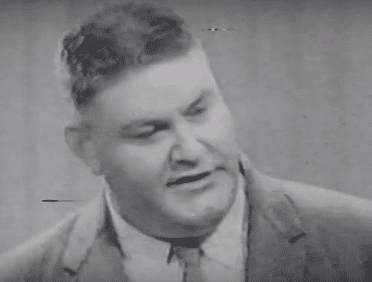
Photo By John Guedel – Original publication: You Bet Your LifeImmediate source: https://www.youtube.com/watch?v=33Rz5yYCeks, Fair use, https://en.wikipedia.org/w/index.php?curid=77433710 , https://en.wikipedia.org/wiki/
Source:
https://navalandmilitarymuseum.org/archives/articles/characters/ferdinand-waldo-demara