
Yannis Xylikiotis was born in the village of Xylikoi in Lokris between 1715 and 1723. His real name was Yannis Zotos, but he remained known in history as Yannis Xylikiotis, that is, Yannis from the Xylikoi. Yannis grew up in his village and was nurtured with the teachings of freedom, having as his role model the thieves who operated in the area undisturbed due to its mountainous and forested terrain.
He was a young man with beautiful features. Tall, thin and with long black hair full of strength and determination. We do not know for sure the reasons that led him from a young age to leave his village and follow the life of a thief. Various hypotheses have been heard from time to time, perhaps the most prevalent being that of honor. That is, that Giannis "came out" for reasons of honor.
At that time, Roumeli was full of young and older fighters, who could not stand the oppression of slavery and had fled to the mountains fighting the Turkish conqueror. Katsonis, Vlachothanasis and Andreas Verousis (Androutsos) are just a few of them and the most important ones with whom Yannis Xylikiotis would collaborate.
Yannis Katsonis or Vrykolakas was the first to hold the Salona armatoliki in the early 18th century.th century. After the victorious battle at Vounichora, the crushing of the Turkish army at Vidavi and the beheading of the dervenagas of Lidoriki by Vrykolakas himself, the Turks were forced to appoint him as the charioteer of Salona and Lidoriki, giving him the title of “Exarch”. Thus, with this office, Katsonis’ authority extended from Lidoriki and Malandrino to Livadia.
Mitros Vlachothanasis was born in 1695 in Vounichora, Parnassida. In 1755 he took over the army of Malandrinos and after a while he remained the only leader of all the army. He took with him the little Andreas Verousis at the age of 15, whom he had as his son. Andreas Verousis at the age of 25 had his own group consisting of 300 men with his lair at the top of Parnassos, Liakoura. In 1769 he went down to the Morea to help in the Orlof Revolution. After 1771, when Vlachothanasis and Xylikiotis were killed, he remained the only leader in Roumeli, recognized by everyone. He died in 1797 in Constantinople in prison. These few parenthetical remarks about the three most important competitors of Giannis Xylikiotis.
It is worth noting that when Yannis Xylikiotis left his village, he joined the men of Vrykolakas, who dominated, as we said, the area of Roumeli. Xylikiotis would quickly prove his bravery and become the leader of a small group of armatolos, or boulouktsis. He fought the conquerors from Livadia and Mendenitsa to Salona and even further, to Kravvara. At the age of twenty, he would attend, along with other kleftarmatolos, at the house of the captain of Vrykolakas, when he was taking his last breath, to receive his wish. Yannis Katsonis appointed his wife's brother, Kostas Zacharias or Konstantaras, as his successor, giving him the thick ring with his emblem. Yannis Xylikiotis will fight under his orders until 1755 when Konstantaras will also die.
It was a period of great bloodshed and unrest as the Turks did not recognize Constantaras as the successor of Katsonis. Thus, Constantaras committed all kinds of atrocities against Turks and Greeks. After his death, his armatoliki was divided. That of Salona was taken by Lambros Tsekouras and Vergos Vlacharmatas, that of Lidoriki (Dorida) by Floros Giataganas and that of Malandrinos by Vlachothanasis. Yannis Xylikiotis continued to fight under Vlachothanasis. Tsekouras and Vlachothanasis became independent from the rest and conducted operations on their own for a long time until they fell into the hands of the Turks through betrayal and were killed. Those of their group who escaped fled to Aetolia-Acarnania. Only Vlachothanasis and Xylikiotis remained in the wider area.
In 1755, he went out as a thief in the mountains and found himself in the daifa of Vlachothanasis together with the old thief Xylikiotis and Androutsos. At the age of 25, in 1765, the latter created his own body consisting of 300 men, as we said above, and collaborated with Vlachothanasis and Xylikiotis. At that time, he was active in the entire area of present-day Boeotia, Phthiotis and Phocis.
We know that Yannis Xylikiotis had the armatoliki of Atalanti and Mendenitsa during the Orlofika period. In 1770, he probably met Androutsos in Dadi – as a well-known Kleftiko song tells us – and they agreed to take part in the Revolution. Thus, Androutsos went down to the Morea to fight. We do not know with certainty the movements of Yannis Xylikiotis during that period. However, we know that later in 1770 – after the battle at the Mytika position near the road to Salona – Vlachothanasis met with Androutsos – who had in the meantime returned, almost miraculously, from Morea – and Yannis Xylikiotis and together with the rest of the captains of the region, they formed a body of just sixty comrades and entered Phthiotis, where they began the massacres and burning of Turkish villages. The Turks reacted with strong forces and besieged them in a monastery in Vardousia – as a kleftiko song tells us – from where the Greeks managed to escape with bare swords and many losses.
Selibeis, dervenagas of Salona, ignoring the kleftarmatolous and in order to have the upper hand, appoints Giannis Lefkaditis, armatolous of the region, sidelining Androutsos. The reaction of Vlachothanasis, Androutsos and Xylikiotis was stubborn. With the reinforcements of Dedousis, Sousmanis, Vidaviotis and Lidorikiotis, they decided to confront Selibeis' forces at Penteoria. In the deadly battle that followed, after many losses and stubborn fighting, the Turks fled to Karoutes and closed themselves in a deserted enclosure. They fought for three days and nights and after seeing that there was no possibility of saving themselves, they decided to surrender. Selibeis himself had also taken part in the battle. After the latter and his men surrendered, they begged on their knees the chieftains to spare their lives in any exchange. The chieftains, and first Androutsos, showed magnanimity and released them, without ransom.
The klephtarmatoli continued their activities until the autumn of 1770 when they fought the battle of Malandrino, where Dedousis and Sousmanis fell heroically fighting. After this battle, everyone returned to their village for the winter. Yannis Xylikiotis went to Xyliki not knowing that this was the last time. Elder Vlachothanasis (he was 75-76 years old) announced to his comrades that he would go to his village for the winter and remain there to die in peace.
In the spring of 1771, the klephtarmatoli left their villages and went to Vounihora where they met with Vlachothanasis to decide on their moves. The klephtarmatoli decided to move against Mukhtar Pasha of Nafpaktos because the latter had captured the son of Androutsos – who came from Xylogaidara – the previous winter and had executed him inhumanly. Androutsos managed to convince the old Vlachothanasis to follow him. The klephtarmatoli of Vlachothanasis, Androutsos and Xylikiotis left Vounihora and arrived outside of Nafpaktos. Mukhtar Pasha took a select body of Turks and headed to meet the Greek klephtarmatoli. The latter avoided facing him in an open area, but were forced to fight near the village of Gavrolimni, west of Nafpaktos. The deadly battle lasted for hours without victory for either side.
At some point in the battle, Vlachothanasis stood up and, drawing his sword, rushed to confront Mukhtar hand to hand. Yannis Xylikiotis, seeing his captain rushing alone against a numerous body of Turks, did not hesitate for a moment and followed him with a sword. The fire of all the enemies turned on the two men and killed them. Vlachothanasis, seriously wounded and realizing his impending death, shouted to his lads: "Boys, take our heads and have my wish." Thus, the hero Vlachothanasis breathed his last.
From that moment on, a fierce struggle was waged between the Greeks and the Turks over the lifeless bodies of the two fighters as to who would conquer them. Androutsos and his men were determined to either die or take the lifeless bodies of Vlachothanasis and Xylikiotis. In the face of the power of the klephtarmatoles, the center of Mukhtar Pasha began to collapse. However, when the dervenagas of Nafpaktos Mitso-Bonos arrived with a large force of men, the klephtarmatoles were forced to retreat and the Turks chased them for a long time. The Greeks gathered at the Khani of Skorda. There were many dead Turks, but they finally managed to take the heads of Vlachothanasis and Xylikiotis and began to carry them triumphantly among the crowd. Finally, they were sold, along with the unique and extremely expensive chariots of Yannis Xylikiotis, to the Bey of Salona for a large fee. The Bey girded Xylikiotis' chariots and ordered Vlachothanasis' head to be impaled and placed on a pile of human excrement.
After the battle, Androutsos was recognized as the leader by all the kleftarmatolous of Central Greece. Finally, it is worth emphasizing that there are numerous folk and klefti songs that mourn the loss of Yannis Xylikiotis.
Eternal is his memory!
Epilogue
This chronicle was awarded with the "Special short story award from the Greek Writers' Union in 2025 (see: https://ellineslogotexnes.gr/wp-content/uploads/2025/11/237-ok.pdf) "
was based on the first and only book that has been published about the klephtarmatolos Yannis Xylikiotis. This is none other than the book of my friend-mentor, an excellent writer and person, Protopresbyter Fr. Diomedes Panagiotopoulos from the Xyliki of Phthiotis. Fr. Diomedes, in a comprehensive study, presents the life and work of his fellow countryman Yannis Xylikiotis with his well-known, lucid, literary, but also historically valid, speech.
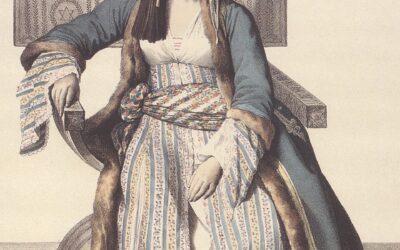
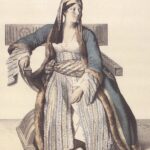
Photo From Web CD “The Revolution of 1821” distributed free of charge with InLife magazine April 2001 issue No. 26 – Web CD “The Revolution of 1821” distributed free of charge with InLife magazine April 2001 issue No. 26, Public Domain, https://commons.wikimedia.org/w/index.php?curid=31604499, https://el.wikipedia.org/wiki/