Translated into Greek by Michalis Peridis
Neither advisable nor necessary. The States should be given — insofar as the historian has the ability to do so — the name that provides, most completely, an idea of their composition and their language. After the 8th century and perhaps already after the 7th — the term "Roman" becomes misleading. The empire was not "Roman" nationally - it was not Roman linguistically; it was not called "Roman" by the modern European nations.
The Greeks, it is true, called themselves "Romans" to avoid the name "Greek" which meant pagan. Later, from the 13th century to the 15th, when the connection between "Hellenism" and paganism weakened, the old name reappears in some chronicles and even the Byzantine Monarch is sometimes called "King of the Greeks", like the present-day Greek king.
Moreover, the adoption by the Greeks of the name "Romans", for religious reasons, is not a sufficient reason to characterize seven centuries of southeastern European history with a name that causes confusion among those who are not at all familiar with or know very little about this long period.
Those who possess it will consider the name as unscientific. The historian should strive to use precise and clear terms. The term "Roman" gives us the idea of a Latin-speaking people inhabiting Italy, or originating from it (and politically, of a domination or authority of such a people over foreign nations, as during the last years of the Republic and the first centuries of the Empire).
The term "Greek" gives us the idea of a Greek-speaking people who inhabited the southern part of the Balkan Peninsula, the islands of the Eastern Mediterranean and Western Asia Minor or originated from these places. (The name "Roman" can also be extended to a Latinized, and the name "Greek" to a Hellenized population. The eastern part of the State, where the Roman Empire existed, did not include, after the 7th or 8th century, almost any Latins', therefore it was composed almost entirely of Greeks.
If we wish to write history carefully — noting the changes brought about by time and making them clear in our terminology — we should call this part the Hellenic Empire, otherwise called the Byzantine Empire, which contains the same meaning, and which is in use among the Greeks of today. We should recognize them as sufficient authority in what concerns their past because of that discerning faculty which races draw from their familiarity with the course of their national life.
This text is the original text written by C. P. Cavafy in the English Language.
Neither advisable, nor necessary. States should be given — when the historian has the option — the appellation which best conveys an idea of their composition and their language. After the 8th century — and perhaps even after the 7th — "Roman" becomes a misleading term. The empire was not "Roman" ethnically? it was not "Roman" by language? it was not called "Roman" by the contemporary European nations.
The Greeks, it is true, called themselves "Romaioi" in order to avoid the name of "Hellene" which denoted the idolater. Later, from the 13th century and on into the 15th, when the connection between "Hellenism" and paganism grew less present, the old name reappears in some chronographers, and even the Byzantine Monarch is occasionally called by them — like the actual Greek king — "Basileus Hellenon".
Besides, the assumption, from religious motives, of the name of "Romaioi" by the Greeks is not a sufficient reason to label seven centuries of South Eastern European history with a designation which is confusing to those who are unacquainted or but little acquainted with that long period, and which will be found unscientific by those who are conversant with it. The historian should endeavor to use accurate and clear terms. "Roman" conveys to us the idea of a Latin-speaking people, dwelling in or originating from Italy (and, politically, the predominance or rule of such a people, as in the last ages of the Republic and the first centuries of the Empire, over foreign nations). "Greek" conveys to us the idea of a Greek-speaking people dwelling in or originating from the Southern part of the Balkan Peninsula, the islands of the Eastern Mediterranean, and Western Asia Minor. (The name Romfgan can also be extended to a latinised, and the name Greek to a hellenised population). The eastern section of what had been the Roman Empire contained, after the 7th or 8th century, almost none of the former element; it consisted almost entirely of the latter. If we wish to write history carefully — noticing the changes effected by time, and making them evident in our terms — should we call that section the Greek Empire? or then the Byzantine, which connotes the same meaning, and which is a designation in use among the Greeks of to-day, who should be accounted fair authorities on their past by reason of that discriminating capacity which races derive from familiarity with the trend of their national life.
CPG
Peridis, Michalis (1894-1968)
Curriculum vitae
Michalis Peridis, son of Ioannis and Angeliki, was born in Agios Stratis in 1894. At a very young age he came to Alexandria, where he studied at the Tositsaia Elementary School and then at the commercial department of the Averofion Gymnasium. In 1918 he received a law degree from the University of Geneva. He returned to Alexandria while continuing his studies in Geneva as a doctoral student. In Alexandria he worked as a lawyer.
In 1924 he married the painter Erietta Kampouraki and in 1952 they moved to Athens. There, Michalis Peridis remained until his death, on February 20, 1968.
His involvement in literature began in 1914, when he met the collaborators of the Alexandrian magazine Grammata. In 1915, he wrote articles for the Alexandrian newspaper Ta nea tou Giannis Kasimatis under the pseudonym "Enas" and at the same time began his collaboration with the magazine Grammata. Along the way, Michalis Peridis was a dynamic member of the magazine's publishing. In 1920, he became editor-in-chief of Grammata until the end of its publication, in 1921. His involvement with the magazine was the occasion for him to meet K.P. Cavafy, become friends with Yannis Kefallinos and collaborate with a number of important figures of the time.. Michalis Peridis was one of the first scholars of the Cavafy archive and his book The Life and Work of Constantine Cavafy was one of the first studies to draw evidence from it.
Projects:
Peza: Agony (1916), The Galatians in Alexandria (1953).
Μελέτες: Costis Palamas: an overview of the poet's life and work (1938), The life and work of Constantine Cavafy (1948), C.P. Cavafy, Unpublished prose texts. Introduction and translation by Michalis Peridis (1963), The Greek language and its current form (1965).
[Resources for writing a resume: 1. Maria Rota, The magazine Letters of Alexandria (1911-1919), Athens 1994, doctoral thesis, National University of Athens. 2. Michalis Peridis, The Galatians in Alexandria, Agony, philological editing Euripides Garantoudis – Maria Rota, Athens, Gutenberg, 2018. 3. Archive material].
Sources:
C.P. Cavafy
Unpublished Prose Texts: Presented and annotated by Mich. Peridis. Fexis Publications, Athens, 1963
Archive A.E. 310 – Peridis, Michalis
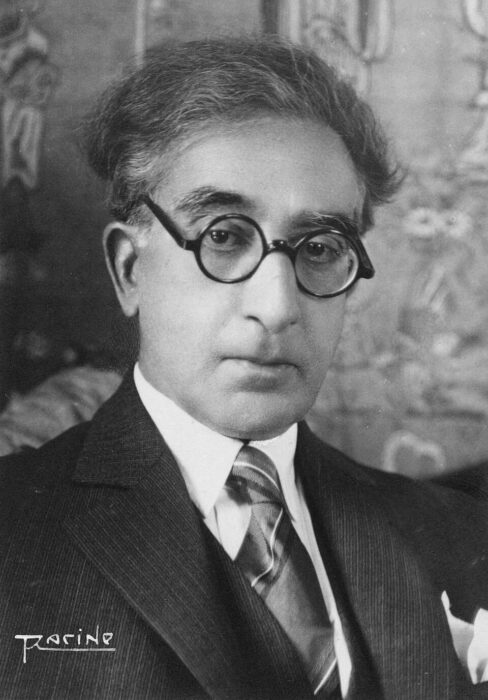
Photo By Unknown photographer (signed: Pacino) – CP Cavafy Archives – Onassis Foundation, Public Domain, https://commons.wikimedia.org/w/index.php?curid=11369226, https://el.wikipedia.org/wiki/