July 27, 1941, 7th Fort, outside of Knovo Lithuania.
When the Germans occupied Kovno on June 24, 1941, about 25.000 Jews lived there. The next day, Lithuanian Nazis attacked the suburb of Slobodka and the center of Kovno, near the Wehrmacht headquarters, killing about 800 Jews, including many babies. But the carnage culminated on that July day. T. Snyder in his book BloodLands tries to explain why fascism appeared so 'endemic' in those societies... No, it was not a question of bad blood, it was preceded by the famine caused by Stalin (what some on the left call a myth). But why the Jews? Because according to Nazi propaganda, the October Revolution was not the result of the Tsar's criminal anti-popular policy that resulted in thousands of deaths, but it was their invention, even though they had already been persecuted, even though persecution of Jews was developing in the USSR as well. Always the concealment of socio-political and economic causes leads to the 'metaphysics of Nazism'. A vicious cycle where pain and rage is shifted to the weak opportunist, the usual suspect, the convenient victim
In December 1941, the German Jaeger Commander wrote:
“…I can confirm today that Einsatzkommando 3 achieved the goal of solving the Jewish problem in Lithuania. There are no other Jews in Lithuania, except those we need as laborers and their families.”
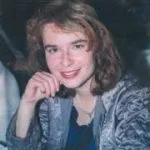
A year ago a brilliant woman, Matilda Olkin, just 18 at the time, would start one Calendar which, when it was published in the 21st century by the research of the great historian Violeta Alekniene, shook Lithuanian society and brought before the collective consciousness the question: "with what right did we cooperate then?" against whom?” In August 1940, in a half-timbered house in northeastern Lithuania, this young Jewish writer unlocked her diary and began to write:
I see — multitudes fall on their knees,
I hear — nights full of weeping.
I travel the world
And I dream this strange dream.
The poem, which describes the pilgrimage of an "exhausted" people to an inferno of "burning sands," was the first written by Olkin, who wanted to study literary history.
"People are starving. The war is coming towards us. I might not get my scholarship – nothing is certain, everything is a blur. And I'm standing on the edge of a cliff, picking the petals of a daisy, asking, “Do you love me? He does not love me.'"
In what may be her last poem, dated November 14, 1940, the setting is a funeral. The narrator looks back at the crowds of mourners:
Oh, how many have gathered
And no one will see the love.
I hold a baby in my arms –
And my infant is Death.
photo https://pixabay.com/el/