
by Francesco Battistini
Egypt – St. Catherine's Monastery in danger due to Al-Sisi's ambitions
In Abdel Fattah Al-Sisi's Egypt, you will have no other god but tourism.
From a place of resurrection to a holiday resort
The Egyptian general wants to turn this religious and archaeological site into a tourist hub. Outrage in Greece.
Deep down, deep down, it is nothing more than a Christian monastery. And what does it matter if it is the oldest in the world. If it was founded by the mother of Emperor Constantine. If it was erected on the spot where Moses received the Ten Commandments and the biblical bush burned. If it houses an amazing Byzantine library, second only to the Vatican, and one of the most important collections of icons in the world. If it was protected by Muhammad himself, and then by the Crusaders, and it became a holy place for the Jews as well. If not even Napoleon dared to touch it and it withstood the attacks of ISIS. What does it matter that UNESCO has declared it a world cultural heritage monument. In Abdel Fattah Al-Sisi's Egypt, you will have no other god but tourism — and only the councils of the general are now tablets of law.
Last Wednesday, three Sinai judges reopened the file “the governor against the monks of the Monastery of Saint Catherine,” reviewed the documents and expert opinions. And they ruled—after fifteen centuries of history and years of pressure dating back to the time of the Muslim Brotherhood—that the time had come to change its use: “The state owns the site as public property” and therefore “has the right to use it as it wishes.” From a place of resurrection to a holiday resort.
It has always been the rais's dream: to transform Saint Catherine and associate it more with diving tourists from Sharm El Sheikh than with the Holy One. "The goal - a source tells AsiaNews - is to turn it into an attraction similar to the Pyramids or Nile cruises."
The monastery has always received tourists—4-5 thousand a week—but in Cairo this is considered a small number: in the heart of the natural reserve large hotel units are being planned to attract Americans and Europeans en masse, overcoming the only obstacle: the Greek Orthodox monks, who in the olive groves around the monastery offer work to hundreds of Bedouins, who are not liked by the regime. The siege lasts for years. And the legal loophole was found when the monks were asked, after pressure from the governor of Sinai, to retrieve from the archives documents from the 6th century that document their ownership — which are now unreadable. The government judges ruled without a doubt. And where Moses' rod struck, the decision says, from now on the state treasury will strike: the ownership of the monastery passes to the state and the monks must abandon their cells, "they will only be able to remain to perform their religious duties, as long as the new owner allows it," meaning Al-Sisi.
In Greece, the reaction was immediate. “A scandal,” declared Archbishop Ieronymos: “We are experiencing another decline of Hellenism and Orthodoxy. A violation of religious freedom. The oldest Christian Orthodox monastery is entering a period of severe trial, which awakens memories of dark times.” The powerful Greek community in the United States is also reacting: “Saint Catherine is soil trodden by God himself,” declares Archbishop Elpidophoros. “This is a treasure of humanity. Christians, Jews and Muslims have always found peace within its walls. The Egyptian government must commit to its preservation."
Greek Prime Minister Kyriakos Mitsotakis raises the monastery’s flag, fears a provocation from Islam, promises to “preserve the pilgrimage character” and “resolve the case.” He has already contacted a worried Al-Sisi, who now, under the weight of the reactions, backs down and recalls “the ancient ties between Greeks and Egyptians,” publicly pledging to “save the unique and sacred religious regime, guaranteeing that it will not be violated.” Twenty days ago, the Egyptian president had spoken about the monastery during his official visit to Athens, while the Foreign Minister was quick to assure him that no one would ever touch Saint Catherine: "Its religious and archaeological significance will remain completely intact," as the judges' decision and the state claims concern "only some of the monks' lands, far from the monastery."
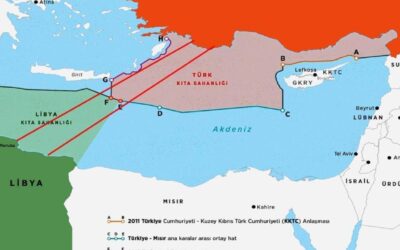
Is the fight over? Not exactly. According to the Pontifical Institute for External Missions (PIME), The decision to close the monastery remains open. And diplomatic sources estimate that Saint Catherine may end up being an object of exchange. Greece and Egypt recently signed a €5 billion plan to lay 1.000 km of undersea cables: as an alternative to Russian gas, they will transport cheap energy from North Africa to Europe. Speaking to Mitsotakis about both the cables and the monastery, Al-Sisi did not promise that the tourism plans for Sinai would be revised. “That’s where the energy we give you comes from, that’s where our future is.” And what if a little history is sold in exchange...
source:
columnist:
Francesco Battistini
photo
https://en.wikipedia.org/wiki/Saint_Catherine%27s_Monastery#/media/File:Katharinenkloster_Sinai_BW_2.jpg – Berthold Werner – Own work, CC BY-SA 3.0, https://commons.wikimedia.org/w/