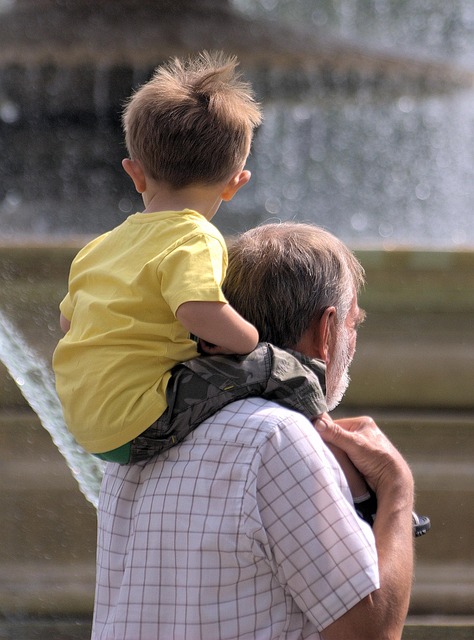
Haris had come for the holidays. As soon as the schools closed, his parents had done him a favor and brought him to his grandfather's that very day. In the village he could enjoy playing, the countryside and the sea without restrictions and always with the joy and anticipation of a new experience. No one ever had to persuade him to go. Even though the village was somewhat isolated on the other side of western Crete. He had the enthusiasm by nature for this and the key to his heart, after passing the Topolia gorge that took his breath away with its immense rocks and steep cliffs, as soon as he descended into the forest with chestnut and walnut trees, he always confidently opened this door of preference for the small village. He didn't like the big city and the apartment that much.
As soon as he arrived, he would hang the lantern of his imagination in the middle of the yard and wait, listening to the moon running with the cedars on the dunes of Elafonisi and the footprints of the water on the stone. In the village it was different. He could see the whole world through the colored glass of the soul and thus he saw everything more beautifully.
The very next day he got up early. He opened his big black eyes wide, stretched his arms like a bird ready to fly and couldn't get enough of looking at all that nature and the distant horizon revealed to him. He breathed in the fresh scent of lemon blossom and citron that came from the orchards on the slope of the hill beyond towards the sea. But the smell of cinnamon, as well as of the steaming bread from the wood-fired oven of Mrs. Erasmia, the baker, did not leave him indifferent.
He closed his eyelids and galloped with his imagination like another knight in a fairy tale from the depths of the sky, to the depths of love and even further.
The glory of the sunrise finds a grandfather and grandson in the vineyard, an hour's drive from the house. The oak trees all around compete as if they will reach higher. "The bushes are more bushy than they were last year," observes Haris. "And you are taller, you have jumped tall," retorts the grandfather. The apricot trees in full bloom are ready to steal the show. The landscape with the morning dew shines in the spring light.
The light flickered on his face, as only light knows how, and Harry's entire body shone, like another shy lemon blossom when a ray of sunlight falls on it.
"The light, which flickers and likes to play with innocence in and out of the shadows and loves to transform the insignificant into the great, to make the world see its best self and to define the roof of love high up, in the highest roofs of the sky. The light, the one that comes to meet us, the one that cannot exist without the journey, that looks inside us and knows, that does not get tired and does not grow old and is not imprisoned, but remains in a smile," is how the grandfather remembers commenting on the light.
He smiles and continues his reminiscence of his grandfather's words: "The light in the gaze, that which does not know what a lie is, but only reads and is read for the truth." This light is also an invitation to Harry's eyes, which open and close greedily to enclose the magic of nature within them.
And it is true that it plays a game, when it mixes in drops with the joy of sudden rain, a game of nature intended to give the thrill of a new experience with colors when the sky lowers.
A rainbow, a few fields and vineyards below, majestically bridged the land and the sea. What a precise frame of color and how it manages to so simply decorate everything, trees, fields, the mountain, the plain, the sea, the boats, the houses, even the blackened chimneys!
"Grandpa, grandpa! Look, grandpa!" the child said loudly, and a sweet blush of excitement rose on his cheeks.
"What is it, my son?" the old man wondered, and raising his eyes from the freshly dug earth, he searched with his gaze far beyond to the junction of the mountain peak and the cloudy horizon, to see.
-A rainbow, grandpa, it's here, right here near us.
"Where is my son? Where is Kerazoza?" he asked, seemingly unsuspectingly, rubbing his eyelids.
-How did you say that, grandpa?
"I was living, my child." He spelled out "Ke-ra-zo-za" and laughed out loud like a teenager who flaunts himself in front of the mirror, feeling the fluff on his upper lip.
"Kerazoza," Harry repeated the new word in surprise and pointed with his hand to the southwest of the hill.
A blackbird flew through the ivy foliage in search of another shelter. It spread its wings, took its risk and frrrr, nail for Kerazoza. The old man hugged the little one affectionately. His hands squeezed the child with love, with kindness. The hands that reverently dug the soil, with the same reverence touched the flowers, the trees and the life that sprouted from it, because everything comes to life from the soil, "since this was, is and will always be, the dowry and the fate, of man and the world," he remembers as soon as he feels the tight embrace.
Mr. Damianos knew how to share and give love. He knelt, lowering his proud posture and came to the same height as the child. He looked at him thoughtfully, as if he were trying to find time, as if he were trying to find the right words, to see how and where to begin the conversation.
-Help me from above, help me a little, I'm getting old and my mind is watering, come on, what are you doing, you've grown old it seems to me and you don't listen, come on, this is the most tender and the most precious sprout that my hands have ever touched. He whispers as if to some invisible companion, neighbor or fellow traveler and that silence that had preceded is broken.
Grandfather and grandson become one. At such moments they feel like they are discovering the mythical reading of the world, sometimes on the paving stones of the small yard and sometimes in the freshly dug soil, and they taste the joy in small and simple things. The rainbow, Kerazoza, as they both now call it, rises to the sky in front of them.
-A magnificent arched bridge, my well-written one, magnificent, so will all the small and large gates of the great city be in the time of love.
-I like listening to you, grandpa, I like it.
The old man ponders, taking a deep breath of the fragrant breeze that comes through the foliage. He doesn't force what comes to his mind. He doesn't rush. Let the thoughts pass through the sieve of the heart. Then, with slow movements, little by little, he takes his handkerchief out of his pocket, the one with the white embroidery and the calligraphic monogram in the corner, a scarlet capital alpha. An idea flashes in his mind. He gets up, smiling, and then gently closes the child's eyes with the handkerchief, like when they play blindfold.
-Be sad, look at this great bridge and forget your sadness. Admire it and start singing even if you thought you didn't know. Make a wish for your friends and it will come back to you a thousand times. That's it. Try to see Kerazoza differently, like this, with your eyes closed, she leaned down and whispered to him.
-But how, how is it possible? He asked and asked again. How, grandpa?
-You can, the same miracles you see before your eyes, see them behind them. You can. Let your thoughts roam and wander everywhere, wherever your heart loves and wherever your mind takes you like lightning.
"Isn't it difficult?" the little boy asks with some protest.
-All efforts are difficult, but only at the beginning, encouraged the child, kindly. At first you may have difficulty, but then, when a crack of light opens within you, with the secret eyes of the soul you will see what the other earthen eyes cannot see. Come on, Harouli, let's make a wish for the whole world, while Kerazoza still holds on and take the colors, her own colors, to make a silk sash and with it to tie life and love. Kerazoza is the bridge of love, says Mr. Damianos and closes his own eyes too.
He is pleased with the child's purity and effort. He is pleased and proud. The smile brings the song to his lips with the ease of a breath. The deep manly voice overflows with fond memories and old words. The song mixes with the earth's fragrance from the moistened soil and the colors of Kerazoza. He also holds the blood-stained glasses. He holds them with a carefree hand to feel the miracles and begins a fairy tale:
"Once upon a time, my child," the old, unwritten stories said, "once upon a time, the waxen Zoe took the large wooden vessel, put in the sourdough, the oil, the hot water, the salt, the bay leaves, the spices and the wheat flour and said to knead seven loaves of bread for this whole village. She had made such a vow to that moon that had descended from the gorge and had been gifted to her on the shore. It was still morning when she pulled back the seven-month-old sheet and saw with joy that her dough had risen and was muttering flits, flits and flits. Her chest also swelled with pride. She had never had another housewife so accomplished." He rolled up his sleeves to his elbows, took more flour from the sack, poured in a little more water, leaned over the bowl, took two deep breaths, and brought the dough out for another go, the sixth time, the most tiring.
She said to rest, take a breath and then start shaping the buns. She poured a glass of water, poured in a lump of Chian mastic, and took sips of it until her mouth smelled of musk, so that her buns would be successful, that's how her mother had taught her, that breathing also has its importance for the dough to come out good and smell of musk. So there she was sitting and waiting, she yawned once, yawned twice, yawned three times, she was sleepy, it didn't take long, she fell asleep!
As soon as she realized it, she closed her eyes and fell asleep. And she saw in her dream that everyone, young and old, in the village was holding a seven-layer sesame bun in their hands and was very happy, everyone, except for a little girl with curly hair and a moon-like face who was not happy. She was smelling the bun and kept frowning and making a sour face.
In her sleep, she still blinked her nostrils with curiosity. Something suddenly spoiled her joy and her dream. Something very sour, she thought, and she jumped up, confused like a spring. She threw handfuls of water on her face, and when she woke up for good, she realized that her dough had started to sour.
She sat down on the stool again and began to cry. She was so ashamed of herself and her suffering. At that moment, a ray of sunlight passed through the skylight and stopped at a tear that was flowing down her cheek. The ray of sunlight knew a secret to correct the damage that had been done to the dough, but she could not testify to it alone, she had no right to do it without a reward. The waxen Zoe continued to look at her boat and cry. She cried so much that it seemed as if it were raining. The ray of sunlight would not leave, hanging there in the skylight. She had felt so sorry for her that it was trembling. Then, for her good luck, Ostria blew. The shutters slammed, the windows were opened wide, her warm breath poured into the house, she took the tears in return, scattered them everywhere, and along with the tears she took the seven-ply sheet, which after swelling noisily above the boat, then flew away like a bird.
Kera Zoe got up, rubbing her eyes. Save my dough and the joy of my people, she begged from her heart, all the people of the village were her own people. "Kera Zoe, sugar", the sunbeam managed to catch up and betrayed the secret to her before a cloud lowered and hid her. "Kera Zoe, sugar", the tears that had become rain repeated with anguish and that seven-colored sheet, as soon as the cloud frayed a little and flew away, turned back and became a seven-colored bridge now and connected the boat with the village square. And Ostria blew warm breaths into the hearts of the people.
The waxy Zoe ran to the cellar, took two handfuls of sugar, scattered it in the bowl and set about correcting her mistake. This was the seventh time she had brought the dough around. And as she later made the buns in the oven, so that she would never forget it, she would say and say it again: "waxy Zoe sugar". From the many times she said it, she got her words mixed up, and a little from her fury and more from her joy that her mistake was being corrected, in the end she ate a few syllables and the whole thing, "Kerazoza, Kerazoza, Kerazoza", she said in a singsong voice. They also heard this word in the square and passed it off as a new song. And when they raised their eyes and saw this bridge, they danced and sang, such a feast with just one word and with the smell of the seven-layer dough that had begun to bake after hours. And it tells you that on that one and only time, all the children of the village had climbed up Kerazoza and saw from there with their hearts, the wants of life and the powers of the world.
Since then, the seven-fold woven sheet comes every time a mistake needs to be corrected, it comes with a ray of sunshine and with the rain, and as Ostria blows it, she whispers the same secret: "kera Zoi zachura" and always at the end of the many times, "Kerazoza, Kerazoza, Kerazoza" she sings it too.
Memories come back to him, memories unfold, he digs out the old days from the lime and now, behold, everything passes again under closed eyelids. Did he miss his youth? Maybe yes, maybe not. A tear followed a deep wrinkle and disappeared into the white beard. Two or three drops of rain rolled on the pine needles and then one after the other, all sparkling, they fell into his hands.
-These are the true diamonds, he mused, admiring their vibrancy and brilliance under the midday sunbeams, the ones that were preparing to continue their journey across the sea, to other distant unknown states.
The dimple in Harry's neck rises and falls from his anxiety to find and see the rainbow with his eyes closed behind the embroidered scarf. His lips tremble like cherry cherries and his fingers awkwardly lock and unlock each other.
The old man watches this intensity, the child's exercise, with devotion. Every now and then he taps him on the shoulder to encourage him, confident in the result he wants to achieve. He boasts about Haris, he feels so proud of his lineage and his offspring.
-Two and three and a hundred times, my son, he speaks softly and makes wishes inwardly and fills his chest with pride.
The rainbow faded, dissolving like watercolor in nature, or perhaps the wind picked it up and scattered it. At the same moment, Harry jumps up and shouts loudly, very loudly, happily.
-Grandpa, grandpa, I did it! I did it, I tell you, grandpa. I got there early and made a wish for the whole world, for goodness, I wished, grandpa, that there would be an open door in every house.
He jumps happily, joyfully. He is a child. Before he can finish his thought, he opens his eyes, throwing the handkerchief high in the wind with excitement.
-Kerazoza, grandpa! And then, where is Kerazoza? He wonders and laughs.
-In your heart, my son, in the beautiful world you keep inside you, there it is, the old man replies thoughtfully, his eyes fixed far away on the clouds laden with pansies and violets. In your heart, he repeats, from now on, know that you will always hear the footsteps of love when it passes by and you will surely find many doors of kindness in your life.
The little boy brought his hand to his heart, as if to feel what he had closed there a moment ago. And he felt the rainbow, and so with his touch he distinguished the colors and whispered them one by one, purple, dark blue, light blue, green, yellow, orange, red… and then as if he heard them: “we are Kerazoza, we together.”
A passerby approaches, greeting him. Without asking, the grandfather takes the hoe and helps with the digging. Haris imitates the elders and does the same with his chisel. Mr. Damianos is very dear to everyone. He is the man who shines with the beauty of his soul.
In the afternoon, the birds had begun their song in the light that, having kept its promise to reach all places, was now traveling from the other side of the world. Nature took on a different aspect as the sun set and the breeze strengthened. From afar, the sound of the sea reached, slow, undulating, like the murmurs in the neighborhoods in the evening. At this most unproductive hour of time, the hour when innocence offers and is offered, when light reads and is read, the mysteries of nature become one with miracles.
-This beauty of earth and sky, what other season can you find it? Mr. Damianos wonders, opens his arms and Harry perches like a bird in a nest.
-Grandpa, are we going back in time? The child asks.
-And back and forth, wherever you want, my son. Come on, lend a hand to turn the millstone of time, let's reminisce from the balcony of dreams about the past and breathe in the past. I've grown old with my word, he says.
-You only need a kiss, grandpa, and you become young, not a hand, he supposedly corrects me and kisses him on the cheek.
He returns the love and the hug and begins. He remembers the old times, the old ones, opens the drawers of memory, chooses, unlocks the best, has a conversation with the child. His own childhood full of fairies and mermaids and dragons and dragon riders comes to mind, who decorated their hair with blooming sage and danced with the elves and paved the way for the righteous and then distributed loaves of bread to everyone and gave the children a handful of coarse salt so that they would never forget the first and truest taste of life, the saltiness, and a handful of sugar to correct their mistakes by making wishes to Kerazoza.
He talks about elves who would wander around the flour mills at night and tease the millers by mixing the flour with red soil, and about winds that would blow through the chimneys and the smoke would swirl inside the houses, and the old women would be the first to cough and come out into the street with their long dresses and smoke on their faces, and unsuspecting passersby would mistake them for ghosts and be shadowed.
And then he brings the conversation to the famous craftsmen who had come from afar and were the ones who built the Town Hall in the city and the mansions, and their own fountain under the plane trees. He talks about the people of the village who were always hospitable and kind, about the few wooden boats, the dances around the fires and the summer festivals. And he hugs him tighter, warmer and every now and then, “ah my child,” he says cooingly, “the good old days, when everything was different, when we left the doors unlocked, when we didn’t lock our hearts…”
In the good old days, the neighborhoods were full of ladies and housewives and children, lots of children, he remembers and sighs as if he doesn't admit what's happening today and doesn't like that these neighborhoods aren't like those. "Let it be," he continues, about the old women who kneaded the arugula while sitting on the church's pavement and the little old men who played with the amber beads of the rosary in the cafe, all singing together, mantinades and laments and passions of life and the sea and love.
"Tell me again about Grandma and Grandpa," Harry begs.
At this memory, the old man's face takes on a different expression. It has something of joy and sadness. His eyes become seas and she smiles, waving the silk scarf with the white embroidery and the red monogram, the capital A in the corner. Archontoula, the tallest of all the girls in the area, a noblewoman, the best dancer. Her family had come from Smyrna and settled in the small house behind the factory. Ten years after the disaster, her parents put aside the bitterness that the uprooting had filled them with and brought Archontoula into the world.
"And her birth, I remember, a great story, a great love, my son," says the old man and ties a knot in his scarf, her scarf. The knot that has been around his neck with the memory is untied. They lived together for twenty-three years and the rest, which are many, he has spent alone. His voice becomes deep, even more manly, because he is talking about love. One by one, her songs, the ones her parents had brought from Smyrna, come to his mind. Sometimes he speaks, sometimes he sings, and sometimes he is silent. He is silent, he carves the frayed whitewash of that era and he constantly finds something and ponders.
Haris also knows Grandma Archontoula's song. His grandfather taught it to him and they sing it together every time, just like now: "My sun, at dawn, wait a little/to send my love a little carnation."
-My son, the archangel himself envied and loved Archontoula and suddenly took her from me one dawn, he complains.
-Yes, but she only loved you, Harry reminds him, the words he himself has said in another conversation earlier.
-Yes, you're right, he agrees and gets up, gathering the trowels, the chisels, the scissors, the baskets and the other vineyard tools. You're right, my dear, my little lady loved only me and most importantly, she's waiting for me!
"Are we leaving, Grandpa?" Harry asks.
-It's getting dark, my child. What do you think?
-Will we come back tomorrow, grandpa?
-Of course, we have work to do. Lots of work, but more tomorrow.
-Grandpa's rainbow?
-We said this, you hold Kerazoza in your heart.
-Yes, he agrees and brings his hand back to his chest, and gropingly finds the colors again and makes them his own, for life and love and knows that many of our mistakes can be corrected, as long as we really want it, "as long as there is a good mood", as Grandpa used to say. A Kerazoza will always come to help.
They start descending the new, well-paved path with stones. The old one has become impassable. "That's right, roads that are not walked on are lost," comments the grandfather and whistles a traditional tune. Tall cypresses, walnut trees and oaks scattered around. Wildflowers, crops and aladani trees fill the barren fields. The wind, passing through the foliage, whistles in its own tune the beauty but also the desolation of the landscape. But it also brings a little chill. The weather has changed. It is not Ostria that is blowing. She has pulled towards the sea.
As they approach, Haris thinks about his canaries. He's a bit worried. "They'll be scared," a thought crosses his mind. They're alone. He bends down, picks flowers to decorate the cage, to make up for them. They were given to him by his other grandfather, Mr. Kostas, the one who lives in the city. When he comes, even on these short vacations, he takes them with him. They chirp all day long. Sometimes he lets them fly around the room to cool off. Then, they go back into the cage by themselves, as if they're afraid of this freedom that gives them more than the small cage.
As he moves forward, he opens his nostrils and breathes deeply in the wet soil, the lemon blossom and the sea breeze. He leaves it to his imagination. The collapsed wall in the desert chapel allows the air to enter freely and since there is no one to sing, it is as if this duty has been taken on by the wind, which sounds different here.
Mr. Damianos holds Haris' hand tightly. He feels his rapid pulse. "We're getting closer," he reassures him. He understands his agitation. He understands everything as if he can read the inner and outer pages of the soul equally well.
-The canaries will be waiting for you, let's do it faster, the sun has risen, the time is coming, he says somewhat vaguely and opens his step faster.
Harry follows, blowing his red nose.
-You understand everything, grandpa, right? The little boy admires the simplicity and wisdom with wonder.
-We're arriving, Haroulis, we're arriving. We've got two mantinades left, one mine and one yours. I was a good singer in my youth, he boasts.
-Two mantinades, but many good evenings to grandfather, he is annoyed as soon as they arrive, since they have stopped many times to exchange greetings.
The yard smells of Chian jasmine and water lilies. The moon stands above the well's silver-laden philiatro. The dog, Gorgis, runs first to enter, pushing the iron gate with his paw. He recognizes his place. He sleeps in a large jar. As soon as they arrive, he runs over there. He stretches out on the red blanket. "Diogenes, you too," they tell him and they burst out laughing. Gorgis gets along just fine with the fat ceramic cat, and let them say, like a dog with a cat. These first friends here, eat together in a large clay pot, sleep together, play together, laze together in Grandpa's armchair when he's not lounging. Inseparable. As soon as he sees them, Fifis, that's what the cat is called, meows happily and the dog, wagging his tail, returns the greeting.
The shutters are open, as they were left. The curtain flutters its embroidered flowers in the little north wind. The little north wind that passes through the old houses and courtyards and then blows dreams into human hearts from the cracks of memory. The little north wind that circles tonight caressing the blooming lemon trees and then fades away among the tall palm trees and cedars and disappears further into the vines. The little north wind that passes along the shore and makes the boats dance.
Harry turns on the light, takes down the cage with the canaries and decorates it. They puff up and flap their wings, somewhat disturbed by the glare. They had been perched. They quickly recover from the surprise and the electric light. They examine the flowering branches with their beaks and then tilt their heads, chirping in pleasure.
– I knew you'd like it, the little boy says happily and pours them some fresh, cool water. But they don't want to drink. They continue to observe the flowers with curiosity.
Immediately afterwards, "as if I'm hungry," he mumbles, and his empty stomach protests with a long, funny gurgle. He can't stand it. He even dreams of an omelet.
"Grandpa, I'm hungry! So what am I hungry for? I'm eating and it feels like rocks," he boldly declares the next moment.
-Oh, my son, the stomach is not satisfied with words, you are right, please pity me, it is my fault. I forgot with the talk and I didn't even give you a little bread and cheese to eat, even though I had it with me. But go wash yourself and I will make sure to compensate you with more than that.
He prepares the fire in the yard and soon the whole neighborhood smells of grilled fish. Haris sets the table on the veranda like every time, like he always does when he eats with his grandfather. He brings the soaked dako, the salad with fennel and horseradish, the artichokes, the dolmades that Aunt Areti has made, the anthotyro cheese, the olives, two glasses and the glass jug of wine.
"The fried potatoes in the oven will take a while," says the grandfather and adds: "But you beat three eggs with a fork in a deep plate."
He feels older at such moments. He also drinks wine, a little, a little, as much as he should, but not watered down, grandpa doesn't make fun of it. He likes it too. He says that wine is the heart's strength and opens a window to happiness.
"To your health, grandpa," says the little boy, overjoyed by his joy and the delicacies on their table. He brings the glass to his lips with obvious pleasure, closes his eyes and enjoys the wine, the moment, life, the dream.
– In life, the grandfather wishes and first smells the wine deeply before tasting it, amber-colored wine.
They eat, drink, laugh, sing, savor life itself intact in all its grandeur. The old man's gaze darkens at such times. It becomes prouder, more melancholic, more manly. The eyes observe the details with persistence. They stand thoughtfully on everything, as if this were the last, the last time they would see it and they want to embrace it all, to enclose it all within themselves forever, so that it would not be lost.
"Grandpa, what you love is never lost?" she asks him suddenly.
-Never, my son, what you love with your soul, never, the answer comes spontaneously.
Mr. Damianos pours a second glass of wine. He holds it suspended in the air and admires the color. "You don't waste moments like this, you don't waste them," he whispers under his mustache and laughs, laughing happily with his company.
Harry says over and over again through the generosity of his age, "I love you, Grandpa, I love you," and his lips drip with honey and rosehip.
Mr. Damianos enjoys this sweet confession of his child's love and, moved, raises his glass and hands to the sky.
"Thank you, God, thank you for making me worthy to live and love, but more..." he muses, "thank you for making me worthy to be loved."
-Tell me about the wine, grandpa, one more time.
-The wine, my dear. But did we taste it, didn't we? It's art, it's passion, it's love, it's the precious gift of the earth that patiently waits for the rain and the light to give a vine laden with grapes. Do you understand?
-Yes, grandfather. You said that you first love the vine that you trust in the embrace of the earth, and then everything else comes in its turn. You see, how I remember! Come now, tell me the others, the ones with the dreams, he begs.
-Ah! You want to hear Mr. Damianos' viticulture philosophy again. That costs a little more.
Harry cracks a smile.
-Listen, let's start from the beginning. What does the heart want? It's not difficult. Come on, tell me, what the heart wants? It's not difficult. Come on, the doctor says so too.
-Red wine, grandpa! It sounds enthusiastic.
-Red, because the heart is musky and constantly travels without considering what the mind says. Red, then, to celebrate the desires of the heart and thus, drunk as the saying goes, to soar high, to find the birds that do not age, to circle the sky until they find another heart to match and to solidify in the world's power. And the heart to rejoice, without languishing. "Red is for the heart and white for love", just as my grandfather used to tell me, back when people left their hearts and doors unlocked and the wine in the jar.
-And about grandfather's love? The little boy asks, waiting as if this is the first time he's heard this story.
-For love. He lets out an ah and continues: Love binds a soul, with another soul and takes the white. In this meeting, souls must match, let the word descend from the lips, into the heart, stand where silence is born and set the works in motion. It can be seen from the works. White wine welcomes love and thus life acquires even greater meaning. In any case, wine, my child, red or white, is for bringing people together, to seal moments and the moments of love are written and count eternally. Over time, they always find a way and return, sometimes through conversations and sometimes through thoughts. Wine also demands respect, not to drink you, but to drink it. It demands measure, so that we do not lose count. And then silence, deep silence.
-What are you thinking, grandpa?
-I think, what a great moment it is in front of the chalice of love, a great moment, my son, for love to treat you to the joy of life. Think about communion!
With these words, how can secret doors not open? They are deeply engraved, especially when we are children and we carry them everywhere and always, routes and sea lines so that we don't get lost in uncharted lands.
"Death," said Mr. Damianos, "if you have lived what you dreamed of and as you should, according to what your conscience dictates, is ultimately nothing bad. It doesn't take anything away from you because it doesn't have such power, it can't. This something you lived, the marrow of life, is in your works, in your thoughts and words, and these remain in other hearts and will always remain behind, to graft the new sprout. Life is a disembodied vessel and the way you will rig it to travel it, the most accurate choice. In this Russian vessel, we belong to life and not to death, this is only a moment, when you close your eyes, but think about how many and how many moments a person counts with his eyes open, think and weigh and calculate. Life is what writes and death does not erase, does not have time, does not know."
He raises his glass once more in life and winks at Haris. In the corners of the child's eyes, the glow of his youth lingered, the one that now, in his own eyes, had faded into a single crack.
"I'm not getting old," she told him, "and I enjoyed my youth and I'm walking with my scars, like now with you, I'm partying and even more so and I'm not hiding, my bottle is about to reach port and the cup is emptying. I drank it sip by sip. It's also about to reach the bottom. But keep in mind, how many beautiful things he gave me, that's what matters."
"You're the best grandfather in the world, grandpa," she says and throws herself into his arms.
Harry slowly tears the middle page from his reading notebook and writes a letter to his parents. He doesn't know what to write about his grandfather first. At the end, in capital letters, he notes: "OLD DAMIAN IS THE MOST GREAT GRANDFATHER"
-Tomorrow, tomorrow I'll leave, I'm coming my dear, the old man chatters in the next room a few nights later, looking at the photo of his little princess. With her song, sleep comes, stepping on rose petals. He sleeps, peaceful, calm, proud.
Nights are for making dreams slip onto pillows. They are full of the stardust that embroiders the darkness and turns on spotlights in the imagination. Who doesn't acrobatics on a silver moon when it stubbornly stands behind the windows or hides here and there in a hurried passing cloud? Or again, when it deliberately lowers itself to the sill and fits entirely into the window frame, chatting with the jasmines and butterflies, who doesn't admire it?
There, in the silvery moonlight, Harry is acrobatically dancing, around midnight, with the radio on and a crack in his heart that doesn't want to blend in with the darkness. It too remains open to the silver and the light.
Suddenly, from one Friday to the next, something changed. Haris is afraid. He is afraid for his grandfather who cannot get up to walk far, for his grandfather who looks pale and tired and is limited to a few steps inside the house and in the yard. He begs in his prayer, "God, do something, don't..."
He doesn't say it. He thinks about it, but he's even afraid to say it. But he understands it. He knows that what will happen will be something he can't change. His grandfather himself has explained it in simple words. But he's a child. That's how all children in the world are. They charm death with colorful fairy tales and tender wishes. He's even begged Kerazoza to come, to correct the mistake. Then, on his own, he admits that there is no mistake. But his eyes well up. With relief, he awaits his parents who will come in the morning.
Harry is sleeping. Sleep doubles his eyelids. The moon rises very high in the sky. It is reflected above the sea and goes higher, further away, counting the sheep of the sky and the waves of the sea.
At dawn he finds his grandfather exhausted, tired in bed. His eyes have a strange glow. They are different, as if they are lit from somewhere else, he feels it. The child is calling out to him. Haris also feels that something is happening. He tries to smile at him. Something strangely tightens his chest, something that suffocates him in the throat, and then he gets cold, he gets cold. His parents haven't arrived yet.
-What is a sin, Grandpa? He approaches and asks in a broken voice but with the certainty that Grandpa will do his utmost to answer him.
And he's not wrong. The old man sits up in bed. He can't help but answer him. He puts two pillows on his back, tries to take a breath, weakly holds the little one in his arms.
-Sin, my son, is to miss the journey of life, to be afraid and not to rig your raft. Sin is to leave the soul uneducated, to be fooled by flashy trash, and the world's window display has a lot of it. Everything you hear, everything you see, everything you touch, everything you smell, everything you taste, everything you feel with your senses, go through it once in your mind, wonder about right and wrong and act accordingly. But even if you make a mistake, it doesn't matter, you will learn from your mistakes, some you will correct, some you will not. Do good and don't break hearts. And remember Kerazoza, he advises him.
He stops, for a breath, holds Haris' hand. "I have chosen all my battles, the last one was chosen by someone else," he says with charge and continues more slowly: "A sin is not to have a goal. A sin is when you succeed, not to remember where you started from. A sin is not to have moderation, to want everything, not to be comfortable with the little and the good. Sins crawl low and have many legs, that's why you, always raise your eyes high, fly, meet the birds, flutter together and arrive singing where you dream of."
Mr. Damianos stops again, leaves the conversation, reflects with more emotion, and then asks for some water.
Harry runs to bring a glass of cool water to quench his grandfather's thirst and then opens the window wide as he orders.
– You're going to catch a cold. What do you want to see, grandpa? He asks and treats him like an adult. He pulls the blanket over him and covers him up to his shoulders.
-Let the morning breeze in, my son, it comes from the depths of the sea to bring us the secrets of its own journeys. Open your eyes and the dirt and the other things you know, I want you to see.
Harry admires the rising sun. He smells the saltiness of the sea. He hears his canaries. He remembers that even the birds praise the works and miracles. He prays, inside, he begs, he begs not to… He doesn't say it. He squeezes his grandfather's gnarled hand in his own and listens to him carefully.
"It is a sin, my son, to pass by this miracle that spreads out before you and not understand it, to not feel anything, to not say thank you to nature that toils and gives it to everyone, with so much true love. It is a sin, my child, to not see the tree that blooms, the sky that does not forget to put on its best clothes after the storm, the sea that does not rest as if it has no other concern than to have time to embrace all the lands. Learn to spread your gaze everywhere, to let yourself love even the small, the insignificant. The heart is a great depository. Deposit them there and do not forget the heartbeat of the people, to listen to the details, the people wherever they are, they are the same, people. The details give meaning to life. And love, do not deny it, love moves the universes, love is God."
He hugs the child in his arms and leans back on the pillow.
The following days of April are warmer and sweeter. Haris goes around the beach in a short-sleeved shirt collecting shells and pebbles. Only Mr. Damianos gets cold, gets cold and wants company at night. He sinks into a deep sleep every now and then and when he wakes up he talks about the passage, this one of no return. His parents have come. It is a comfort. The house is filled with sweet human presences. Neighbors, acquaintances, friends, near and far relatives, come and go and keep remembering, this, that, the other. They talk more. Grandpa listens: "Mr. Damianos is another good man, one of the last of the old days." He shows his pleasure by bringing his hand to his heart, but he no longer speaks. A half-extinguished smile permanently remains on his lips. Life passes before him like a movie, the soul prepares for the passage into the unknown.
It was dusk, full of scents and colors. Through the open window came the roar of the sea, and the warm wind of Ostria, laden with salt. A cloud came over the lemon trees and then another, and another, and many more. Many clouds, next to the tamarisks. They mingled, close together, as if they were all in the same embrace. They darkened abruptly. From white they turned to ash with some huge lead marks.
-The clouds bring the rain, the little boy ponders, and a drizzle falls from his own cloudy glasses.
-Grandpa is breathing heavily. It seems he's even more tired.
The rain came, just for that hour. As it should have. And then sun and rain together. The rain from the sea and the sun over the hillside and the grassy tiled roofs. And a single, strange breeze between them, turning the pages of time in old readings. Like in the old days.
Harry stares straight ahead, waiting. He is certain. It will come, it will appear, at this hour it is impossible for Kerazoza not to come. The clouds are lowering more and more and taking the rain further away. A large window opens in the sky and these rays of sunlight pierce the humidity of the atmosphere and the transparent fog. They gather opposite a magnificent arch.
"Grandpa, grandpa, Kerazoza, grandpa, I knew it, grandpa, here she is, Harry shouts to stifle his sobs."
The grandfather's silence at that time testified to more than the child could imagine. He opened his eyes, vaguely pointing towards the window for a moment, and then he tilted his head to the side and it was as if he had fallen asleep. His face lit up with a strangely peaceful smile. The eyelids remained sealed and the heart, a closed gold-bound book, was now ready to open and unfold its pages.
Haris is sad and cries. He recalls his last days with his grandfather. He loves everything, it's beautiful, he has locked them in his heart and they are scents of love, his forever. This will mean immortality, he thinks, and he's not wrong. Mr. Damianos has instilled in the child's life values and these are not lost, they find a path in the mind and from there all paths open up.
"It's true," he thinks, "my grandfather lived every single ray of sunshine of youth, enjoyed them and honored every wrinkle with the utmost respect."
He feels proud. He knows that the old man's soul yearns to meet the light beyond seas and lands. Death could not take anything from him, he thinks, "I have everything well kept in my heart."
And then, he imagines his grandfather sitting in a Kerazoza, treating the world and correcting mistakes. Treating even Charos, as if he were a friend, treating him to red wine, getting him drunk, and him being jealous that he doesn't know what Russian wine and the journey through life are, and imagining that he will somehow find a way and a secret to live someday, to feel what it means to love, to hurt, to fall in love, and "come on, let's raise our glasses to life and immortality and the mysteries of the universe and the world above and below and ours and others'," he hears his grandfather's words and laughter and knows that in his own way he also conquered death, without fear. She defeated him because she knew how to love life with its small and large parts, its joys and sorrows, its songs, its revelries, its obituaries, and ultimately, its right and wrongs.
He hears her whispering to him that perhaps each of us owes someone a good morning and a good night, that don't seek an answer, that don't expect anything, perhaps because in themselves, they have the power of a wish, the magical click of the heart that manages to say a lot without making a sound and paint silver shimmers with the moonlight on the shore.
He will always hear his voice...
"When the light will love the landscapes of the soul, in another time, when our life will acquire greater value and meaning with us, when the Russian pantyera will have its fill of the earth's tumulus, then Kerazoza will remain with us forever."
When love becomes a path, when the voice alone manages to awaken magic and innocence, then a song can save, at least the dreams, those that come and go with the carpet of imagination, unhindered everywhere.
Most people are unaware of the power of love and its possibilities. They are reminiscent of Harry's canaries who were more comfortable in the cage, who did not want to risk their wings in another flight and always returned there to the supposed safety. Everyone can know and love nature, nature teaches harmony and freedom, reminding us that respect is something that is earned.
-Have a good journey, grandfather, have a good journey, says Haris and scatters a handful of soil, "dowry and fate of man...", facing him for the last time, among the carnations and the song of Mr. Damianos comes to his lips:
"My sun, at dawn, wait a little/so I can send my love a carnation."
Tomorrow, in the name of love
Life of Diktao
Corfu April 1999
From my book "A Carnation Defect and a Cinnamon Remembrance" Fildisi Publications. A short story from the open drawers of the old days, when I was writing to keep in touch with my first identity, that innocent one of origin.
With the sails of nostalgia open, what we learned to sew and mend alone, against oblivion, our heart recognizes the path after so many hardships... And perhaps what we love is what ultimately saves us.
photo Stevebidmead, https://pixabay.com