The aim of the subproject is:
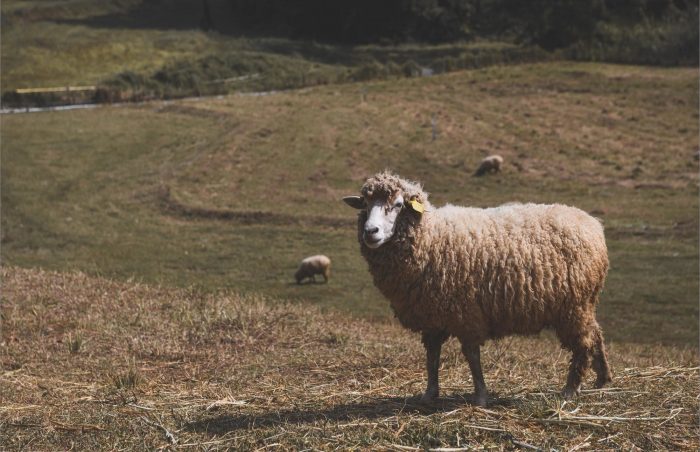
- The genetic improvement of farms animals.
Improving welfare conditions through productive systems that promote competitiveness.
- Improving the position of farmers in the value chain.
Enhancing the competitiveness of animal products in the markets by using improved animal breeds.
Addressing the effects of climate change through improved animal breeds.
- Sustainable development and more efficient management of natural resources, through improved animal breeds.
Each investment plan will prove that it fulfills at least one of the above objectives.
Beneficiaries
1. In the context of the Subproject "Animal Genetic ImprovementBeneficiaries may be the Bodies consisting of legal entities belonging to one of the following categories:
a) They are Producer Groups (O.P.), Producer Organizations (O.P.), Associations of Producer Organizations, Agricultural Cooperatives (DP), Agricultural Partnerships (AES), Interprofessional Organizations and Societes Anonymes whose majority share belongs to in Cooperatives of law 4673/2020 "Agricultural Cooperatives and other provisions", registered in the respective mandatory registers.
b) Associations and cooperatives, which are implementing agencies for genetic improvement programs of agricultural productive animals.
c) Beneficiaries may be considered legal entities of the above a) and b) paragraphs that complete the procedures of establishment and registration in the respective mandatory registers no later than the date of issuance of the approval decision of aid.
d) Organization for research and dissemination of knowledge.
2. Beneficiaries who operate in the form of a civil law company, with the exception of Social Cooperative Enterprises and consortia, may not be considered beneficiaries.
Eligible costs
1. Investments in research, in tangible and intangible assets and in training and information actions are supported, met in each case of the conditions of the applicable article of Reg. 702/2014. The costs have a reasonable cost of implementation and must be documented in a clear, specific and up-to-date manner in the submitted application.
2. The potential beneficiary is obliged to comply with all the conditions of the General part and the case-specific article of Reg. 702/2014, even if they are not explicitly mentioned in this invitation.
- Aid for knowledge transfer and information actions (Reg. 702/2014, Article 21 of section 1)
(a) costs of organizing vocational training, skills acquisition activities, including training courses, workshops and individual guidance, demonstration activities and information activities.
b) the travel, accommodation and subsistence expenses of the participants.
c) the cost of providing replacement services in the absence of participants.
- Aid for measures to promote agricultural products (Reg. 702/2014, Article 24 of section 1)
a) The eligible costs relate to:
aa) in the organization of competitions and exhibitions.
(bb) publications to raise awareness of the general public about agricultural products, provided that no reference is made to any particular undertaking, trade name or origin. They do not refer to any specific business, brand or origin.
b) Eligible costs for the organization of competitions and exhibitions include the following:
aa) participation costs,
(bb) travel and subsistence expenses;
(cc) the cost of publications and websites announcing the event;
(dd) the rental of exhibition spaces and kiosks and their installation and dismantling costs;
ee) symbolic prizes worth up to 1000 euros per prize and per competition winner. The aid for awarding symbolic prizes referred to in paragraph 4 item e), of no. 24 of Reg. 702/2014, is paid to the body implementing the promotion measures only if the prize has actually been awarded and upon presentation of proof of the award.
c) Eligible costs for publications aimed at raising awareness of the general public about agricultural products include the following:
(aa) the cost of publications in print and electronic form, on websites and in short advertisements on electronic media, radio and television, in order to provide substantiated information on the beneficiaries of a particular region or producing a particular agricultural product, under provided that the information is neutral and that all beneficiaries have equal opportunities to be included in the publication,
bb) expenditure on the dissemination of scientific knowledge as well as documented information on quality systems in accordance with Article 20 (2) of Regulation 702/2014, open to agricultural products of other Member States and third countries and to generic agricultural products, foodstuffs their benefits and their suggested uses.
cc) Promotion measures can be implemented by producer groups or other organizations, regardless of their size
d) The aid is granted on the basis of the reimbursement of the actual costs of the beneficiary e) The measures for the promotion of agricultural products concern exclusively:
(aa) genetically modified farm animals;
bb) the acquaintance of the consumer public with the indigenous breeds of agricultural productive animals and their products; and
cc) the acquaintance of the consumer public with the certified breeding of agricultural productive animals that are subject to genetic improvement.
f) All eligible companies in the area have access to aid for promotional activities, under objectively defined conditions. When promotional measures are implemented by producer groups and organizations, participation should not depend on membership of such groups or organizations and any administrative contribution to the group or organization should be limited to the cost of implementing the promotional measures.
- Aid in the livestock sector and aid for dead animals (Reg. 702/2014, Article 27 of section 1)
a) Aid for the collection and maintenance of genealogical data of animals and the establishment-maintenance of pedigree books and registers, for the following costs
aa) Expenses of appropriate staff (permanent and non-permanent) including payroll and travel.
bb) Expenditure on supplies, materials, instruments and procedures for monitoring and keeping genealogical books and registers of productive farm animals such as:
i) electronic equipment,
ii) printing materials,
(iii) software programs for registration, data processing and record keeping;
iv) body measuring instruments,
v) DNA analysis,
vi) electronic tracking costs,
vii) electronic means of evaluation and registration of characteristics.
(b) Aid for testing costs carried out by, or on behalf of, third parties for the purpose of determining the genetic quality or yield of livestock, with the exception of checks carried out by the livestock owner and standard milk quality checks.
aa) Expenses of appropriate staff (permanent and non-permanent) including payroll and travel.
bb) Costs of supplies, materials, instruments and implementation procedures for the individual control of productive farm animals, such as: a) electronic equipment, b) software programs for registration and processing of data, c) milk volumeters, d) analysis of milk samples and / or meat) e) automated electronic yield control f) estrus synchronization.
c) Aid for genotypic control of agricultural productive animals, in order to identify genes that endanger the improvement and utilization of the breed and to exclude them from reproduction, in order to reduce their frequency in the population. In particular as regards the genotypic control of sheep and goats, the following are observed:
aa) For genes that jeopardize breeding improvement, males, females of the 1st lactation period and females with yields above the average milk production will be genotyped.
bb) Also, young animals intended for breeding and coming from heterozygous parents that carry resistant alleles important for the improvement of the breed can be genotyped.
cc) For genes related to the improvement and utilization of sheep breeds, a specific proposal regarding the genes to be tested, the number of animals and the feasibility is submitted with the beneficiary's candidacy file.
d) The aid is granted in kind and does not involve direct payments to the beneficiaries.
- Aid for research and development in the agricultural sectors (Reg. 702/2014, Article 31 of section 4)
a) The supported project is addressed to all companies operating in the specific sector or sub-sector of agriculture or forestry.
b) The following information is published on the internet before the start date of the supported project:
(aa) the fact that the project to be implemented is to be implemented; (bb) the objectives of the project to be implemented;
cc) approximate date of publication of the expected results of the supported project;
dd) the place of publication of the expected results of the supported project on the internet;
ee) a statement that the results of the supported project will be available free of charge to all enterprises in the specific sector or subsector of agriculture and forestry.
c) The results of the supported project are made available on the Internet from the date of completion of the supported project or the date on which any information about these results is provided to the members of any organization that precedes it. The results remain available on the Internet for a period of at least 5 years, starting from the date of completion of the supported project.
d) The aid is granted directly to the research and dissemination organization. The aid does not involve payments to companies operating in the agricultural sector based on the prices of agricultural products.
e) The following costs are eligible:
(aa) staff costs relating to researchers, technicians and other support staff in so far as they are employed on the project.
bb) costs of instruments and equipment, to the extent and for how long they are used for the project. When instruments and equipment are not used for the life of the project, only depreciation costs corresponding to the duration of the project, which are calculated on the basis of generally accepted accounting principles, are considered eligible.
cc) costs of buildings and land, to the extent and for how long they are used for the project. In the case of buildings, only depreciation costs corresponding to the duration of the project, which are calculated on the basis of generally accepted accounting principles, are considered eligible. For the plots, the costs of transfer under free market conditions or the capital expenditure actually paid are eligible.
(dd) costs for contract research, knowledge and patents purchased or obtained by licensing from external sources in accordance with the principle of equal distances, as well as costs for consulting and equivalent services used exclusively for the project.
(ee) additional overheads and other operating costs, including the cost of materials, supplies and related products, which are a direct result of the project.
f) Expenditure on research and development relates exclusively to the genetic improvement of farm animals.
Aid amounts
The limits of the requested eligible budget for each aid application are as follows:
Business size | Bottom applicanteligible budget | Supreme applicanteligible budget |
Media (articles 21, 24, 27 and 31 of Reg. 702/2014) | 500.000,00 Euro | 2.000.000,00 Euro |
Large Companies (article 31, Reg. 702/2014) | 500.000,00 Euro | 1.000.000,00 Euro |
Maximum budget limits per category of aid
1. For "Aid for measures to promote agricultural products" the maximum limit of eligible investment costs is set at 000 euros per company and per year (Article 24, Reg. 702/2014).
2. For "Aid for research and development in the agricultural sectors" the maximum limit of eligible investment costs is set at 000.000 euros (article 31, Reg. 702/2014).
Aid intensity
The aid intensity (aid rates) per aid category is as follows:
a) Aid for knowledge transfer and information actions (article 21, of Reg. 702/2014): 80%
b) Aid for measures to promote agricultural products (article 24, of Reg. 702/2014): 80%
c) Aid in the livestock sector and aid for dead animals (article 27, of Reg. 702/2014): 80% of the administrative costs for the creation and maintenance of pedigree books and registers and 70% for expenses related to performance controls. If the same expense is used for both pedigree books and performance checks the aid rate is 80%
d) Aid for research and development in the agricultural sectors (article 31 of Reg. 702/2014): 80%
The above limits may not be circumvented by the artificial separation of aid schemes or aid projects.
Credits - Financing
The public aid amounts to 14.702.000,00 € and is funded by the Recovery and Sustainability Fund for the period 2022-2025.
Investment project financing - Aid provided
1. The financing for the implementation of the investment plan is covered by the public expenditure and the private participation.
2. The public expenditure (aid and / or support) is calculated as a percentage of the eligible budget and is granted in the form of a grant from the Recovery and Sustainability Fund. The percentage of aid intensity is given in paragraph 3.
3. The amount of eligible costs, per category of expenditure, shall be derived from those referred to in paragraph 2.
4. The budget resulting from the verification of the aid application is eligible, in accordance with the procedures of section 11, subject to the state aid conditions.
5. The private participation of the beneficiary arises as the difference between the eligible budget and the public aid. Private participation may include own funds and / or external financing, provided that 25% of the total eligible costs do not contain State aid elements.
6. The public expenditure is allocated in accounts, ie after the implementation of the investment expenditures, their repayment and their receipt by the competent bodies on the basis of the expenditures deemed eligible.
7. To facilitate the implementation of the investment plan, the possibility of using financial instruments, advance payment or open trust account is provided. The financial instruments are given the possibility to include the loans of the Recovery and Resilience Fund, observing the accumulation requirements of state aid of no. 8 of Reg. 702/2014 as well as the set of state aid rules applicable on a case by case basis. The amount of the loan from the Recovery and Resilience Fund does not exceed the amount of the private participation of the beneficiary.
The deposit is provided in accordance with the terms, conditions and restrictions of paragraph 8.
9. The open trust account is provided in accordance with the terms, conditions and restrictions of paragraph 4.
10. In any case, the cumulation of aid as a percentage of the eligible budget of the aid application may not exceed the aid rates provided by Reg. 702/2014 without prejudice to any lower limits of sub-paragraph 4.3 hereof, for each category of eligible costs.
Duration of implementation of investment plans
The deadline for submitting the last application for payment of the aid does not exceed 31 May 2025.
Submission Period
Start of submissions: 06.06.2022
Deadline for submissions: 30.09.2022
See the relevant Invitation HERE