For decades, America sold the world a dream.
Work. Save. Start a family. Buy your own house.
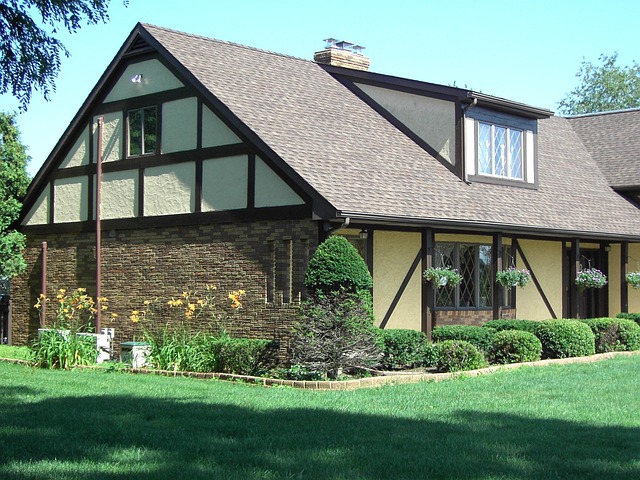
A small house with a yard was not just four walls. It was a symbol that the worker could create something of his own, leave a fortune to his children, gain stability, and move from a salary to creating family wealth.
Today this dream is dangerously far removed from the average American family.
And when a few years ago Robert F. Kennedy Jr. spoke about this on the popular radio show The Breakfast Club on Power 105.1 FM, many heard his statements as yet another campaign statement.
Today, however, the official numbers force us to listen to the debate again.
In the interview and in a later excerpt he published, Kennedy presented housing as one of the most important wealth-creating tools for the middle and lower classes. As a presidential candidate, he proposed government-backed mortgages at 3% interest rates for first-time home buyers, arguing that such a policy could significantly reduce a family's monthly payment.
This proposal was a campaign proposal. It is not currently a federal housing policy.
But the problem he was talking about not only did not disappear.
Grow up.
On September 3, 2026, the average interest rate on a 30-year fixed mortgage in the United States rose to 6,71%, the highest level since July 2025.
What does this mean in real life?
It doesn't just mean a bigger number on a bank statement.
It means that a house in front of you may theoretically be for sale, but economically be miles away from you.
The Harvard Joint Center for Housing Studies estimates that existing home prices were 54% higher at the end of 2025 than in 2020. The cost of buying a median home had reached about $3.100 per month, up from about $1.700 at the beginning of 2020. To be considered affordable, a household would need an income of more than $120.000 per year, compared to about $66.000 in 2020.
Read these two numbers again:
66.000 dollars.
Over 120.000 dollars.
Within a few years.
And then we wonder why young couples delay buying a home, moving out of rent, starting a family, or feeling financially secure.
In July 2026, the median price of a new home in the U.S. was about $393.800, according to the Census Bureau and the Department of Housing and Urban Development.
Even more revealing is another element.
According to the National Association of Realtors, first-time homebuyers made up just 21% of buyers, the lowest percentage ever recorded in its survey. And the median age of a first-time homebuyer had reached 40.
Forty years for the first residence.
Once upon a time, home was the beginning of adult life.
Today it is in danger of becoming a middle-aged achievement.
And who buys when the family can't?
Here is another point in Kennedy's earlier statements that caused great debate.
He had accused large corporate and investment powers of entering the single-family home market en masse and being able to compete with a family with cash offers.
The basic problem he describes is real.
After the 2007-2009 financial crisis, large institutional investors began buying up significant numbers of foreclosed single-family homes and converting them into rental housing. The U.S. Government Accountability Office says their access to large amounts of capital gave them an advantage over smaller investors and individuals. Studies reviewed by the GAO also show that in some markets, this activity may have contributed to higher home prices and rents.
But here journalism must separate reality from exaggeration.
Kennedy had gone so far as to predict that large corporations could control up to 60% of single-family homes by 2030. Current official data does not support this prediction.
The GAO reports in 2026 that large institutional investors own about 3% of single-family homes nationwide, although their presence is much greater in specific cities and especially in some Sunbelt markets. For example, Atlanta, Jacksonville, and Charlotte have seen particularly high concentrations of such investments.
This is important.
Because we don't need to exaggerate the problem to make it scary.
The real problem is already big enough.
A family in need of a mortgage may find itself facing an investor with much greater access to capital.
A young person must put together a down payment while simultaneously paying for rent, insurance, food, a car, student loans, and everyday expenses.
And as he waits to be able to buy, the rent continues to drain from his bank account each month without creating ownership.
Here lies perhaps the greatest social change.
Anyone who already owns a home sees their property creating wealth.
Anyone who doesn't have a home is trying to catch up with a market that is moving faster than their income.
Thus two Americas are created.
The America of those who entered the real estate market early.
And the America of those who look through the window.
This is not just a real estate crisis.
This is a social mobility crisis.
Because the home in the United States has been for decades one of the most important mechanisms through which a working family created wealth.
Without ownership, entire generations risk paying rent for decades without ever creating the asset that previous generations left for their children.
And then the question ceases to be:
"How much does a house cost?"
The real question becomes:
Who will have the right to own the America of tomorrow?
The working family?
The young man starting his life?
The middle class?
Or whoever has the most capital?
There is no single factor responsible for this crisis. Limited housing supply, high interest rates, construction costs, rising prices, income pressures, and real estate investment markets are all working together. Harvard now calls housing affordability in the United States a serious and widespread problem.
But perhaps Kennedy was right on one key point:
The house is not just a product.
It's how millions of families create security and wealth.
And if an entire generation is excluded from ownership, then it's not just the real estate market that changes.
The very social structure of America is changing.
The American dream is not dead.
But for more and more people, it has taken on a price they can no longer afford.
And when the working American has to wait until he's forty to buy his first home, maybe it's time for Washington to stop asking just "how much did the economy grow?"
And start asking:
Can the person who works in this country still acquire a piece of it?
Πηγές
- The Breakfast Club – Power 105.1 FM / Robert F. Kennedy Jr.: The original radio interview and excerpt in which Kennedy presents his proposal for 3% mortgages for first-time home buyers.
- Harvard Joint Center for Housing Studies – State of the Nation's Housing 2026: data on price increases, monthly housing costs, and required income.
- US Census Bureau & HUD, August 2026: data on new home sales and prices.
- Freddie Mac / Reuters, September 3, 2026: average 30-year mortgage interest rate 6,71%.
- National Association of Realtors: historic low of 21% for first-time home buyers and median age of 40.
- US Government Accountability Office, 2024 and 2026: institutional investors, single-family home markets, and impacts on individual housing markets.
And this is the original Kennedy video on housing,
https://www.youtube.com/watch?v=BTiW63uok6A&t=3s
and Greek
photo Orca, https://pixabay.com