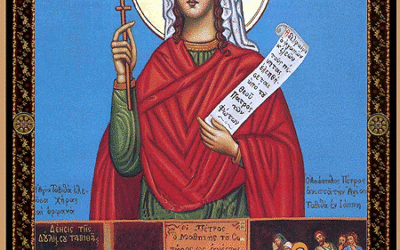

The few lines that follow are dedicated as a small tribute to the memory of the passengers - victims of the tragic train collision in Tempe.
International Women's Day (March 8), which is celebrated every year as a day of remembrance for the struggles for women's rights, was first held on February 28, 1909 in New York and was officially established by the International Conference of Women in 1910. Two years ago, I had dedicated an article related to this day to the Tempe tragedy. The few lines that follow are once again dedicated as a small tribute to the memory of the passengers - victims of the tragic train collision in Tempe. Among the dead were young girls like cold water, who in the prime of their youth fell victim to incompetent, irresponsible and unscrupulous politicians and officials whose actions hurt and mercilessly insult the people who are anxiously awaiting the voice of Justice. And it is, frankly, unacceptable that these people are still waiting, after so many years!
The woman stars, as a Greek mother, along with all the mothers of the tragic victims of Tempi, in the fight for justice and the punishment of all those responsible, regardless of the position of power they held during the tragedy. And as a woman, she receives incredible shots from government officials!
The degradation of women has deep roots; it seems that the female sex is paying dearly for Eve's original sin! If we look back to antiquity, the position of women was not so flattering for their personality. The position of women in the Athenian state is well known. While for the free Athenian citizen the law of polygamy and unlimited political rights applied, for the Athenian woman things were very different; every married woman had to be a faithful wife and a child-making machine, without selfishness and with tolerance for male sins. Women had no right to equality with men. This position of women within Greek society was natural to arouse the interest and concern of Euripides, a faithful disciple of Anaxagoras and an admirer of Aspasia.
Moreover, at that time in Athens the "women's issue" was, as we know, a fashionable issue. While the perception of most Athenians, and especially of aristocratic and conservative circles, was that women should remain in this position without any protest, in the house of Pericles, political and literary discussions took place by the few who saw things differently and were, historically, the precursors of women's emancipation. The protagonist in this issue was Aspasia, the first feminist of antiquity, for whom unfortunately no written sources have survived.
The great Greek poet Euripides was the first to begin the struggle for the restoration of women in society. For the first time, Euripides attempted to bring to the Athenian stage his concerns about the behavior of women of his time, to express opinions of timeless value and, above all, to sow the seed for the “emancipation” of the female sex. And women finally proved that they have the ability to assume the highest positions and offices, just as Euripides had “prophesied” in the chorus of Medea: “Honor, honor to women the race is coming.”
The woman-mother was the one who united all the people to thunder in the impressive rallies and demand that justice be served, as a minimum respect for the memory of so many young people who traveled to the other life, passing through Tempi!
Let us hope that those responsible for the criminal tragedy of Tempi will be revealed and that the Greek justice system will punish them exemplary, offering the minimum in the face of the unspeakable human suffering, vindication, that is, the parents' long-standing demand for the punishment of the guilty. The pain, of course, of the Greek mother is not alleviated or overcome, but vindication is the duty of a law-abiding state towards her.
International Women's Day (March 8), which is celebrated every year as a day of remembrance for the struggles for women's rights, was first held on February 28, 1909 in New York and was officially established by the International Conference of Women in 1910. Two years ago, I had dedicated an article related to this day to the Tempe tragedy. The few lines that follow are once again dedicated as a small tribute to the memory of the passengers - victims of the tragic train collision in Tempe. Among the dead were young girls like cold water, who in the prime of their youth fell victim to incompetent, irresponsible and unscrupulous politicians and officials whose actions hurt and mercilessly insult the people who are anxiously awaiting the voice of Justice. And it is, frankly, unacceptable that these people are still waiting, after so many years!
The woman stars, as a Greek mother, along with all the mothers of the tragic victims of Tempi, in the fight for justice and the punishment of all those responsible, regardless of the position of power they held during the tragedy. And as a woman, she receives incredible shots from government officials!
The degradation of women has deep roots; it seems that the female sex is paying dearly for Eve's original sin! If we look back to antiquity, the position of women was not so flattering for their personality. The position of women in the Athenian state is well known. While for the free Athenian citizen the law of polygamy and unlimited political rights applied, for the Athenian woman things were very different; every married woman had to be a faithful wife and a child-making machine, without selfishness and with tolerance for male sins. Women had no right to equality with men. This position of women within Greek society was natural to arouse the interest and concern of Euripides, a faithful disciple of Anaxagoras and an admirer of Aspasia.
Moreover, at that time in Athens the "women's issue" was, as we know, a fashionable issue. While the perception of most Athenians, and especially of aristocratic and conservative circles, was that women should remain in this position without any protest, in the house of Pericles, political and literary discussions took place by the few who saw things differently and were, historically, the precursors of women's emancipation. The protagonist in this issue was Aspasia, the first feminist of antiquity, for whom unfortunately no written sources have survived.
The great Greek poet Euripides was the first to begin the struggle for the restoration of women in society. For the first time, Euripides attempted to bring to the Athenian stage his concerns about the behavior of women of his time, to express opinions of timeless value and, above all, to sow the seed for the “emancipation” of the female sex. And women finally proved that they have the ability to assume the highest positions and offices, just as Euripides had “prophesied” in the chorus of Medea: “Honor, honor to women the race is coming.”
The woman-mother was the one who united all the people to thunder in the impressive rallies and demand that justice be served, as a minimum respect for the memory of so many young people who traveled to the other life, passing through Tempi!
Let us hope that those responsible for the criminal tragedy of Tempi will be revealed and that the Greek justice system will punish them exemplary, offering the minimum in the face of the unspeakable human suffering, vindication, that is, the parents' long-standing demand for the punishment of the guilty. The pain, of course, of the Greek mother is not alleviated or overcome, but vindication is the duty of a law-abiding state towards her.