Origins and History
Few dishes evoke the Greek table quite like roasted lamb. Lamb has long held an important place in Greek food culture, particularly during celebrations, religious festivals and family gatherings. Today, arni me patates, roasted lamb with potatoes, remains a familiar and much loved Greek dish, with versions found throughout the country.
The foundations of the dish are wonderfully simple. Lamb is combined with garlic, olive oil, lemon and oregano before being slowly roasted until tender. The potatoes cook alongside the meat, absorbing the juices, olive oil and citrus as they roast. This combination of rich lamb, sharp lemon, aromatic herbs and good olive oil is characteristic of the flavours we associate with Greek home cooking.
There is also a fascinating history behind the wider tradition of slow roasted lamb. Kleftiko, one of Greece’s best known lamb dishes, is traditionally associated with the klephts and the Greek mountains. The meat was traditionally cooked slowly and enclosed so that the cooking process was discreet. Modern versions are usually prepared in a sealed roasting dish or wrapped before being finished uncovered to develop colour.
Honey brings another layer to my version. Sweet and savoury combinations are certainly not new to Mediterranean cooking, but I use honey here to create a beautiful caramelised crust on the lamb rather than making the dish noticeably sweet.
The potatoes are patates lemonates, Greek lemon potatoes. Potatoes are, of course, a relatively recent arrival in Greek cuisine compared with lamb, olive oil, herbs and lemons. Nevertheless, they have become firmly proven in Greek cooking and are now one of the classic accompaniments to roasted meat.
For me, that is what makes this dish so interesting. It represents the way food traditions evolve. Ancient ingredients meet ingredients that arrived much later, and generations of Greek cooks have turned them into something that now feels completely at home on the Greek table.
My Greek Roasted Lamb
Ingredients
1.5kg lamb shoulder or leg, preferably bone in 6 garlic cloves
2 tablespoons Greek honey
4 tablespoons extra virgin olive oil Juice and zest of 2 lemons
2 teaspoons dried Greek oregano A few sprigs of fresh rosemary A few sprigs of fresh thyme
Sea salt
Freshly ground black pepper
Method
Preheat the oven to 160°C.
Make several small incisions in the lamb with a sharp knife and push slivers of garlic into the meat.
Mix the olive oil, honey, lemon zest, lemon juice, oregano, salt and freshly ground black pepper together. Rub the mixture generously over the lamb, making sure it is well coated.
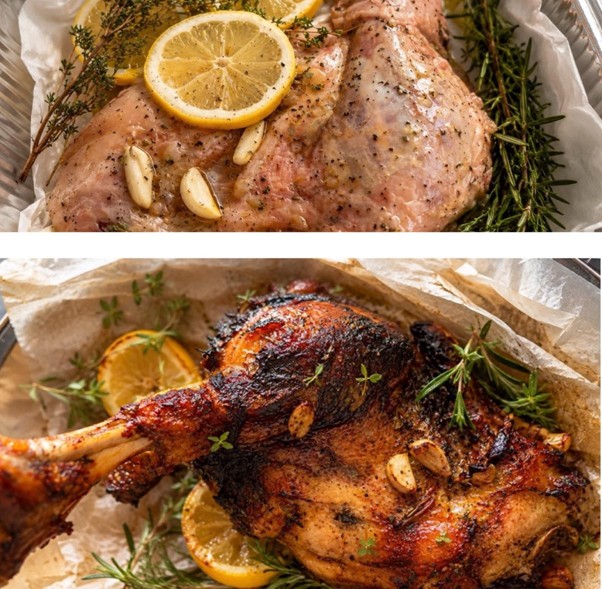
Place the lamb into a roasting tray and surround it with the remaining garlic cloves, rosemary and thyme.
Cover the tray tightly with baking parchment followed by foil and roast slowly for approximately 3 hours, or until the lamb is beautifully tender.
Remove the covering and increase the oven temperature to 190°C. Continue roasting until the outside of the lamb becomes deeply golden and caramelised.
Allow the lamb to rest for at least 15 minutes before serving.
Greek Lemon Potatoes
Ingredients
1kg potatoes
4 tablespoons extra virgin olive oil Juice of 2 lemons
3 garlic cloves, crushed
1 tablespoon dried Greek oregano 250ml chicken or vegetable stock Sea salt
Freshly ground black pepper
Method
Peel the potatoes and cut them into large wedges.
Place them into a roasting tray and add the olive oil, lemon juice, garlic, oregano, salt and pepper. Toss everything together until the potatoes are thoroughly coated.
Pour the stock around the potatoes rather than directly over them.
Place them in the oven alongside the lamb and roast until tender, turning them occasionally so they become beautifully golden and absorb the lemon, oregano and roasting juices.
For the final part of cooking, allow the potatoes to roast uncovered until the edges are caramelised and crisp while the centres remain soft and creamy.
From My Kitchen
There is something very comforting about a dish like this. It is generous, uncomplicated food that is meant to be placed in the middle of the table and shared.
The lamb brings richness, the honey creates that wonderful roasted crust, the lemon cuts through the richness and the oregano gives everything that unmistakable Greek character. Then there are those potatoes, slowly roasting underneath and taking on all the flavours from the pan.
This is more than a recipe. It is a taste of the Greek table, where food, family, tradition and memories have always belonged together.
That is A Taste of Greece.