Lemon Myrtle, Macadamia Nuts, Tasmanian Pepperberry, Cucumber and Tomato
For this week’s Greek food column, I wanted to explore the way Greek food has travelled beyond Greece and evolved within the communities that have made new countries their home.
This dish takes its inspiration from the Greek Australian diaspora, combining the familiar flavours of Greek cooking with ingredients associated with Australia. The foundation remains distinctly Greek: pork, extra virgin olive oil, garlic, oregano and lemon. The Australian influence comes through three native ingredients: lemon myrtle, macadamia nuts and Tasmanian pepperberry.
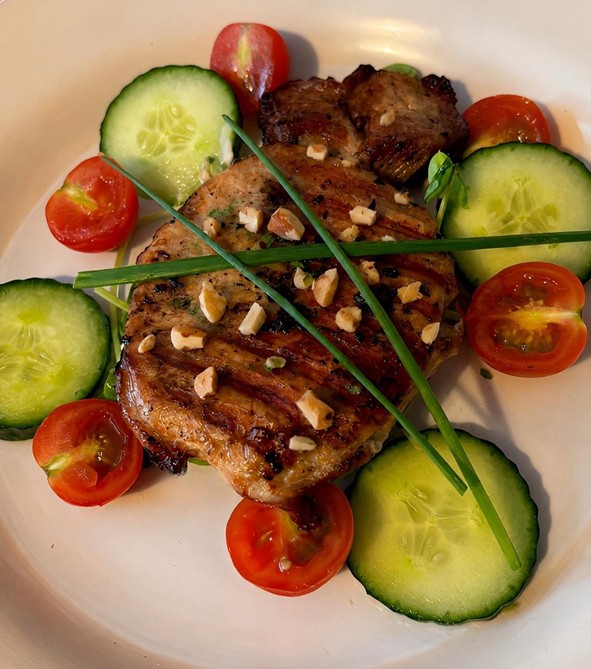
The pork chop is marinated before being chargrilled, giving it the smoky, caramelised flavour associated with Australian outdoor cooking. Fresh cucumber and tomatoes provide the freshness of a Greek table, while toasted macadamias add texture and a distinctly Australian element.
Cooking in the United Kingdom
As I cooked this dish here in the United Kingdom, I made a few practical substitutions because the traditional Australian ingredients are not always readily available in British shops.
Lemon myrtle was substituted with fresh lemon zest. This preserves the bright citrus character of lemon myrtle while using an ingredient that is readily available in the United Kingdom. I used plenty of finely grated lemon zest to give the pork a pronounced citrus aroma.
Macadamia nuts were substituted with toasted almonds. Macadamias are traditionally associated with Australia, but toasted almonds are considerably easier to source in the United Kingdom. They provide a similar nutty texture and work particularly well with grilled pork.
Tasmanian pepperberry was substituted with freshly cracked black pepper and a small amount of smoked paprika. This provides the peppery warmth and subtle smoky character needed for the dish, while complementing the chargrilled pork.
These substitutions are important to me because the original Australian ingredients remain part of the story. I have simply adapted the recipe to make it possible to recreate in a British kitchen without losing the idea behind the dish.
The result is not intended to be presented as an ancient traditional Greek recipe. It is something different: a modern Greek Australian interpretation, inspired by the movement of Greek people, food and culinary traditions across the world.
For me, that is what makes diaspora cooking so fascinating. Recipes change when they arrive in a new country. Ingredients become locally available, cooking methods evolve and new combinations develop, but the memories and traditions behind the food remain.
Greece provides the foundation. Australia provides the inspiration. The United Kingdom provides the kitchen in which I have brought the two together.
Greek Australian Chargrilled Pork Chops
Ingredients
2 thick cut pork chops
2 tablespoons extra virgin olive oil 2 garlic cloves, finely crushed
1 teaspoon dried Greek oregano Zest and juice of 1 lemon
½ teaspoon freshly cracked black pepper
½ teaspoon smoked paprika 40g toasted flaked almonds 1 large cucumber
150g cherry tomatoes Fresh chives
Fresh parsley Sea salt
Extra virgin olive oil to finish
Method
Combine the olive oil, crushed garlic, Greek oregano, lemon zest, lemon juice, black pepper and smoked paprika in a shallow dish.
Add the pork chops and coat thoroughly with the marinade. Cover and refrigerate for at least 30 minutes, preferably for a few hours.
Remove the pork from the refrigerator and allow it to come towards room temperature before cooking.
Heat a barbecue or heavy griddle pan until very hot. Place the pork chops onto the grill and cook until beautifully charred on both sides and cooked through. The exact cooking time will depend on the thickness of the chops.
Remove the pork chops from the heat and allow them to rest for several minutes.
Meanwhile, slice the cucumber into thick rounds and halve the cherry tomatoes. Arrange them around the plate with the fresh chives and parsley.
Place the rested pork chop in the centre of the plate. Scatter the toasted almonds lightly over the pork, taking care not to overwhelm the dish.
Finish with a drizzle of extra virgin olive oil, a squeeze of fresh lemon and a final sprinkling of Greek oregano and chives