Four days before the polls, Republican Byron Donald maintains a lead in the polls, but the gap has narrowed and early voting turnout is already a record for a midterm election.
Florida is electing a new governor on Tuesday, November 3, for the first time in eight years. Ron DeSantis is completing his second term and cannot run again, so the state will have a new face in Tallahassee starting in January 2027. Along with the governor, voters are choosing a senator, all 28 seats in the House of Representatives, the state attorney general and deciding on constitutional amendments.
The two main candidates
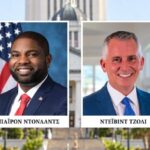
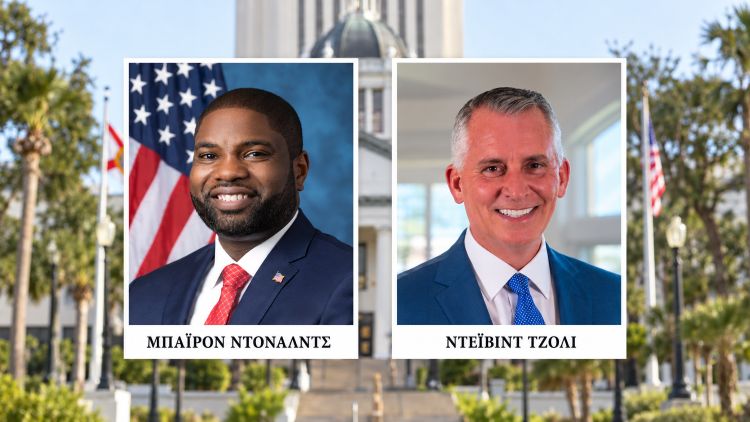
Byron Donalds (Republican). Representative from Naples, southwest Florida, who has been endorsed by President Trump since the beginning of the race. He comfortably won the Aug. 18 primary with nearly 48% of the vote, leaving Lt. Gov. Jay Collins in second place with 25%. In September, DeSantis officially endorsed him, ending a period of frosty relations between the two. His running mate for lieutenant governor is former state Sen. Brian Avila. If elected, he would become the first African-American governor in Florida history.
David Jolly (Democrat). Former Republican congressman from Pinellas County (2014–2017), who joined the Democrats in 2025. His primary challenger, Orange County Mayor Jerry Demings, withdrew in June due to health reasons. His running mate is former congressman Gwen Graham, daughter of former Gov. Bob Graham. Florida has not elected a Democratic governor since 1994.
There is also one Liberal candidate and five independents on the ballot, none of whom are recording significant percentages in the polls.
What do the latest polls show?
The picture is solid as to the winner but not as to the margin. Poll averages give Donald a 4-5 point lead: the On Point Politics average (October 27) has him at 48,6% to 44,5% for Jolie, while Pollsmax, with 41 counts, has him at 48,4% to 43,4%.
The most recent measurements:
| Company | Date | Donalds | Jolie | Difference |
|---|---|---|---|---|
| St. Pete Polls | 27 Oct. | 48 % | 46 % | Donalds +2 |
| New York Times / Siena | 26 Oct. | 48 % | 44 % | Donalds +4 |
| Echelon Insights | 23 Oct. | 50 % | 44 % | Donalds +6 |
| University of North Florida | 12-19 Oct. | 49 % | 47 % | Donalds +2 |
| Univision / YouGov | 15 Oct. | 50 % | 42 % | Donalds +8 |
| Change Research (Democratic) | 8-10 Oct. | 47 % | 47 % | Draw |
| Stetson University | 1-9 Oct. | 52 % | 41 % | Donalds +11 |
| Mason-Dixon (NBC6/Telemundo) | early Oct. | 48 % | 41 % | Donalds +7 |
The University of North Florida poll, one of the most authoritative in the state, shows the greatest convergence: in July, Donald was ahead by 5 points, now by 2, within the margin of error. The same poll shows that 11% of registered Republicans say they are voting for Jolly, while 5% of Democrats support Donald. The poll director likened the race to the 2018 DeSantis-Gillaum race, which was decided by less than a point.
The Mason-Dixon measurement shows sharp geographic differences. Donald leads clearly in North, Central, and Southwest Florida, while Jolie wins in the Tampa Bay area and Southeast Florida (Palm Beach, Broward, Miami-Dade) by 52% to 36%. Male voters lean toward Donald and female voters lean toward Jolie.
It's worth noting that some of the polls are commissioned by the parties or by friendly organizations, which should be taken into account. Additionally, Florida currently has a large Republican advantage in voter registration, so turnout will play a key role.
Early voting: almost 4 million votes already cast
According to data from the Florida Department of Elections (October 29), more than 2,2 million voters have voted in person at early voting centers and about 1,69 million by mail. As of the first weekend, participation had already exceeded 20% of the total turnout for the 2022 midterm elections.
Registered Republicans have a slight lead in turnout, thanks to in-person early voting, while Democrats are ahead in mail-in ballots. But the gap is noticeably smaller than in 2022, and DeSantis himself has publicly warned that Republican turnout is not as strong as it should be. Important: The data shows who voted based on their registered party, not what they voted for. More than 700.000 unaffiliated voters have already cast ballots, and they could tip the scales.
The big disagreements: insurance, property taxes, cost of living
Both candidates have built their campaigns on the cost of living, which is the number one problem for Floridians in all surveys. But the solutions they propose are radically different.
Home insurance. Jolly proposes removing hurricane and wind coverage from private policies and moving it to a state catastrophe fund, funded primarily by taxes on insurance companies. Donald wants to keep risk in the private market, with more homeowners insurance programs, maintaining recent reforms and changes to the existing Florida Hurricane Catastrophe Fund, and promises to cut premiums by 20%. He calls his opponent’s plan a “state takeover” of wind insurance, while his ads talk about a $1.000 “hurricane tax.” A WUFT fact-check found that Jolly’s plan does not create such a tax, and it likely won’t deliver the savings it promises.
Real estate taxes and Amendment 3. On the ballot is Amendment 3, which expands the homestead exemption and lowers property taxes for owner-occupied homes. Donald supports it. Jolly raises concerns about the impact on funding for local services, such as police, fire and schools. Each amendment needs 60% of the vote to pass.
Other topics. Jolly calls for a freeze on new data centers, limits on profits for private electric companies, more housing for workers, and expansion of primary health care, while he supports abortion rights. Donald emphasizes tax cuts, less red tape in housing construction, economic growth, and a continuation of DeSantis policies. He accuses Jolly of changing positions on all key issues since leaving the Republicans.
A race without a televised debate
For the first time since 1974, Florida's gubernatorial election is going without a single televised debate. Donald, who had refused to face his party rivals in the primaries, has invited Jolie to three debates. Jolie declined in September, accusing his opponent of misleading advertising and saying such a debate would only add to the toxicity. The Republican side responds that Jolie is "hiding." The closest thing voters have seen to a debate was the two's back-to-back, separate appearances at the Sunshine Economy Summit in Fort Lauderdale.
Practical information for voters
- Early voting: mandatory in all counties by Saturday, October 31. Some counties are open through Sunday, November 1. Check times and locations on your county Supervisor of Elections website.
- Postal vote: must arrive at the Supervisor of Elections office by 7 p.m. on Tuesday, November 3. A postmark is not sufficient, so if you haven't mailed it yet, it's best to deliver it in person in a special box.
- Election Day: Tuesday, November 3, polls open 7 a.m. to 7 p.m., at the polling station where you are registered.
- Identity: a document with a photo and signature is required.
What to expect
Most of the evidence points to Donald's advantage: he's ahead in the medians, has the support of both Trump and DeSantis, and is running in a state that has voted Republican in recent years. Jolly, on the other hand, has managed to make the race more competitive than many expected a year ago, with strong appeal among independents and in Southeast Florida. The outcome will be determined by who brings the most of his own to the polls on Tuesday.
Greek News & Radio FL will be monitoring the results on election night.
Portrait of Byron Donalds: Office of the Clerk, US House of Representatives. David Jolly Portrait: campaign photo, via WPBF. Composition: Greek News & Radio FL.