Which Turkish groups are investing in Texas, what are they acquiring and who controls the deals? The relationship with American natural gas, shipyards, industry and Turkey's religious presence in the United States.
Investigative Report – International Economy – Geopolitics
An economic reality that deserves careful investigation
Texas is not just one of the largest states in the United States. It is a central pillar of American energy production, the oil and gas industry, international shipping, and electricity generation.
In Houston, Baytown, Brownsville and other areas of the state, large foreign business groups are investing significant capital.
Among them are Turkish companies.
Their presence is not a conspiracy theory nor is it based solely on social media posts.
There are recorded investments, acquisitions, energy deals and business partnerships confirmed by official sources.
The real journalistic question, however, is deeper.
How does this activity affect the economic and energy relationship between the United States and Turkey? Who controls investments in strategic facilities? And what are the benefits and potential dependencies created?
- The official admission: Turkish investments of $1,3 billion
On March 13, 2025, the Texas-Turkey Business Forum was held in Houston.
The event was attended by representatives of major American and Turkish companies, Turkish Energy Minister Alparslan Bayraktar, and executives of the Turkish-American Business Council.
During the meeting, Council President Murat Ozyein announced that Turkish investments in Texas had reached 1,3 billions of dollars.
According to the data presented:
In 2024, Turkey's imports from Texas amounted to $3,2 billion.
Its exports to the US state reached 2 billion.
The sum of the two trade flows was about $5,2 billion.
Turkey represented about 0,5% of Texas' foreign trade.
The numbers come from the business council itself and are not an independent valuation of all Turkish assets in the state.
They do, however, illustrate the magnitude of the trade relationship.
A memorandum of understanding was also signed at the forum between the Turkish-American Business Council and the Greater Houston Partnership.
The purpose of the agreement was to further strengthen investments, technological cooperation and business contacts.
The important element is that cooperation is not limited to individual companies. There is now an organized business framework for the development of economic relations.
This does not prove political control of Texas by Ankara, but it does demonstrate that strengthening Turkey's economic presence is a declared business pursuit.
- Brownsville: The shipyard acquisition and the billion-dollar investment plans
One of the most significant developments occurred at the port of Brownsville, near the border with Mexico.
In September 2025, it was announced that the Turkish Karadeniz group, through Karpower Valley, agreed to acquire shipbuilding facilities from Singapore-based Seatrium.
The acquisition was completed on January 30, 2026.
The price was approximately $50,6 million, according to local American financial publications.
The AmFELS facility has a significant history in the shipbuilding industry, ship construction and servicing offshore energy projects.
Karpowership is active internationally in the construction and operation of floating power plants.
The facilities it acquired in Texas are planned to be used for the construction and repair of ships, floating energy units and new technological infrastructure.
According to a report in the Rio Grande Valley Business Journal on May 13, 2026, the company plans to invest approximately 3 billion dollars for the development and upgrading of facilities.
Another financial publication reported a broader plan worth at least $4,5 billion.
The two amounts should not be added together, as they may relate to different estimates or phases of the same development program.
Nor should future announcements be confused with expenditures already incurred.
There is, however, one particularly important element.
According to local financial reporting, in December 2025, the transfer of existing lease rights of approximately 136 acres, or approximately 550 acres, to Karpower Valley was approved.
In April 2026, authorization was also given for negotiations regarding an expansion of the leased facilities.
This does not mean that the Turkish company bought the entire port. Brownsville.
Acquired a specific shipyard and associated facility usage rights.
The difference is substantial from a legal and economic point of view.
The company has also unveiled plans for floating data centers, known as floating data Centers, and energy infrastructure that will serve the growing demand for electricity.
The development of artificial intelligence and large data centers has created a new market for businesses capable of providing large amounts of electrical power.
This is precisely where Karpower's broader business interest lies.
It does not only invest in traditional shipbuilding.
It seeks participation in the energy infrastructure market that will serve the next generation of digital industries.
The development creates prospects for employment and productive activity, but makes transparency regarding financing, operating permits and environmental impacts particularly important.
- Sabancı: Turkish capital in electricity production
The Turkish Sabancı Group has developed a significant presence in the American energy sector.
Through Sabancı Renewables, it invests in large-scale photovoltaic projects.
It already has operating units in Texas, while others are under development.
Among his works are:
The Cutlass II, with a power of 272 MWdc.
The Oriana, with a capacity of 232 MWdc.
Lucky 7, with a power of 130 MWdc.
Pepper, with a power of 156 MWdc.
In September 2026, the 220 MWdc Alina project near San Antonio was also announced.
The total capacity of the group's US portfolio, including projects under development, exceeds 1 GW.
This does not mean that all units are already in operation.
Alina, for example, is scheduled to begin commercial operation in 2028.
This distinction is important for the correct valuation of investments.
- The agreement with Meta
Of particular importance is the agreement announced by Sabancı Renewables on June 22, 2026.
The company signed a long-term contract with Meta, the parent company of Facebook.
The agreement concerns the Lucky 7 and Pepper projects, with a total capacity of 286 MWdc.
According to the announcement, Meta will acquire all of the environmental features associated with the production of the two projects.
This is a commercial agreement that supports Meta's goals for the use of renewable energy sources.
It does not mean that Meta has gained ownership control of the facilities nor that Turkey is gaining access to Facebook users' data.
It does, however, demonstrate that a Turkish energy group has managed to secure a long-term commercial partnership with one of the largest American technology companies.
Electricity generation is evolving into critical infrastructure for artificial intelligence, data centers, and the digital economy.
This is one of the reasons why this particular investment is of broader economic interest.
- Borusan: Turkish industry in the American oil sector
The Turkish group Borusan operates in Baytown, Texas.
The company manufactures steel pipes used in drilling, oil and gas production, and energy networks.
Its presence in the United States is not new.
The Baytown plant is an important production center for the company in the American market.
In December 2024, it also announced the lease of approximately 123.000 square feet of additional industrial space to support the expansion of its operations.
The facility serves the supply chain of the American energy industry.
This is an industrial activity within the US, with American jobs and production aimed at the local market.
The essential question is what shares of the specific market are occupied by foreign-owned enterprises and to what extent their presence creates productive benefits or potential dependencies.
- Elin Energy: From Turkey to the American photovoltaic industry
Another significant investment concerns Elin Energy.
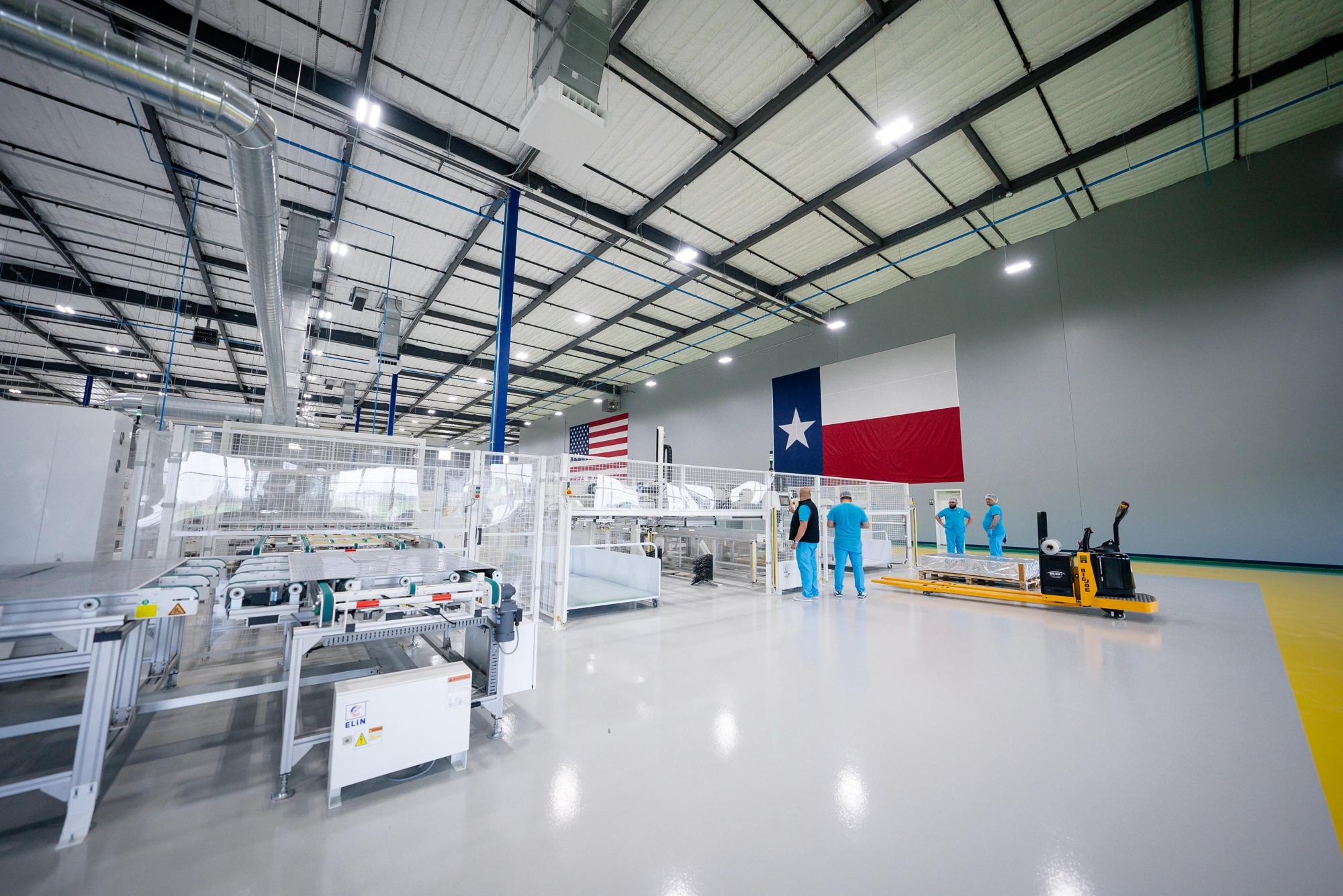
The Turkish company has established a photovoltaic panel factory in the Brookshire area, west of Houston.
Production began in 2024 through Sirius PV USA.
The facility has an area of approximately 225.000 square feet and an initial annual production capacity of approximately 1 GW.
On September 8, 2026, the company reported that it employed approximately 300 workers.
The interest is not limited to the production itself.
The facility leverages the American industrial environment, the country's energy needs, and the investment framework that has been created for the production of technological equipment.
Elin is a prime example of a foreign business creating a manufacturing presence in the United States rather than simply exporting products from Turkey.
- Natural gas: The biggest strategic connection between the US and Turkey
Perhaps the most important chapter of this economic relationship concerns natural gas.
In September 2025, Turkish state energy company BOTAŞ announced a long-term agreement with Mercuria.
The agreement concerns the supply of American liquefied natural gas (LNG) for the period 2026–2045.
It provides for approximately 4 billion cubic meters of natural gas per year, in LNG equivalent, with a total contracted volume of approximately 70 billion cubic meters.
Deliveries can be made to US loading ports or to regasification facilities in Turkey, Europe and North Africa.
In February 2026, the US Export-Import Bank announced $400 million in export insurance support.
The transaction concerns American LNG that Hartree Partners will supply to BOTAŞ.
These are two different trade arrangements, with a common feature being the significant strengthening of energy relations between the United States and Turkey.
- Is there a pipeline connecting Texas to Turkey?
At this point, special attention is needed.
LNG trade agreements are not proof of a natural gas pipeline from Texas to Turkey.
The transfer process works differently.
The natural gas is transported through American onshore networks to liquefaction facilities.
It is then loaded onto special LNG ships, which can cross the Atlantic and deliver their cargo to different destinations.
Therefore, there can be a direct trade relationship between Texas and Turkey without a direct pipeline connecting the two regions.
As of October 30, 2026, no formal agreement had been identified for the construction of a Texas-Turkey transatlantic pipeline.
The real development concerns LNG exports and long-term energy agreements.
This does not diminish their geopolitical importance.
On the contrary, Turkey seeks to strengthen its role as an important energy hub between natural gas producers and consumers.
Such a strategy has economic implications not only for the United States but also for Europe, the Eastern Mediterranean, and Southeast Europe.
- Who controls foreign investment in American strategic infrastructure?
The question arising from Karpower's activity in Brownsville does not concern exclusively a Turkish company.
It concerns the overall framework for controlling foreign investment in the United States.
The US Committee on Foreign Investment in the United States, known as CFIUS, has the authority to review transactions that may pose national security risks.
Its jurisdiction may cover acquisitions of American businesses, certain investments in critical infrastructure, and specific real estate transactions near ports, airports, and military installations.
However, it does not mean that every foreign investment must necessarily be reviewed or approved by CFIUS.
Furthermore, information about audit procedures is not always made public.
No public document was found for the AmFELS acquisition confirming whether a special review by CFIUS was conducted.
It cannot therefore be argued either that there was no control or that the transaction was specifically approved by the Commission.
The question remains legitimate and journalistically important.
- Texas has enacted restrictions on foreign land purchases
The state has already taken legislative measures for specific categories of foreign investors.
Senate Bill 17, which took effect on September 1, 2025, restricts certain real estate transactions related to countries that have been designated as national security threats.
Countries cited in the law's implementation included China, Russia, Iran and North Korea.
Turkey was not included in this list.
In October 2026, the Texas attorney general announced new proposed regulations to strengthen enforcement of the law.
This fact shows that the protection of land and strategic infrastructure is an active field of public policy in the state.
The assessment, however, must be based on the law, actual property rights and the potential impacts of each transaction, not solely on the nationality of the investor.
- Turkey's religious presence in Texas
A different side of Turkey-Texas relations concerns religious and cultural activity.
On October 27, 2022, a mosque affiliated with the Turkish religious network Diyanet was inaugurated in Houston.
The ceremony was attended by representatives of the Turkish State Directorate of Religious Affairs, diplomatic officials and representatives of the local Turkish-American community.
According to the relevant Turkish announcement, the facilities were created from property provided by a private donor and developed with the assistance of the local community.
The Dallas Diyanet Mosque also operates in the Dallas area, which officially states that it is affiliated with the Turkish religious network.
The presence of such organizations can be examined in the context of cultural diplomacy and a country's relations with its citizens living abroad.
However, it is not proof that Texas Muslim communities are controlled by the Turkish government.
Nor is there a documented connection between these specific religious institutions and the investments of Karpower, Sabancı, Borusan or Elin Energy.
Economic activity, diplomatic relations and religious life are different issues that must be examined with separate evidence.
- How many Muslims actually live in Texas?
Online posts often present the increasing visibility of Muslim communities as evidence of a general demographic shift.
The available data allow for a more specific check.
According to the Pew Research Center's Religious Landscape Study for the period 2023–2024, approximately 2% of adult Texans identify as Muslim.
Approximately 67% declare themselves Christian, while 26% are not affiliated with any religion.
This is sample survey data, not a complete census of the population.
Also, religious identity rates do not reveal the ethnicity of the residents.
A Muslim resident can be a multi-generational American citizen, have origins in any country, or have converted to Islam.
Therefore, the percentage of Muslims cannot be used as a measure of the Turkish demographic presence.
The evidence does not substantiate the claim that Texas has become a Muslim state.
- Plan EPIC City and the controversy over religious identity
The public debate about Islam in Texas has also been fueled by the EPIC City housing development plan, which was renamed The Meadow.
The project is affiliated with the East Plano Islamic Center, in the greater Dallas area.
Initial designs include residences, educational facilities, places of worship, and commercial activities.
The plan caused significant political and legal controversy.
Texas officials argued that the way the project was presented raised potential issues of religious discrimination and compliance with zoning and economic laws.
Project representatives denied accusations of religious exclusion and stated that applicable laws would be followed.
In June 2025, the US Department of Justice closed its own investigation without prosecuting, after receiving assurances that the future community would be open to all.
In 2026 there were new administrative and judicial developments, including a federal investigation into issues of fair access to housing.
The case therefore cannot be presented as definitively resolved at all levels.
This is a specific legal dispute regarding a residential development plan.
There is no evidence linking the EPIC City with the Turkish investment plan in Brownsville or with its energy agreements BOOTS.
- The Houston video: What it shows and what it doesn't prove
The video released on social media with the tag "INVASION UPDATE" shows a crowd of people participating in a procession through the streets of Houston.
Most wear black clothes, while flags and religious or ceremonial symbols can be seen.
The image was used by social media accounts to claim that the Muslim presence in Texas is growing at an alarming rate.
However, the visual material alone does not prove the nationality of the participants, the exact date of the procession, or its purpose.
Muslim religious processions have been held in Houston for several years.
The Houston Chronicle had documented similar events, including in 2008 and 2022, to commemorate Ashura by Shiite Muslim communities.
It has not been confirmed, however, that this particular video depicts one of these events.
The presence of a religious procession on an American street is not in itself evidence of illegal activity, organized invasion, or foreign political control.
Journalistic verification requires identification of the date, location, organizers, and true nature of the event.
- Why is Texas attracting Turkish and other foreign capital?
The answer lies primarily in the geography and economic structure of the state.
Texas has natural gas production, a significant pipeline network, large industrial facilities, and strong port infrastructure.
At the same time, the development of the technological industry creates increasing needs for electricity.
The state has long sought to attract foreign investment capital and production facilities.
According to the Texas government's economic development office, more than 2.200 foreign businesses are already operating in the state.
The Turkish presence is part of this broader international business activity.
Investment by a foreign business can create jobs, tax revenues, exports and technological development.
It can simultaneously create issues that require increased oversight, particularly when it concerns critical infrastructure.
The essence lies in evaluating each investment with specific financial and legal criteria.
- The geopolitical dimension: Turkey as an energy partner of the United States
Turkey is a member of NATO, but its relations with the United States have at times been influenced by different strategic priorities.
Energy cooperation adds an important factor to bilateral relations.
For Washington, Turkey is a market for American energy exports.
For Ankara, US LNG deals can reduce its dependence on other suppliers and strengthen its role in international gas trade.
The development is also gaining importance for Greece.
Our country also seeks to develop its role as an energy and transport hub for Europe and the Balkans.
Energy transport routes, LNG facilities and regional networks define a new framework of economic relations in the Eastern Mediterranean.
Cooperation between the United States and Turkey does not automatically entail damage to Greek interests.
It highlights, however, the need for constant monitoring of international energy agreements and changing trade balances.
- The unanswered questions
The research highlights important developments, but also issues that have not yet been fully answered by publicly available documents.
What is the exact economic value of the investments that Turkish businesses have already made in Texas in 2026?
What portion of the billions in investments announced for Brownsville has secured funding?
What are the final terms of existing and planned port facility leases?
What permits are required for the operation of new energy units?
What public incentives, tax exemptions or subsidies have been approved and what are their terms?
How many permanent jobs have been created and how many are future projections?
Which services review transactions involving sensitive infrastructure?
And, finally, how effectively do American institutions ensure that attracting foreign capital is combined with protecting the public interest?
CONCLUSION – The real stakes
Turkey has gained a measurable business presence in important sectors of the Texas economy.
The acquisition of a shipyard in Brownsville, Sabancı's energy investments, the production activity of Borusan and Elin Energy, and the long-term supply agreements for American LNG make up an economic relationship that deserves systematic journalistic monitoring.
At the same time, the religious and cultural presence of Turkish organizations in the United States is a separate issue, which must be examined on its own factual basis.
It is not documented that the financial investments, religious institutions, and processions appearing on social media are parts of a unified plan of state control.
The real significance of the case lies in investment decisions, infrastructure ownership and management, energy agreements, and rules that ensure national security and transparency.
For a large economy like the United States, the question is not just how much foreign capital flows into the country. It is what rights investors acquire, what obligations they assume, and how the public interest is protected.
These are the questions that need to be answered with evidence and not with slogans.
The most important sources of research
I mainly chose primary sources, namely government organizations, official business councils, and company announcements.
- Turkish-American Business Council – TAİK
Confirms $1,3 billion in investments, trade, and collaboration with Houston.
- Port of Brownsville – Official Announcement
Confirms the entry of the Turkish Karpowership into the shipbuilding facilities.
Official announcement of the port
- Rio Grande Valley Business Journal – May 13, 2026
Detailed report on Karpower's planned investments in Brownsville.
Turkish shipbuilder plans $3B investment
- Sabancı Renewables – September 15, 2026
Official announcement by the Turkish group on the expansion of energy projects in Texas.
Sabancı Renewables – Texas Investment
- Export-Import Bank of the United States – February 23, 2026
US government announcement on the natural gas agreement with Turkey.
EXIM – $400 Million LNG Deal to Turkey
- Pew Research Center
Official research data on the religious composition of the Texas population.
Religious Landscape Study – Texas
Main sources of research
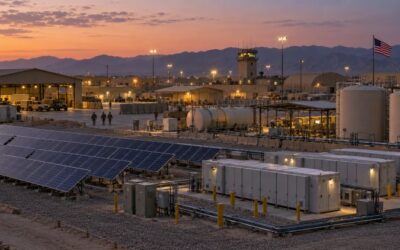
First photo – Karpower, Brownsville, Texas
It comes from Karpower's official announcement, on February 3, 2026, on the completion of the acquisition of the AmFELS shipyard.
See the photo on the official Karpower website
Second photo – Factory Sirius PV USA, Texas
Real photo from the photovoltaic panel production plant of Sirius PV USA, affiliated with the Turkish Elin Energy.
Third photo – Shipyard AmFELS, Brownsville
Archival aerial photograph of the shipbuilding facilities, before their acquisition by Karpower.
"Facilities of Karpower on Brownsville of Texas. The Turkish company completed the acquisition of the shipyard in 2026 AmFELS. Photo source: Karpower USA.
- OFFICIAL SOURCES OF THE RESEARCH ARTICLE
- Turkish-American Business Council – TAİK
The 2025 Business Forum, which announced $1,3 billion in Turkish investments in Texas.
Texas–Türkiye Business Forum – Official Announcement
- Port (The Harbour District) of Brownsville – Official Port Authority
Announcement on the sale of the AmFELS shipyard facilities to Karpowership.
Port of Brownsville – Acquisition Announcement
- Karpower USA - 3 February 2026
Official confirmation that the acquisition and transfer of operational control of the shipyard has been completed.
- Rio Grande Valley Business Journal – May 13, 2026
Detailed financial report on the planned $3 billion investment in Brownsville, facilities and projected jobs.
Turkish Shipbuilder Plans $3 Billion Investment
- Borusan Pipe – Turkish steel industry
Official company information about the production facilities in Baytown and its participation in the American energy industry.
Borusan Pipe – Facilities and Production
- PV Shops USA - 15 April 2024
Report on the start of photovoltaic panel production by the Turkish Elin Energy in Texas.
Turkish Solar Manufacturer Begins Production in Texas
- Sabancı Renewables - 22 June 2026
Official announcement about the Turkish company's long-term energy agreement with Meta, through two photovoltaic projects in Texas.
Sabancı Renewables – Agreement with Meta
- Mercuria – September 23, 2025
Official announcement of the agreement to supply American LNG to the Turkish state-owned company BOTAŞ for the period 2026–2045.
- Export-Import Bank of the United States – February 23, 2026
US government announcement approving $400 million in export insurance support to Turkey.
EXIM – $400 Million LNG Deal to Turkey
- US Treasury Department – CFIUS
Official information on foreign investment controls that may affect national security.
CFIUS – Foreign Investment Reviews
- Pew Research Center
Demographic survey of the religious composition of Texas. According to data from 2023–2024, about 2% of adults self-identify as Muslim.
Pew Research Center – Texas Religious Landscape
Business and energy investments: Turkish-American Business Council – Texas–Türkiye Business Forum · Port of Brownsville – Official announcement of the acquisition · Rio Grande Valley Business Journal – $3 billion investment plan. · Sabancı – Agreement with Meta · Sabancı – New photovoltaic projects.
Natural gas and geopolitics: BOTAŞ – Official announcement on LNG agreements · American Export-Import Bank – $400 million deal. · US Treasury Department – CFIUS Rules.
Demographics and religious presence: Pew Research Center – Religious Composition of Texas · Turkish Directorate of Religious Affairs – Houston · Associated Press – EPIC City Investigation