In recent days they have been circulating in social media Photos of flooded streets in West Palm Beach and captions like "devastating for residents." We checked: the flooding is real, and this year it's been unusually severe. Let's take a look at what happened, why it happened, and what anyone living near water should be aware of.
What are Booking you
King tides are the highest tides of the year. In South Florida, they occur every fall, from September to November, mostly around the full moon and new moon, when the pull of the sun and moon combine. The tide usually lasts about three hours around high tide, and then the waters recede.
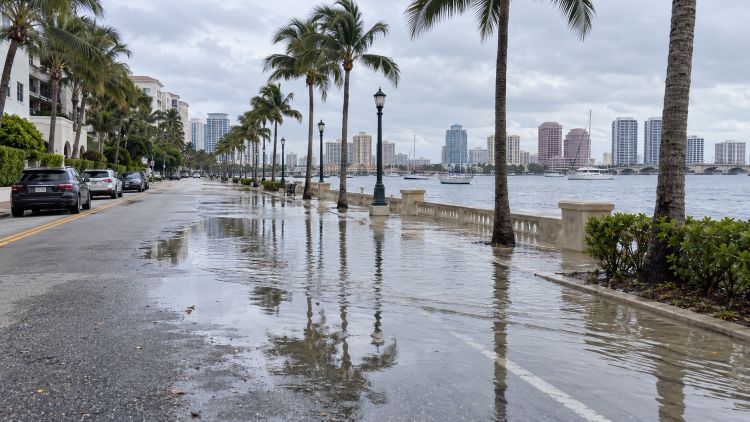
That's why we talk about "sunny-day flooding": roads near the Intracoastal and along the coast fill with water without a drop of rain having fallen. The city of West Palm Beach itself explains that flooding can also occur in low-lying areas that are not directly next to the water.
What happened this week?
This year's king tides didn't come by themselves. They coincided with October's full moon (Hunter's Moon), with the moon at its closest point in its orbit on October 28, and with a low-pressure system near the Bahamas. Strong easterly winds and a swell from the northeast pushed even more water into the canals and the Intracoastal.
The result was historic high waters:
- At Lake Worth Pier, the water level reached 2,7 feet on October 27, higher than during Hurricanes Nicole (2022), Sandy (2012), and Dorian (2019).
- Record water levels were set that same week in West Palm Beach, Miami, Cape Canaveral, Marathon and Key West.
- In Miami, flooding exceeded the "major flood" threshold for two days in a row. University of Miami researcher Brian McDonald called it "unprecedented."
The biggest news is that all of this happened without a hurricane or tropical storm.
Which flooded in Palm Beach County
- West Palm Beach: The Intracoastal Waterway overflowed onto Flagler Drive downtown for days. A Corvette and a Ferrari were found in the water on October 27, and photos of the damage went viral. The city also canceled the LagoonFest festival due to the risk of flooding.
- Bloomfield Drive: Residents complain that water remains on their street six hours after the flood, while the surrounding streets dry up, and they are asking the city to fix the drainage.
- Lantana and Lake Worth: On Ocean Avenue the water reached close to one meter at its peak and the road was closed.
- Briny Breezes: The water reached 60 centimeters and embraced mobile homes, until the municipality's pumps removed it.
- Palm Beach (island): Lake Trail flooded and Midtown Beach suffered erosion.
- Juno and Jupiter: The wave ate up large quantities of sand. In Juno, the coastline has come dangerously close to an apartment building.
Is it "devastating"?
There needs to be a balance here. For some residents, the situation is truly exhausting: flooded streets every day, cars on salt, water that doesn't leave the neighborhood. However, so far there have been no reports of structural damage to buildings, and in most areas the water recedes within a few hours. A restaurant in Lantana with water on its floor remained open, a reminder that it experiences it every year.
What's worrying is the trend. According to the US National Oceanic and Atmospheric Administration (NOAA), days with flash flooding along the Southeast and Gulf coasts have increased by 400% to 1.110% since 2000. McDonald estimates that sea levels have risen about 4 inches (10 centimeters) since 2012 alone. What was rare a few years ago is now happening every fall.
What to watch
- Do not drive through water. The message from the authorities is "Turn around, don't drown." It's difficult to judge depth, and seawater causes corrosion to the bottom and the car's electronics.
- Don't walk in the water. Floodwater often contains sewage and fuel from the roads.
- Look at the time of the flood. Flooding peaks around high tide, twice a day. If you can, plan your travel outside of this window.
- Move the car if you usually park it in a low spot near water.
- Report the flood your municipality, especially if the water does not recede after the flood. This usually indicates a drainage problem. On Palm Beach Island there is a “Tell the Town” form and the non-emergency police number, 561-838-5454.
What's coming?
The National Weather Service is predicting moderate to high tide flooding through the early weekend as a low-pressure system near the Bahamas weakens and moves away. But the season isn't over. According to the city of West Palm Beach's flood calendar, high tides are expected through Nov. 12 and again Nov. 22-29. The period 24-27 November is what needs the most attention, because the floodwater is expected to reach within a few inches of the flood threshold. If it coincides with winds from the sea or rain again, we may see images like those of the week again.
Πηγές
- Palm Beach Post / Yahoo: King tides smash water-level records
- CBS12: King tides flood roads, threaten beaches
- CBS12: Corvette, Ferrari take baths as king tides flood West Palm Beach
- WPTV: Neighbors asking for drainage fix
- City of West Palm Beach: King Tides